










I didn’t imagine my last semester of high school would start with IVs in my wrists and bruises on my hips from an operating table.
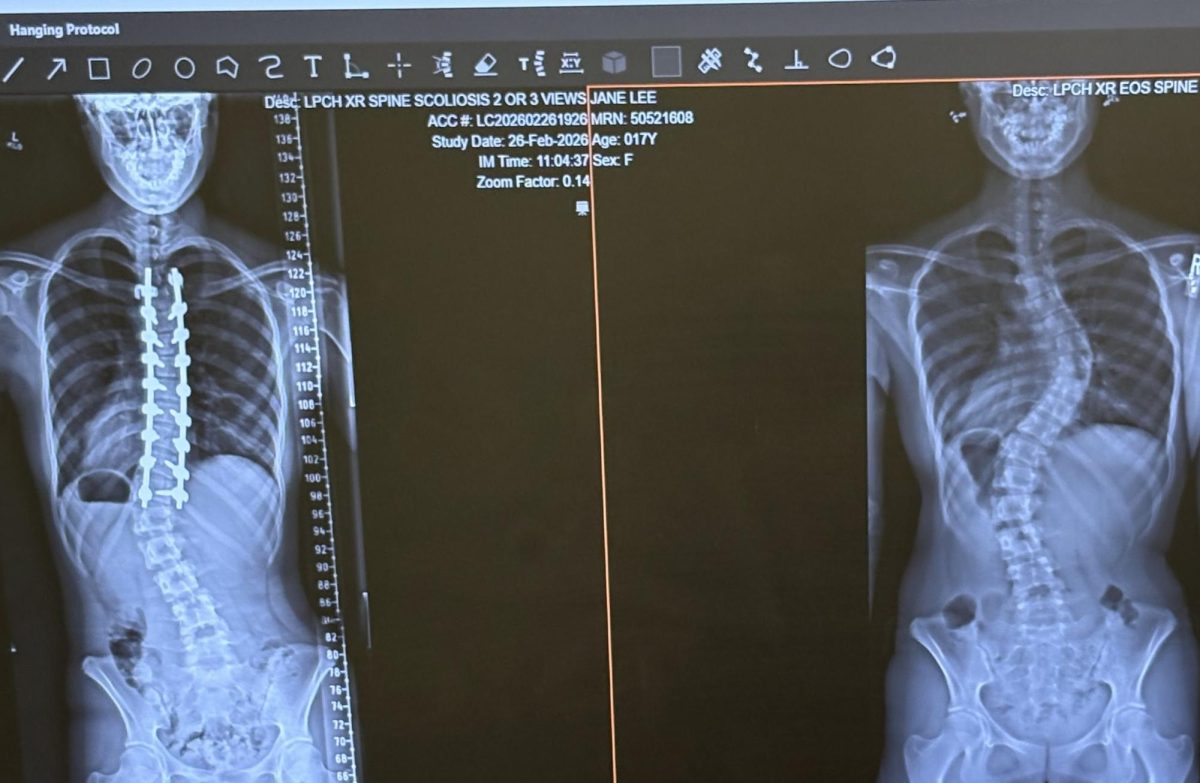
A year and a half ago, I was diagnosed with severe scoliosis — a strong curve (or in my case, two curves) in my spine that, if untreated, could ultimately cause severe harm to my body. Four hospital visits in two months led to my decision to undergo spinal fusion surgery — one of the most painful surgical operations and one which would literally fuse my vertebrae into a straighter line — before I graduated.
Funnily enough, it took me years to realize my persistent back pain was abnormal. As a color guard assistant captain, I was dancing and straining my back about 14 to 18 hours a week, and feeling sore and tired from practice seemed normal. However, my back flexibility had gradually receded to the point that I could barely bend backwards without some type of pain.
When I first saw an X-ray of the problem, I found it difficult to discuss my diagnosis with even my closest friend. This reluctance continued even after my surgery — I didn’t want to draw from their own problems, and I tend to despise the awkwardness that often followed such a serious conversation.
For a long time, I questioned whether undergoing surgery was the right decision. Plenty of adults commented on how young I was, and for good reason: I was equally as concerned about my long-term mobility. I’ve been a dancer for over 12 years, and the prospect of never being able to bend backwards was terrifying, never mind not being able to twist my upper body. I was making a decision for life, and I had trouble deciding whether living with pain was better than having to be careful with my movements forever.
But despite it all, I went through with it. On Jan. 13, I underwent a 6-hour operation where the spine from my shoulder blades to my waist was fused.
Because it was a major surgery, I knew it would keep me out of school for weeks afterward. To be honest, I don’t remember much from the first week of recovery. I came out of anesthesia feeling insane with horrible double vision. Delirious, I insisted my mom give me my phone as soon as I woke up, and texted my best friend: “awake. I can’t seeing. Glasses. But every ing went well. Dw.” I like to think he was pretty comforted by the last two statements.
My physical therapists made me stand up with my repaired spine for the first time not even 24 hours out of surgery. Luckily, whether it was due to my age, back strength or the length of my fusion, I learned to walk again pretty quickly, although I found sitting stiff and uncomfortable for almost a month.
Throughout my hospital stay, I was on three IVs constantly, and I was woken up every few hours in the night for my nurses to check my vitals. I remember feeling so frustrated when I was woken up at 6 a.m. just so my anesthesiologists could check if I could wiggle my toes. Still, I can’t thank my nurses enough for always checking in with drowsy me even at 3 a.m.
Luckily, I was released two days later after clearing my physical therapy requirements. Coming back home, however, was probably worse than the time I spent in the hospital. I could feel every bump in the road on the drive back from Stanford, and I couldn’t stomach any substantive food for days, losing an unhealthy amount of weight in the process.
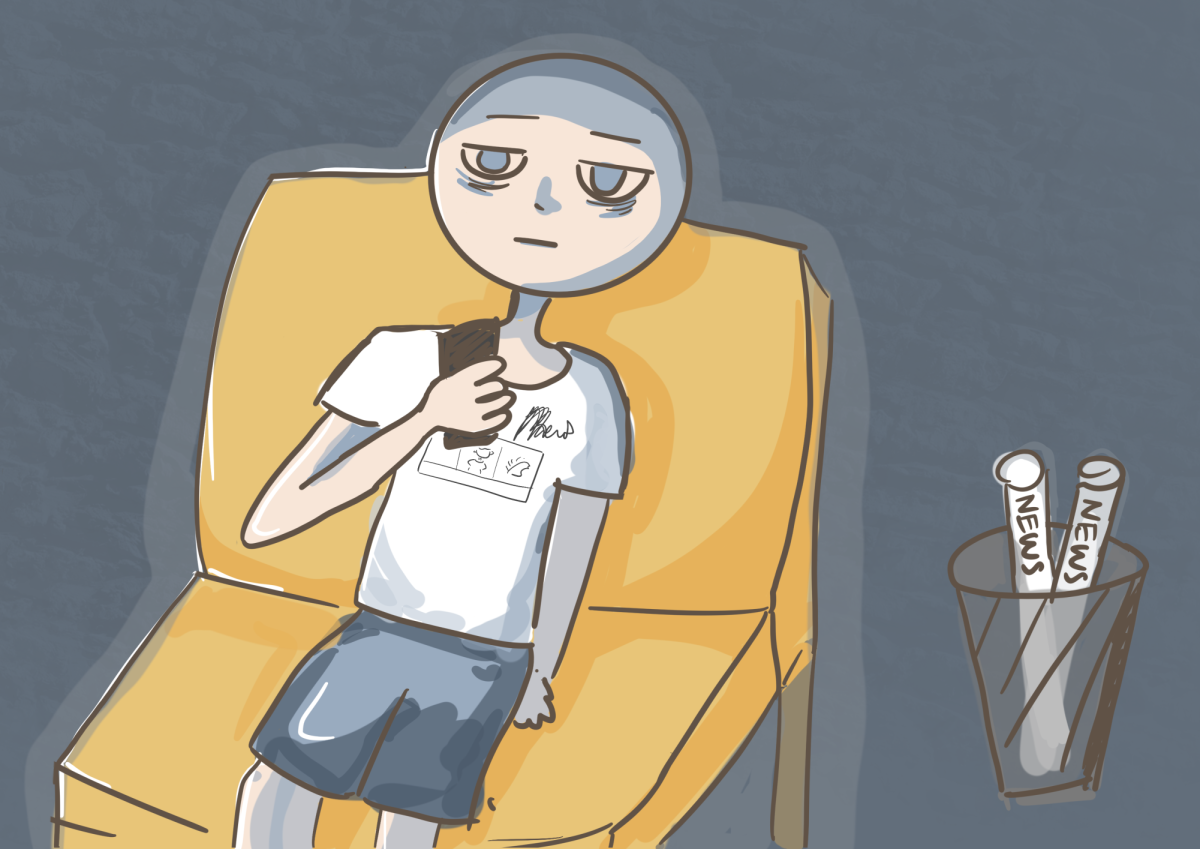
I was most surprised when I came back to school and some people believed that my six weeks away was some kind of easygoing vacation. While, yes, I did end up doomscrolling more than I would like to admit, and I was fortunate to spend a lot of time with my parents, recovery hasn’t been easy, even as I approach six months post-op.
The first time I stepped out of the house after my surgery, two or three weeks post-op, I walked around Safeway for 10 minutes and was immediately winded. I couldn’t sit for more than an hour at a time until a month later. I couldn’t bend down at all until six weeks post-op.
Still, I’m grateful for my surgery putting my priorities into perspective. During finals season of first semester, I remember texting my friend: “who cares if i don’t get an A on my next physics test i’m undergoing the second most painful surgery lol.”
In a community where a grade on a test means so much, it seems crazy in retrospect that I needed something so drastic in my life to see something so simple.
And while my story might not resonate with everyone, I hope it underscores at least the importance of having a supportive community around me. So while I won’t ever get those six weeks of senior year back, I have zero regrets.
As we seniors graduate, I hope we can take a moment to reflect on everyone who has supported us for the past 18 years of our lives. Approaching graduation, I’ve realized its similarities to my surgery — except, this time, it won’t just be six weeks away from the comfort of our routine, no matter how exhausting school is. We’ll all enter a new stage of our life, move to new places, find new people. I’m so, so grateful for our shared pasts that have shaped us into the graduating Class of 2026.
So, with a straighter back and an inch added to my height, I’ll approach my future knowing that after surviving metal rods and screws being put into my back, I can handle whatever comes next.
