
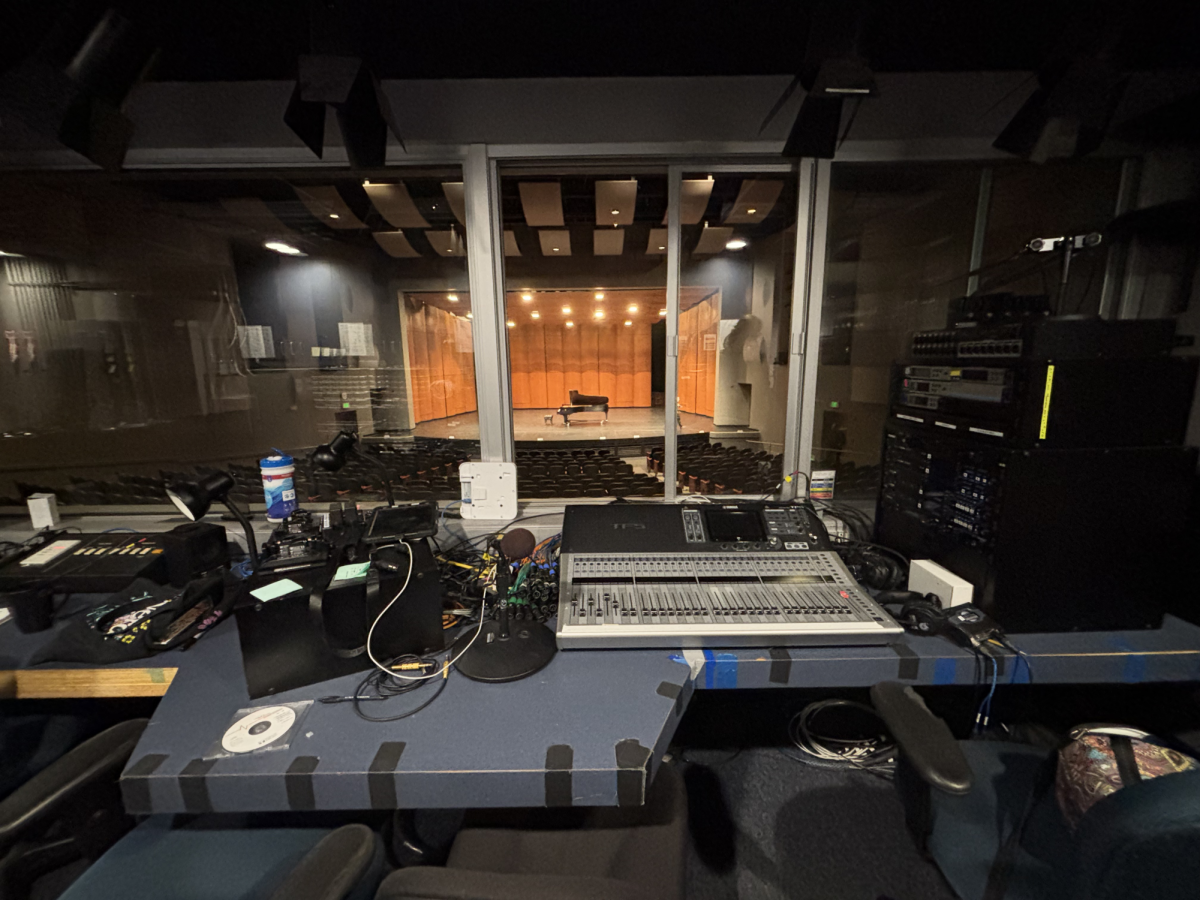







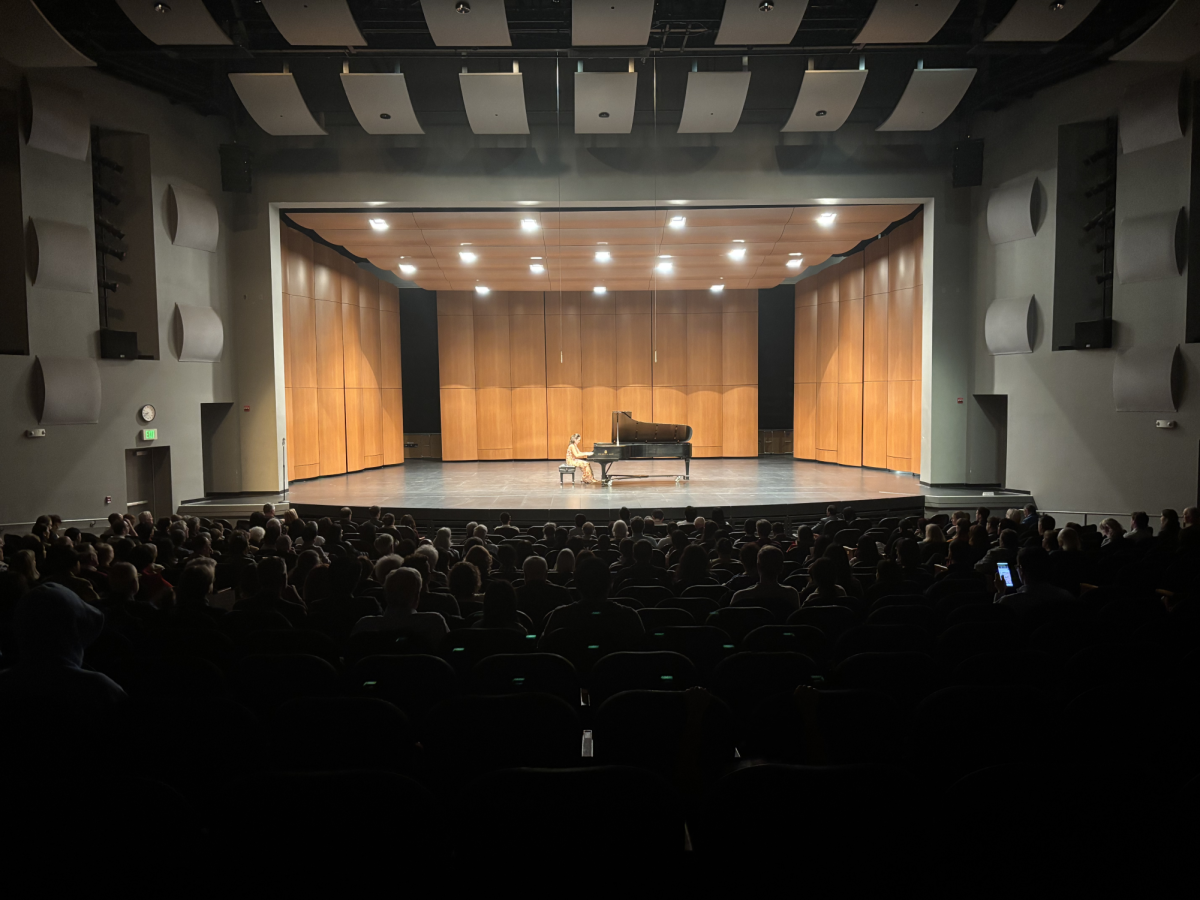
The McAfee Center’s lights shone on world-class South Korean pianist Chaeyoung Park on Jan. 31 as she filled the fully packed theater with a rousing performance of Maurice Ravel’s La Valse to the left-handed wonder of Johannes Brahm’s arrangement of Johann Sebastian Bach’s Chaconne.
Her performance was one in a series held by the Bay Area Steinway Society — a non-profit organization that hosts classical piano performances from internationally recognized artists in Silicon Valley, the Peninsula and the South Bay.
For 31 seasons, Steinway Society has been delivering classical music to the Bay Area
The Steinway Society was created in 1994 as a way to enhance the local music scene. It began as a home concert series and expanded into a full concert series soon after. According to marketing director Lori Jensen, there are other Steinway Societies across the nation, but the Bay Area’s program is one of the few that presents concerts.
“Classical music is an important part of culture and personal development,” Jensen said. “We often have patrons coming from other states to hear our performers, which is a great reminder that what we do is important and matters to people.”
The Steinway Society uses the McAfee whenever schedules align. Artists and patrons alike enjoy the warmth of sound, the ease of location and the size of the hall; on top of that, there is an unfortunate lack of performance venues in this area, making the McAfee a prized performance location.
Park, 27, is a pianist the Steinway Society has been looking forward to hosting for a while, Jensen said. After her stunning performances in the Van Cliburn International Piano Competition — one of the most prestigious and influential classical music contests in the world — the organization decided to add a bonus concert to showcase her artistry.
Chaeyoung Park’s journey with piano spans across two nations
Park’s exposure to music began at an early age. Her earliest memories of the instrument was in kindergarten, where she showed interest in free group classes offered at school. The road trips she went on often included classical music, which became the typical soundtrack for car rides with her parents.
At the same time, Park’s grandmother gave her family an upright piano as furniture — which Park ended up playing and practicing with. Her talent soon became evident, and she graduated from the kindergarten piano teacher to a more advanced neighborhood teacher
“I liked the challenge of it,” Park said. “I liked that I was pretty good at it and I liked getting better. The next thing I knew I was in America to study piano.”
Piano quickly became the focal point of her life. When she was 10, Park and her family relocated to America within three months after her piano teacher suggested she immigrate to study abroad. She studied in Kansas with American classical pianist Jack Winerock before moving to New York to attend The Juilliard School, where she earned her bachelor’s, master’s and artist diploma degrees under Robert McDonald.
Without relatives in America, Park faced challenges as a non-English speaker.
“The first couple of years in the country across the world were difficult, with new culture, new people and a new environment,” Park said. “All of those things made it difficult for me to ground myself as a person and know who I was. It was also easy to lose confidence.”
One thing Park did have in the foreign atmosphere was the piano — music quickly transformed into a medium that became her way of connecting with others. Even if she couldn’t speak English at the beginning, the universal language of music allowed her to convey emotions through musical expression to the world around her.
To this day, Park said she still plays music to feel connected with other people.
“It’s not only limited to music — I love talking with people, just spending time with people, or having food with people, all these different ways that you can connect with someone and feel like you are seeing them, or they’re seeing you,” Park said. “Music is one of the greatest pathways that allows a kind of connection.”
When it comes to her performances, it’s not all about the chase for perfection. One of the most important things for Park personally is trusting that she’s done the right kind of preparation, which gives her a sense of ease from performance nerves.
Personalizing the music she plays has helped Park get out of the headspace of feeling that every little detail has to be perfect.
“I try to think about the performances I personally enjoy, which may not be ‘perfect performances,’ rather the ones that captivate me,” Park said. “It’s the ones that make me feel something; it’s the ones that create an atmosphere, the ones that are interesting and make me think, rather than just a polished performance.”
Along her journey, Park has experienced a multitude of setbacks. There have been moments where she felt that she reached her limit, other times where she kept hitting the same wall, which undoubtedly discouraged her. Competitions and auditions have sometimes gone awry, and musical connection was not always entirely present.
Through reflection and talking to others who have given her advice, Park has accepted that careers in music are never a straightforward path, but rather one filled with ups and downs.
“The main thing is that you just stick with it,” Park said. “Feeling down is only temporary, and it happens with everyone — have faith in the process, and faith that pushing onwards will bring different opportunities your way.”
Throughout her McAfee performance, one thing was clear: Each of Park’s pieces mirrored countless hours of preparation going into interpretations, techniques and emotions. All the while she captivated her audience.
“When it’s a live performance, I feel this amplified connection with the audience. There is a special kind of energy when a group of people are experiencing the same emotional thing at the same time,” Park said. “There is something very satisfying about the feeling as if I’m leading a group of people on this emotional story.”
