










Courtesy of Jeremy Huang
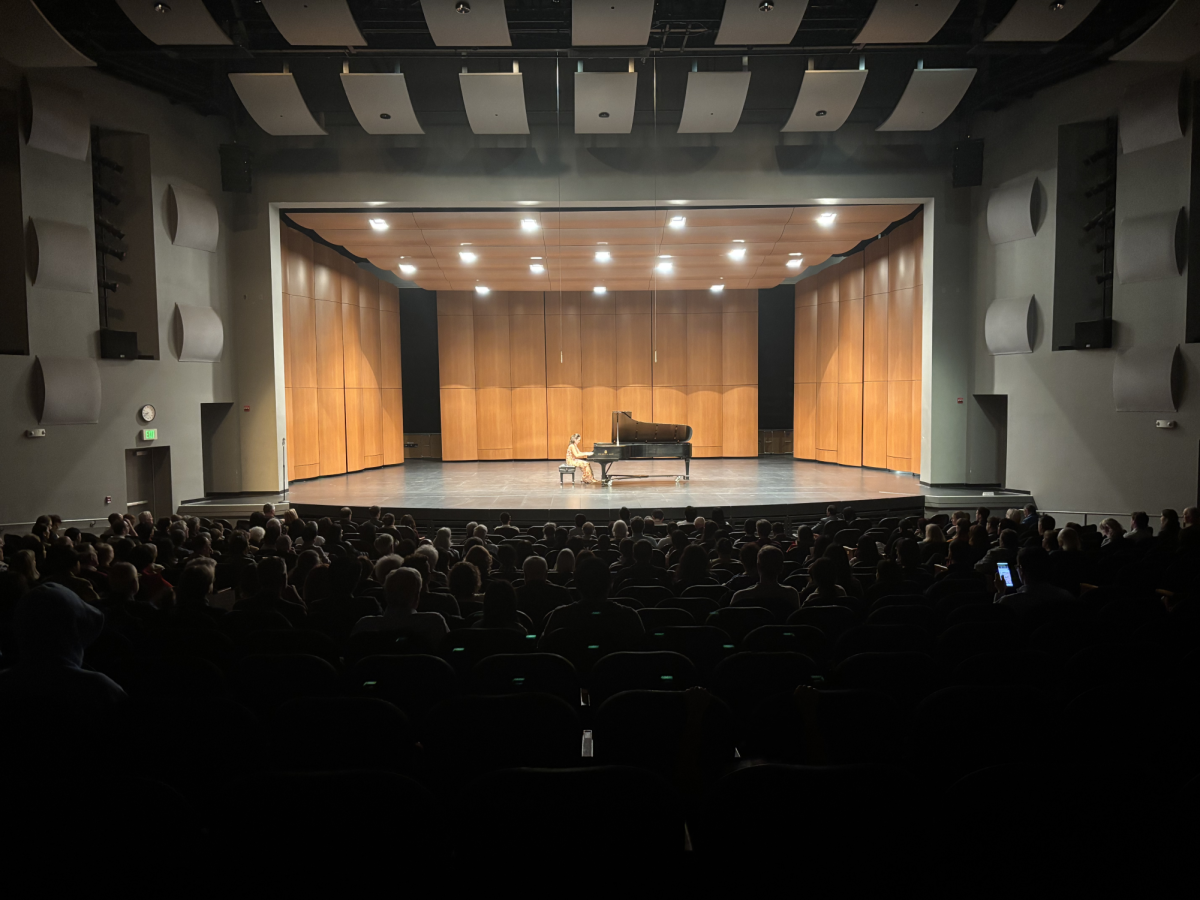
Jeremy Huang arrives at the Ryan Center for the Musical Arts at Northwestern University for a music audition on Feb. 15.Every year, a handful of Falcons are recruited into college via athletics across a variety of sports, such as volleyball, soccer and swimming. However, just as many seniors these days seem to find themselves taking another path — pursuing a degree and perhaps even a career in music.
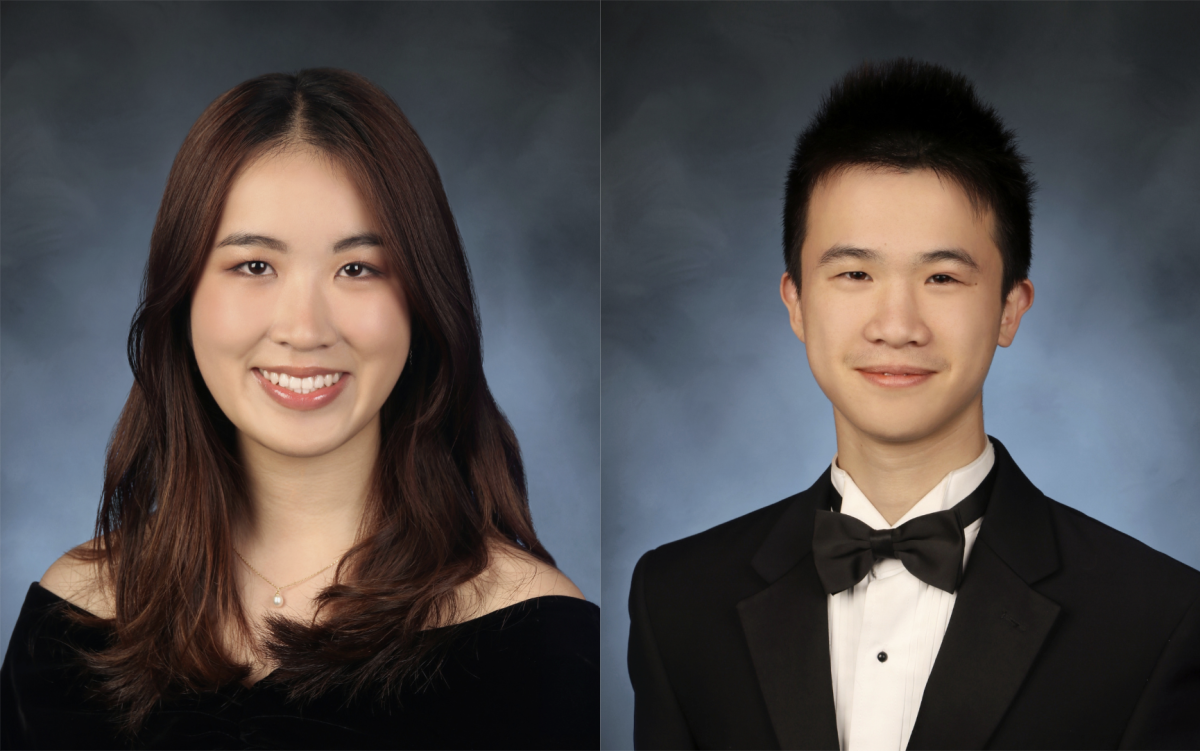
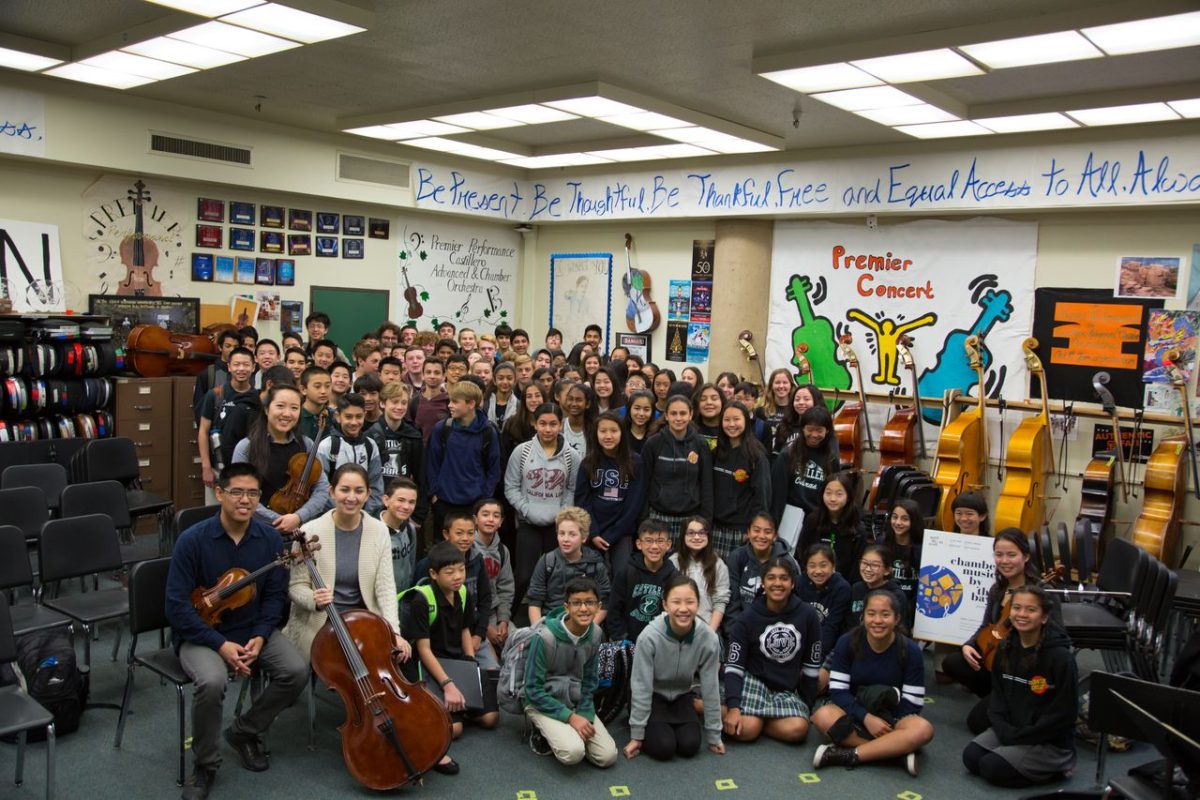
This year, a number of seniors in the music department applied to colleges as music majors or directly into music schools. Dylan Huang is pursuing saxophone, Jeremy Huang music education and percussion and Justin Jiang music composition. Others include Barbara Vasilyeva for music at UC Berkeley, Raymond Zheng for percussion at Northwestern University, Masha Sotoodehniakorani for music performance at the University of Washington and Ishir Ayyagari for electronic production and design at the Berklee College of Music.
Saxophonist pursues dual degree at University of Rochester with the Eastman School of Music
In his sophomore year, Dylan signed up for a masterclass at the annual United States Navy Band International Saxophone Symposium. Initially, he assumed music was only something people pursued for fun, but attending a session with a Northwestern professor opened his eyes to what musicians were capable of and how expansive the community was.
The event made him realize he wanted to become a professional musician — and it wasn’t something far-fetched and impossible like he’d previously thought.
Dylan spent much of his sophomore and junior years getting a general idea of schools that matched his interests; he attended summer camps, masterclasses and familiarized himself with programs that piqued his interests. Even after finding a potential professor to be his mentor, Dylan attended their trial lessons, met their top students and explored their performance schedules.
Dylan’s private teacher introduced him to an older student with similar aspirations, who connected him with the right people and events early on. While his parents were initially skeptical about him double majoring, they ended up accepting music as a path he wanted to pursue.
During the actual application season, Dylan’s first semester was very packed with commitments. He had to submit up to 20 minutes of music per school, with some schools requiring technical components like scales. However, unlike other instruments that required specific excerpts, saxophone applicants have more personal choice — Dylan was able to reuse his competition pieces.
He completed 10 applications for 10 music schools, all of them intending to do a double major in either business or economics, depending on school.
After his application was in, colleges completed a prescreen round with early eliminations, passing through those that were deemed viable to a live round, which required Dylan to fly out to them and perform in person.
“Flying out to audition for them is a very important sign of respect,” Dylan said. “At the end of the day, you’re going to be rejecting 90% of your schools, and not only is it important you show them what you can do but also keep a good relationship with every one of them.”
His biggest struggle and uneasiness came from being able to stay motivated, since he cited that burnout is one of the biggest problems musicians face.
“It’s a lot of flights, a lot of time zone changes, a lot of missed school. Even now, I’m still having to make up work,” Dylan said. “The best solution for [burnout] is remembering it’s bigger than just the competition. Everyone has their own individual reasons for loving music, and remembering that above all else is what keeps you coming back.”
After a long journey, Dylan has committed to a dual degree between the University of Rochester and the Eastman School of Music for saxophone performance and financial economics.
Percussionist transitions from engineering to music education at Northwestern
Senior percussionist Jeremy originally planned to pursue Chemical Engineering in sophomore year. Hoping to build a solid foundation, Jeremy joined the Aspiring Scholars Directed Research Program (ASDRP) as he entered junior year and began working in a research lab.
However, in an environment with little collaboration and poor mentorship, Jeremy couldn’t bear the thought of pursuing anything STEM or lab-related.
“My mentor was always expecting perfection even though I was just trying to learn how to assimilate into the group,” he said. “Sure, his standards were high and motivating. Sure, he had extremely solid connections, but he was a horrible mentor to me.”
So, he switched directions to music performance and education, his childhood passion since he was 4 years old. Because of the strong profile in music he had built over the years, he received full support from friends, family and his college counselor. Jeremy took his experience from the lab to model his philosophies, focusing them around fostering the best environments for students to learn in the most efficient way possible.
Jeremy’s application process began over the summer, where he began work on the Common Application and University of California application. As a music education major, he still had to submit the same supplements and normal essays for schools, but had additional essays exclusive to music schools on his experiences as a leader and teacher in music. While doing so, he juggled writing with his main priority: practicing and learning repertoire.
Jeremy’s application process deviated from a regular applicant’s where he had to complete music auditions. As a percussionist who mainly played drums, Jeremy was expected to know not only how to drum but also how to play keyboard instruments like marimba and vibraphone.
He learned 10 separate etudes, short solo exercises, in total — three on snare drum, five on marimba and three on timpani — each of which took weeks to learn and months to master.
One major part of his audition process came from the task of professionally recording and submitting videos of his pieces to schools. Jeremy found a rhythm in recording twice a week, on his free weekdays, as mock recording sessions to prepare for his final recordings right before the deadlines.
“I would come for hours at a time, there were many nights where I was the only one left in the entire music building,” Jeremy said.
While the timeline is similar to normal non-music major applicants, the stress of completing applications isn’t done until February or March, when most colleges host in-person auditions for those that are invited. While students submitted their applications by January and took a breather, Jeremy doubled his practicing time to prepare.
Throughout January and February, Jeremy flew to five different schools to audition in person. He started at University of Michigan, then took a trip to Southern California for UCLA and USC, then ended at Indiana University Bloomington and Northwestern.
As an auditionee, Jeremy notes that it’s easy to tell when a professor has the passion to care for their students. He also looks for an environment where the percussion studio’s culture is driven and motivated, but not toxic or competitive. Most schools and their professors were extremely welcoming and helpful, some were not.
“At USC, one professor watched a hockey game while I auditioned, then asked why I even auditioned in the first place,” Jeremy said.
Jeremy was accepted into UMich, Indiana, New York University, Boston University, Northwestern and UCLA for music education. He has committed to Northwestern for music education and percussion performance.
Senior commits to Carnegie Mellon for music composition and neurobiology
As a music composition major, Justin was spared the traveling part of the process; he was only required to attend interviews and put together portfolios with instrument performance recordings. Similar to Dylan, Justin also used overlapping pieces with current competition or recital repertoire. Nonetheless, Justin’s practice still remained rigorous.
Justin completed the majority of his essays and materials over the summer, allowing him to avoid last-minute cramming during the fall semester. This way, he was able to allocate his fall semester to practicing and recording performances.
“If you are planning on submitting any art portfolio as a main focus of your application, you need to give yourself room to breathe to polish your best work,” Justin said.
In addition to piano pre-screening auditions, Justin had to rehearse his compositions with musicians. Thankfully, due to the abundance of talented musicians at the school, many peers were willing to help him perform his composed music.
Justin split his college list into half music schools and half STEM schools. As a result, he looked specifically for dual programs that allowed him to study both music and STEM, such as the Peabody Institute at Johns Hopkins University and BXA at Carnegie Mellon University.
One important aspect he looked for in schools was access to professional opportunities, whether that be sheet readings with professional orchestras or opportunities to play and write with chamber groups. He also believes faculty makes or breaks a music program.
Additionally, because Justin wanted freedom to explore other interests, he mainly looked for a mix of public universities and private liberal arts universities, along with non-conservatory music schools.
“The biggest tip is to diversify your applications. It’s possible for you to change your mind four months down the line after accepting an offer at a music school, or at any point in your career, so always have backup schools in different fields,” Justin said.
Justin’s mom encouraged him to explore the arts and humanities fields and keep STEM as a backup, having worked in the industry herself. Contrarily, his dad was initially wary about a music degree, but was more open to a STEM major alongside music.
Justin notes that for anyone considering a musical career, it’s important to think seriously about what you plan and want to accomplish at a music school. His biggest uncertainty is struggling to find his place within the community and whether it is a path worth pursuing. He recommends talking to music teachers and asking for realistic advice.
“It’s not a traditional path at all, in fact you will never stop second guessing yourself even after getting into colleges. I never know exactly where I fit within a crowd of musical talent,” Justin said.
