







Courtesy of Toga Tests
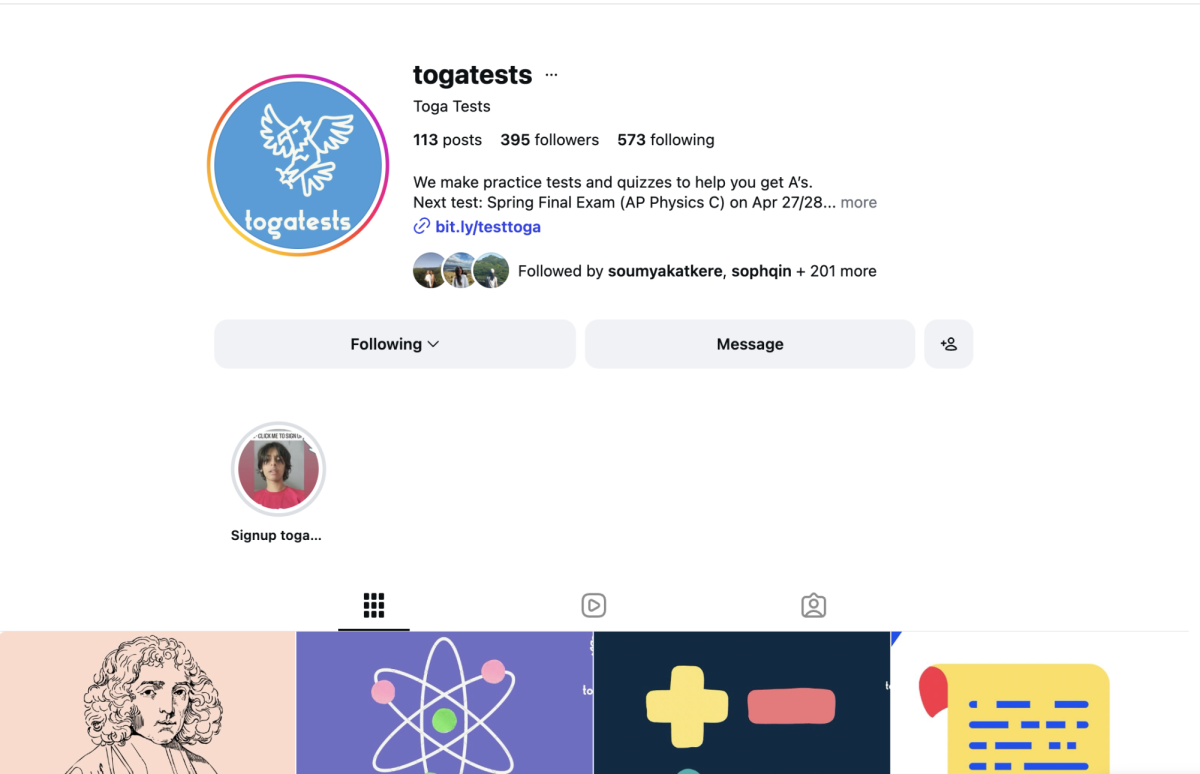
The Toga Tests Instagram profile.In February 2024, as the second semester of their sophomore year began to ramp up, Yash Sharma and Nathan Liu had a revolutionary idea: developing mock exam resources for each of their courses, available for all students to use. Soon after, they gave this idea a name: “Toga Tests.”
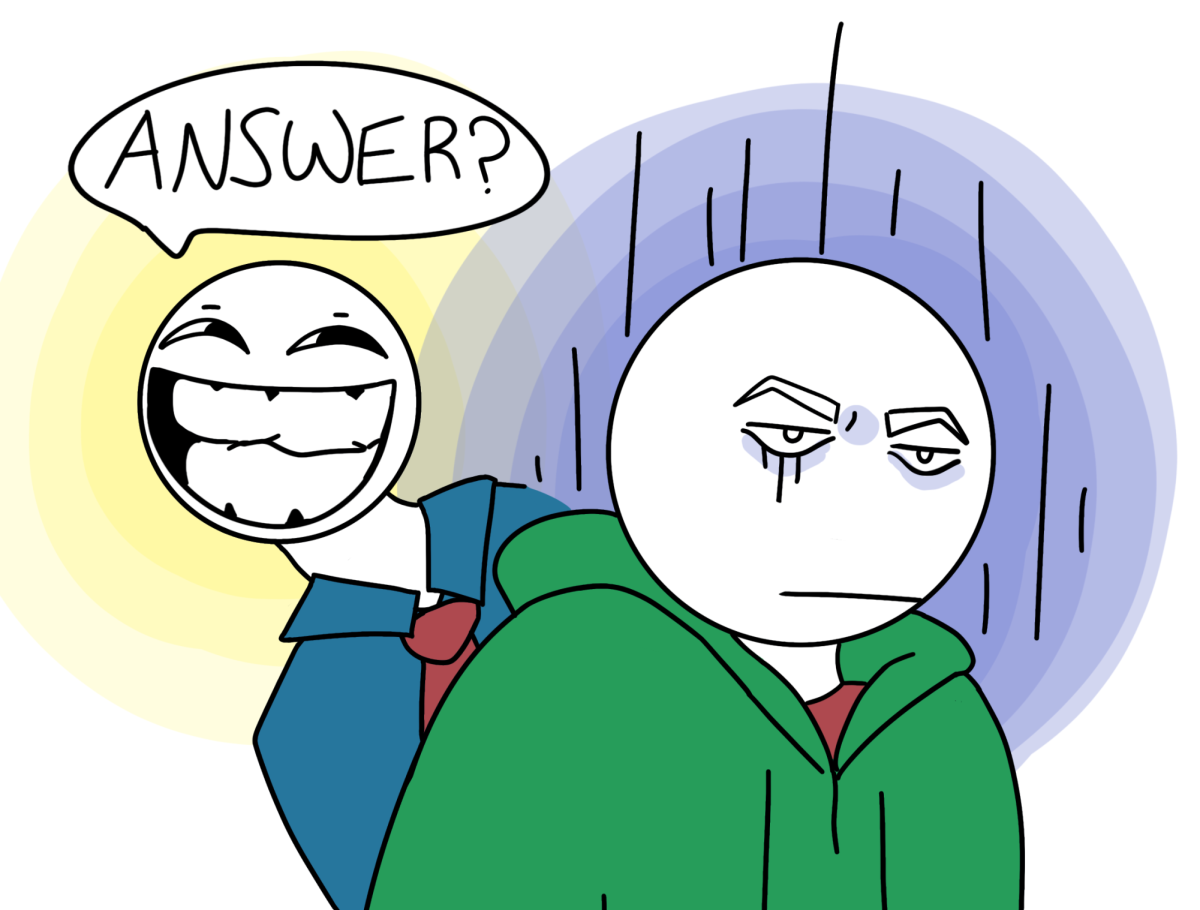
Together, Yash and Nathan would post mock exams a few days before official tests on their website and advertise it on their Instagram page, “@togatests.” The effort emerged in response to frustration over noticeable differences between the difficulty of practice materials and actual tests, especially in harder classes.
Now, two years later, students across campus, and especially those in the Class of ‘26, are well acquainted with Toga Tests.
“Before a test, a lot of people will talk about Toga Tests more than the review questions that teachers give us,” senior Rebecca Wang said; she’s found Toga Tests particularly helpful for AP Physics 1 and 2 and AP Physics C. “Toga Tests has a lot of harder questions and it’s really tailored to how each class’s test would actually be.”
When they first began developing Toga Tests, Yash and Nathan mainly sourced problems from online resources and their textbooks. Yash recalls printing out a realistic Precalculus Honors test with Nathan — the students they showed it to were shocked, asking where they got the test from.
“Everybody wants to get good grades, so you kind of bond over the struggle of studying,” Yash said.
Moving into junior year, they began taking practice problems from Quizlet, a learning platform where users can create online flashcards with questions.
“We started to realize that Quizlet actually had really hard questions. We pivoted to that so we could increase the depth of the questions we were putting into a test,” Yash said.
Since then, Nathan has taken over the task of creating tests while Yash handles more tasks regarding managing the website. Now, they’ve settled into a rhythm: A few days before a test, once Nathan’s compiled their practice problems, the pair will release their Toga Test for that subject on their website, combined with an Instagram post advertising it.
AP Physics 1 and 2 student Navya Chawla said she uses the Toga Test only after completing the other review worksheets and AP Classroom problems her teacher, Jennifer Lee, provides her.
“I’d say it’s better than the MIT workbook for physics, because MIT just has so many questions,” Navya said. “I find that Toga Tests is the most similar and it’s more targeted. It covers the same difficulty, but it’s also the kind of questions my teacher would ask.”
While Rebecca and Navya say that they avoid talking about Toga Tests with teachers, Yash has noticed a neutral or even negative response from teachers when he discusses it with them.
Yash partially attributes the reasoning behind some teachers’ negative reactions to the myth that Toga Tests uses old tests to create its questions, despite the questions being from different online resources.
In a separate conversation with one teacher, Yash recalls being told that the Toga Tests platform gets in the way of distinguishing between A+ and A students, since their questions sometimes match up closely with actual tests. However, he thinks comments like these reflect more on the misguided priorities of the education system as a whole.
Rebecca thanks Toga Tests for some of her learning, saying that it’s difficult to find the right level of practice questions for her AP science courses. She also said the practice questions from her teachers tend to be a lot easier than the actual test questions, and the AP classroom questions are formatted differently than how her teacher would give the test. The difficulty of Toga Tests, by contrast, is the perfect in-between.
“We’re more like, ‘Here’s an issue, and this is how students are going to respond to the issue,’” Yash said. “We’re not cheating to fix it. All we’re doing is finding concepts that could possibly be on the test and practicing those problems — because that’s what we’re going to be tested on.”
Nathan and Yash ultimately don’t have any concrete plans for Toga Tests after they graduate, but they have created enough content so that future students can still find Toga Tests helpful. They may find students who’d like to run it in the future, but no plans have been made yet for who would take on that role.
Reflecting on the success of the site, Yash said, “It’s really nice to hear, ‘Hey, did you check the Toga Test? Does Toga Tests have something to use?’ in a conversation that you’re not expecting. It’s sort of ingrained in the lives of everybody here. Everybody’s using it. They know it’s a good resource, and they know it’s trusted.”
