








Courtesy of Gege Akutami/Shueisha and Jujutsu Kaisen Production Committee
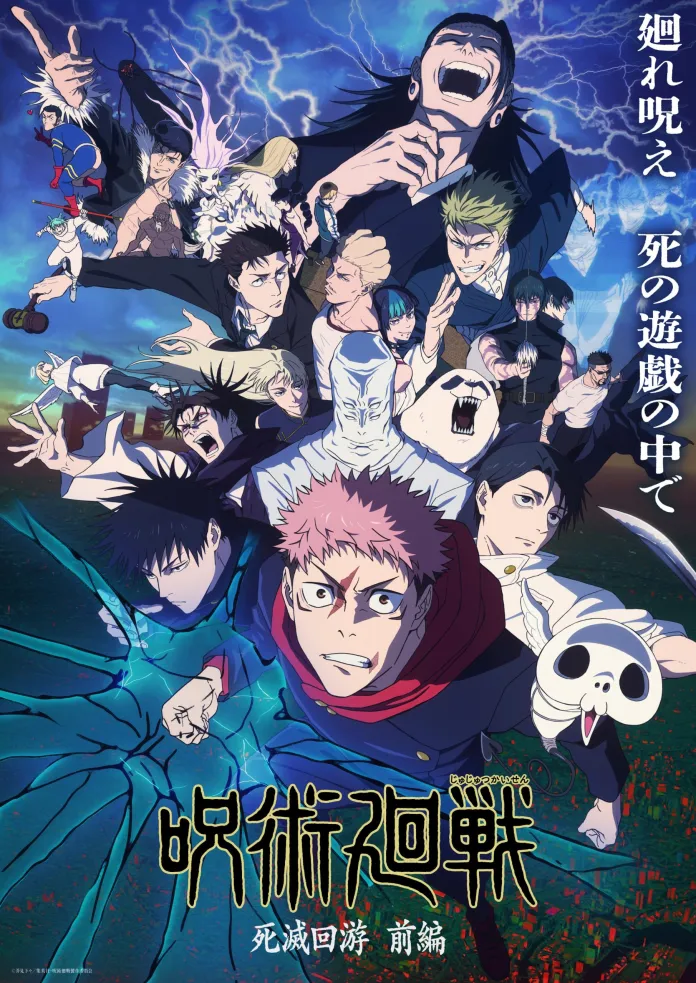
Season three of hit shōnen anime “Jujutsu Kaisen” finished airing its last episode on March 26.Editor’s Note: This review contains spoilers for all three seasons.
As someone who spent their summer captivated by the visuals, characters and storytelling of hit shōnen anime “Jujutsu Kaisen,” I was extremely excited this winter for the release of its third season, Part 1 of “The Culling Game.” It did not disappoint.
The season, released on popular anime site Crunchyroll, offered 12 episodes in this first phase. They earned an impressive 8.9 rating on IMDb.
Each is experimental and almost movie-like and spellbinding, capturing and never releasing viewers’ attention.
In the world of “Jujutsu Kaisen,” there exist monsters known as “curses” that originate from humanity’s negative emotions, such as fear or anger. The select few who are able to detect and use these emotions, called “cursed energy,” are given the titles of Jujutsu sorcerers and are trained to fight the curses. Sorcerers have their own unique techniques they can use in battle. The main character, Yuji Itadori, is forced to host the soul of Ryomen Sukuna, an incredibly strong evil sorcerer from an ancient era.
Part 1 of “The Culling Game,” the eighth story arc of “Jujutsu Kaisen,” covers the events following the Shibuya Incident. After widespread destruction across Shibuya, a ward in Japan, Kenjaku, one of the story’s main protagonists, took advantage of the situation and initiated the Culling Game: a battle royale across an assortment of 10 colonies around Japan.
Under the leadership of director Shota Goshozono, Japanese animation studio MAPPA, famous for animating incredible works such as “Attack on Titan: The Final Season” and “Chainsaw Man,” produced this season. Once again, this studio did not disappoint, and with a budget of $150,000 per episode, the artists created nothing less than a cinematic masterpiece.
Under Goshozono’s direction, the anime explored techniques not typically seen in animated shows, such as framing and composition styles that made the anime feel less like a show and more like a movie. While highly experimental, the ambitious goal was achieved flawlessly.
For starters, the story was easy to follow: Having dedicated the first episode to explaining the season’s basic plot, the animation team was able to devote the rest of the season to fighting and action. This explanation episode, which was fairly out of the ordinary for most shōnen anime, received some backlash from watchers, being rated at a notably lower 7.7/10 on IMDb. However, it was effective at its purpose, and I feel that had it not been done, the season would have been a lot more confusing with all the rules of the Culling Game.
Additionally, most characters are well fleshed out, each with their own backstory or quirk that make them unique. For example, Hiromi Higuruma, a newer character we meet in the season, receives just about an entire episode showcasing his backstory. I liked how his mental state and beliefs were backed up by actual story events rather than just being thrown in.
Some critics contend the pacing of the fighting is too fast. The Culling Game worked similarly to a battle royale, so fights happened just about every episode, often piling on top of each other. The season contained about 18 different fights among the whole season. As a result, even the most significant fights received, at most, two episodes or an extended one. Compared to Yuji’s fight against Mahito in Season 2, which lasted almost five episodes, some believe the season’s fights lack depth. For my part, I liked the quick pace.
In terms of directing, “Jujutsu Kaisen”’s fights are staged quite differently from most common shōnen anime: Rather than the usual intense and action-packed fighting, they are also tactical and well planned, creating engaging, well-choreographed sequences. One of my favorite examples of this is the battle between Yuji and Higuruma, a newly awakened sorcerer.
The fight is packed with action, but also comes with the twist of Higuruma’s technique working similarly to a courtroom, resulting in a psychological battle as well. His domain expansion, an advanced ability that encloses both fighters in a small space, Deadly Sentencing, works less like typical offensive domains. Instead, it’s more like a trial with its own rules and penalties.
Another interesting technique explored in the season is the use of color and lighting. Lighting is used in many cases, such as in the Yuji vs. Higuruma fight, where their respective colors, green for Yuji and red for Higuruma, clash to show their difference in mindset. The technique makes scenes feel more cinematic and serious, especially compared to Season 1.
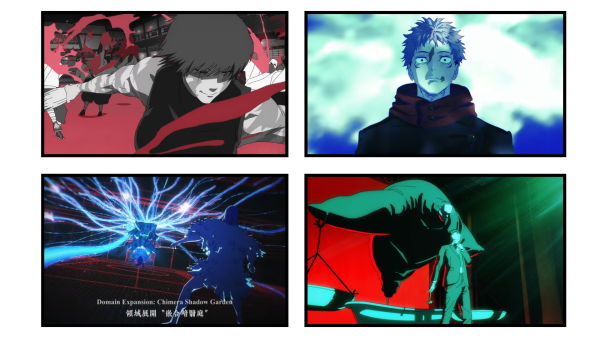
Additionally, the studio takes a bold new creative approach to the season’s animation style. Rather than the very detailed animations we saw in earlier seasons, this season, artists opted for a smoother, simpler form of animation. While this has been faulted by some fans, I believe it works well, especially for a fight-focused anime, which requires smooth fights, often under tight deadlines as well.
Then there is the brilliance of the music and sound design. The chaotic, high-energy opening “AIZO” by King Gnu and the emotional, sorrowful ending “Yoake no Uta” by Jo0ji both hit home. Additionally, the anime soundtrack by Yoshimasu Terui is effective at capturing the atmosphere of the season, emphasizing the emotion of scenes when needed and having plenty of upbeat and high-energy tracks for fights.
Lastly, the show is absolutely stunning in terms of its use of animation. MAPPA’s use of 3D animation, which many studios struggle with, was very well done. It is extremely clean, and you wouldn’t be able to tell the difference between the 3D and 2D segments without looking for it. The animation style is fluid in all details, perfect for a fight-focused anime and is constantly utilizing perspective. My favorite display of this animation expertise occurs in the Yuta vs. the Sendai Colony fight.
In this episode, Yuta Okkutsu, one of the students at Jujutsu High, engaged in a four-way battle with extremely strong characters. The entire episode sparkles with action, with incredible animation the whole time, as well as recognizable references to the original manga art style. Throughout the entire episode, I kept getting more and more surprised at how good it was.
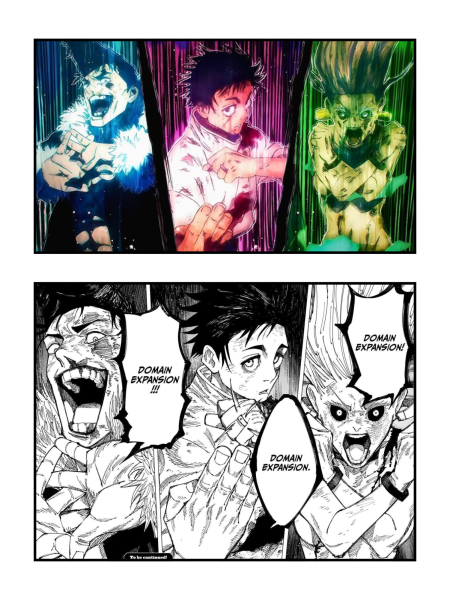
To me, the anime of the show reaches the level of being just about perfect. The season features memorable characters, good storytelling and jaw-dropping action. My only real criticism is with the sometimes too breakneck pacing of the season, even for an adrenaline fan like me. While it made the season very engaging and highly entertaining, it often left me wondering if there was more emotion or depth to some fights from the manga that I missed out on.
Overall, though, I believe this season fulfilled them. Part 2 of “The Culling Game” is scheduled to release in January — until then, I can’t wait to see what MAPPA has in store for diehards like me next.
Rating: 4.5 out of 5 Falcons
