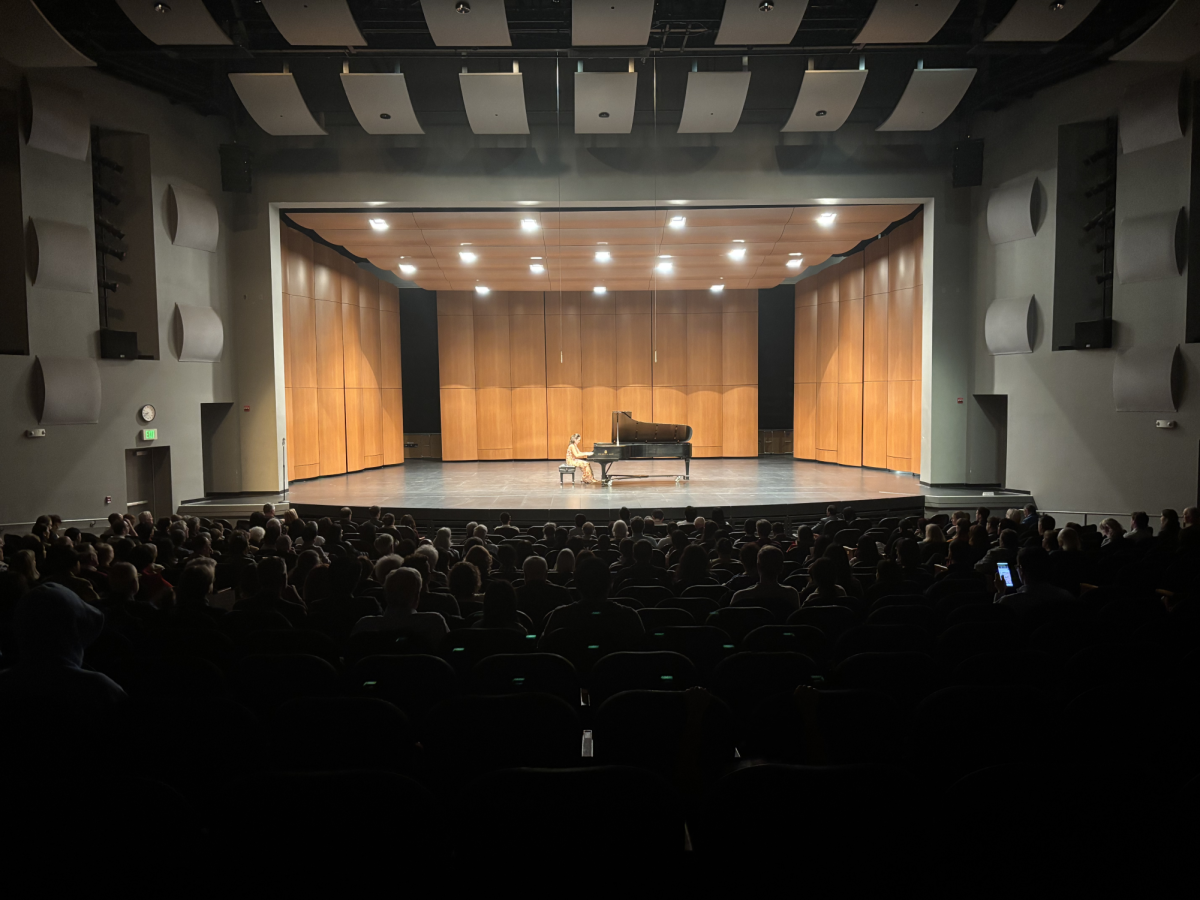











In the spring of 2025, a crowd of parents and students erupted in thunderous applause inside the McAfee Center as music directors Michael Boitz and Jason Shiuan smiled. The two had just finished the kick-off meeting for a multicity tour of Japan that would take place one year later in June 2026. They could already hear the excited whispers as they walked off stage.
Bringing 309 music students — over a third of the school — to a country over 5,000 miles away is no easy task. Very few high schools attempt such major undertakings. In fact, being able to do something like this has taken decades of establishing relationships, hours of rehearsal and a deeply supportive network of students, teachers and families that has given the school’s music department its prestigious reputation — a journey that can be traced all the way back to the 1960s and can be associated with five major and defining moments in the program’s history
- Craig Northrup: musical leader in the community for decades (1972)
When the school opened in 1959 with only sophomores and freshmen on campus, the music department was led by Richard Moyer, who also wrote the Alma Mater song. He centered music around classics, focusing on traditional Western music primarily from the 18th and 19th centuries. There were already multiple musical groups, including an orchestra, a mixed chorus, a dance band, a pep band and a marching band.
More than a decade later, Donald Brand, the principal of the time, hoped to expand the program and asked Craig Northrup, the new hire after Moyer left the school, to create a jazz ensemble and marching band.
Excited to introduce new genres of music to the program, Northrup sought to build a complete music department.
The band program had an enrollment of 125 students in 1972. By the time he left, a decade later, it had 280 students. As enrollment in the music program increased, Northrup helped hire a new music director to share his growing responsibilities and eventually handed over the orchestra and music theory classes entirely. In 1982, his final year as a music director, he taught five classes of band — a contrast to the initial one period of the activity.
During his decade here, Northrup garnered numerous accolades for the music program. The marching band performed at a halftime show for the Oakland Raiders vs. Kansas City Chiefs football game and played the “Star Spangled Banner” at a San Francisco 49ers game.
But among all the achievements, his most pivotal contribution for the community was bringing the department on its first ever international tour to Vienna, Austria, in 1974.
- Community support grows for the department’s first international tour (1974)
In the summer of 1974, 83 band students flew to the International Youth Music Festival in Vienna, Austria.
To finance their trip, the band held fundraisers all over town, from McDonald’s hamburger stands to electronics sales meetings. Count Basie, a renowned jazz musician, even came to the Flint Center at De Anza College and performed alongside the band. With these events, the band was able to raise enough money to go on the trip.
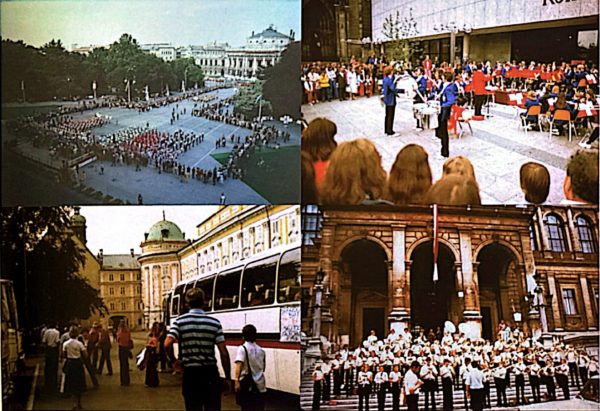
During the 17-day trip, the group competed at the International Youth Music Festival, where they placed first. Then, they performed 10 times on a tour across Europe in countries like Austria and Germany. A recording of their concert at the International Youth Music Festival was even broadcast on Radio Free Europe.
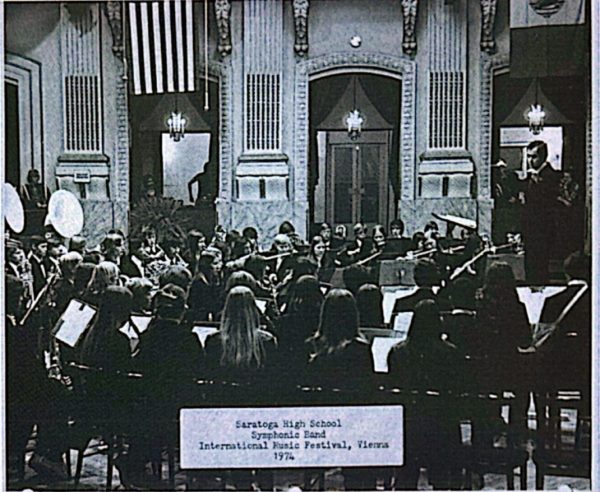
The band members also received congratulatory telegrams from President Richard Nixon and future president Ronald Reagan, the governor of California at the time.
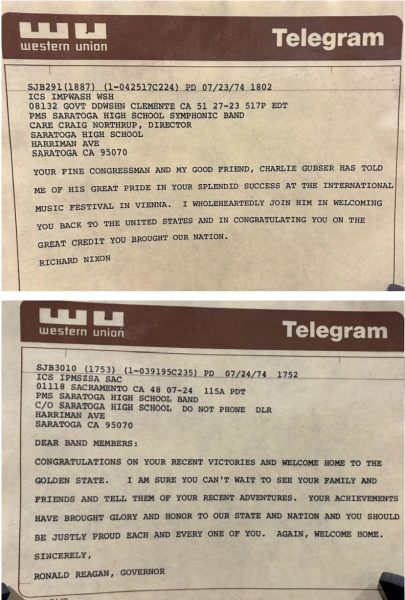
Class of ‘75 alumnus Eddie Mann was the principal trumpet for the band at the time.
“We rehearsed like crazy to make sure that we were note-perfect,” Mann said. “Mr. Northrup really wanted to win; he didn’t want to go there and have the Polish marching band beat us. He wanted us to win this thing, and we did.”
More importantly, though, the trip symbolized a core pillar of music education at the school: community. When the band returned home, a crowd of 250 waited at the San Jose Airport to welcome them.
“The cheerleading team came, other classmates came, and they greeted us at the airport along with their parents,” Mann said. “It was literally one of the greatest memories of my life.”
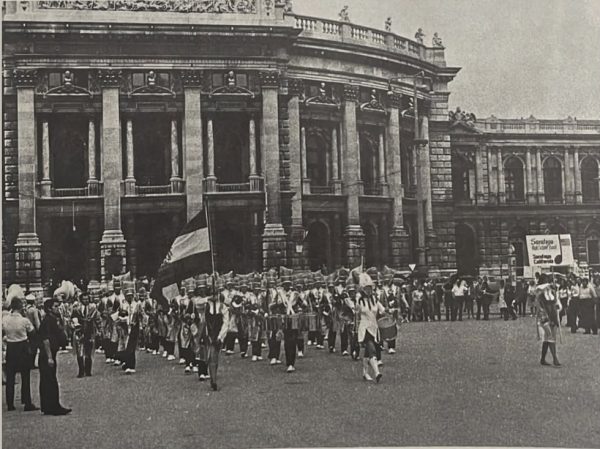
When the band returned to the same festival in 1979, Northrup received an invitation to be the music director for the Vienna International Music Festival, which he accepted.
In the early ‘80s, Northrup decided to leave his role as a music director and focus on his new job, since both promoting and organizing the festival and teaching became overwhelming.
The memory of that trip still lingers.
In September 2024, more than 50 years after the trip, around 20 members of the original band gathered at Wildwood Park for their Class of ‘74 reunion. They reminisced about their time in band, and pictures of newspaper clippings, instrument cases and programs continue to circulate on their Facebook group — a testament to the bond they formed through the program.
During the fundraising process in preparation for the tour, Saratoga Music Boosters (SMB) was founded in 1974 by dedicated parents of the participating students, to help them fund life changing trips like the one to Vienna for their children and future generations of SHS students.
Since then, SMB’s mission has extended to supporting music education in all Saratoga schools by inviting professionals to help with specialized instruments, in addition to purchasing new instruments and music for the students. Moreover, SMB also organizes the annual Cookie Dough and Pancake Breakfast Fundraiser, both of which are beloved community events that attract thousands each year.
- Michael Boitz’s impact on the music department (1998)
Less than 20 years after Northrop’s retirement, the program had fallen on hard times: The once-famous department of the 1970 and 1980s had withered to just 71 students total in marching band and color guard and 11 students in orchestra in the mid-’90s.
“The campus needs a ‘soul,’” Kevin Skelly, the principal at the time, said. “Someone who could help academically proficient students develop a passion in the arts for all levels.”
Boitz began his career teaching both band and orchestra at Minnesota’s Elk River Unified School District. As a part-time employee of the district, he was often tasked with handling the leftover duties other music teachers neglected to do.
Feeling dejected by his first teaching experience, Boitz began searching for a new job in 1997.
While attending the Midwest Clinic (an international music and band educational conference) for his professional development, he spoke with former music director of Palo Alto Unified School District Kay Remsen about job openings in Santa Clara County.
At first, Boitz was hesitant to move to the Bay Area, as Proposition 13, a property measure passed by voters in the ‘70s, had sharply reduced local property tax revenue for California Public Schools, leading to widespread budget cuts in music programs as districts shifted their limited resources to core subjects.
Despite his uncertainty about such a big move, he decided to take the leap. Boitz said he planned to teach music in a Bay Area public high school only for a couple years before pursuing his Doctor of Musical Arts (DMA), and eventually to teach at the collegiate level.
As Boitz was getting ready to prepare for his graduate school auditions, he subsequently submitted his resume to numerous high schools in the Bay Area. Northrup was asked by Skelly to sift through the applications, and Boitz’s application caught his eye.
When Northrop talked to Boitz, he described the school as “a community that reveres education, but lacks a music director to bring the program to its maximum potential.”
Ultimately, he began his 2-year degree in master of music at Northwestern University in tandem with starting his job as a band and orchestra director at SHS in the fall of 1998. For Boitz, this resulted in working full time during the school years, and living in Chicago over the summers — completing the equivalent of a semester of school each summer.
From there, Boitz’s impact only grew exponentially. In 2001, he was honored with the Saratoga-Los Gatos Teacher of the Year Award, and in 2013, he was named the music educator of the year by California Music Educators Association.
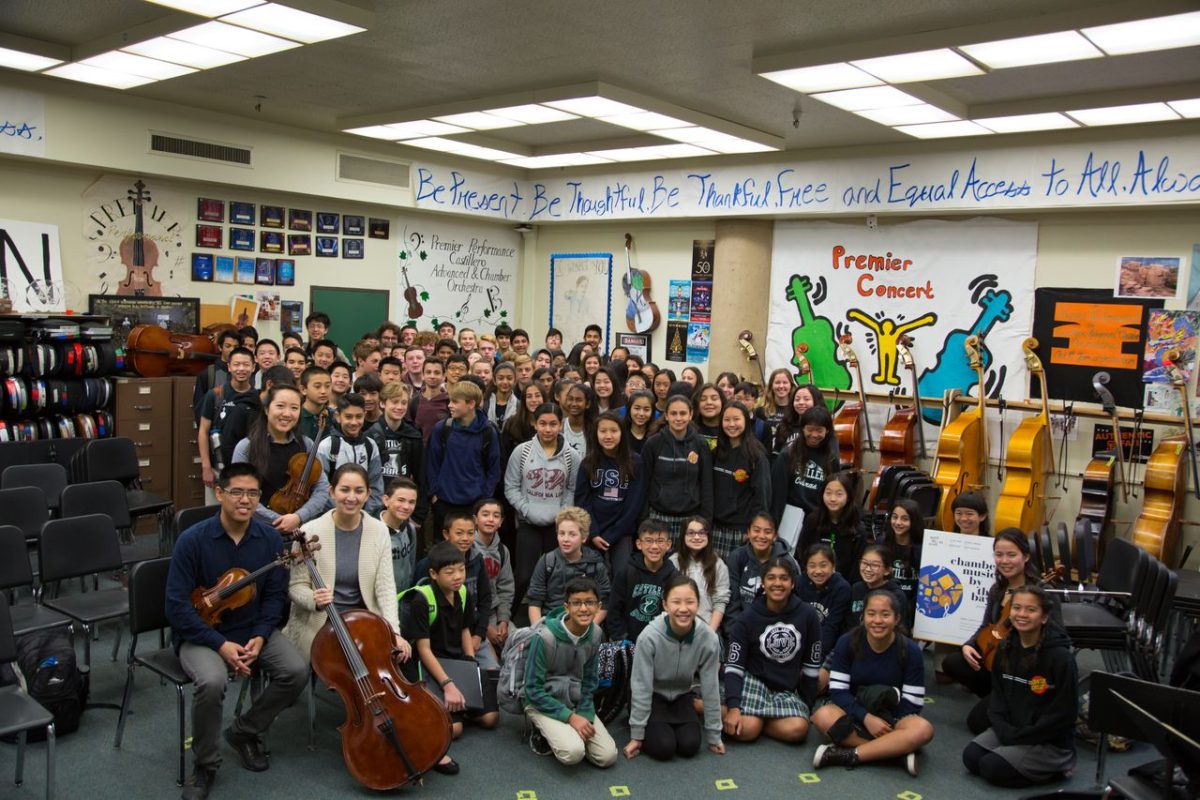
And, inspired by Boitz’s teachings, several of his students went on, and continue, into pursuing a music degree, becoming a music educator, or joining the professional music industry. Most notably, Shiuan (Class of ‘11) assumed the position of Performing Arts Department Chair and Director of Bands at Saratoga High in 2018. Other names include: Jessica Chang (Class of ‘04) is a chamber musician and Executive Director of Chamber Music By the Bay that annually hosts a one week residency at SHS; Jaewoo Lee (Class of ‘17) is the second trombone of the Toledo Symphony Orchestra; Jamie An (Class of ‘18) is now the assistant principal cello with the Baltimore Symphony Orchestra; Thomas Lim (Class of ‘19) is a soloist and often performs with chamber ensembles in the Boston area.
- The department performs at the Macy’s Thanksgiving Day Parade (2012)
Despite funding and leadership challenges throughout the years, the spirit of the young musicians was never lost. Through local performance opportunities and Boitz’s enthusiasm and leadership, the department was reinvigorated and grew to be one of the most respected ensembles in the nation again.
The groups participated in the California Music Educators Association (CMEA) festivals, which serve as a litmus test for how good an orchestra or band program is, and consistently received the highest score.
“When [the school administrators] went to see me in the CMEA festival each year, I would be asked, ‘What did you get? What was the rating?’” Boitz said. “The expectation — even during my first year— was that I needed to get a unanimous superior.”
In addition to annual local festivals like the Homestead Orchestra Festival and the San Francisco Music Festival, Boitz began to look into other performance opportunities nationally and set his sights on the Macy’s Thanksgiving Day Parade in 2012.
The group first had to audition by sending in an application including information about the program’s directors, a list of their accomplishments and recordings of their performances. They were accepted on their first try, something Boitz had not expected. The band was one of 11 selected nationwide.
They then traveled to New York to take part in the Parade. The 230 members of the SHS Marching Band and Color Guard marched three miles from Central Park West, down Sixth Avenue and ended their parade on the Macy Star at Macy’s Herald Square. Their segment was performed in front of an audience of 3 million and televised to 50 million. The trip to New York was not just a performing opportunity, but also a learning one, as the group visited the historic 9/11 Memorial and the Metropolitan Museum of Art.
While the march at the Macy’s Parade marked a significant milestone for the band, it represents just one chapter in the program’s long history of prestigious performances.
The orchestra also performed in venues like the Sydney Opera House and Carnegie Hall. Encouraged by the CMEA judges, Boitz decided to apply for the Midwest Clinic in 2014 — the same place he had originally learned about SHS. It was a full circle moment attending the conference as a director, leading one of the premier orchestra ensembles in the country.
“Never in a million years did I think I’d be teaching a group that had the opportunity to apply for that,” Boitz said. “Honestly, I thought it was untouchable. I didn’t think we’d ever be in a position to do it.”
The program went on to be accepted to the Midwest Clinic three more times: Orchestra in 2018 and 2023, and Percussion in 2024.
This time also marked a significant growth in the size of the music department. The marching band went from roughly 25 musicians in the ‘60s, 40 musicians in 1997 to over 200 by 2014. Similarly, the orchestra went from 25 musicians in the ‘60s to about 150 musicians by 2014.
Today, banners from both the Macy’s Thanksgiving Day Parade and the Midwest Clinic are hung on the walls of the music building — a reminder of the continued growth of the program over the years.
- The new music building (2017)
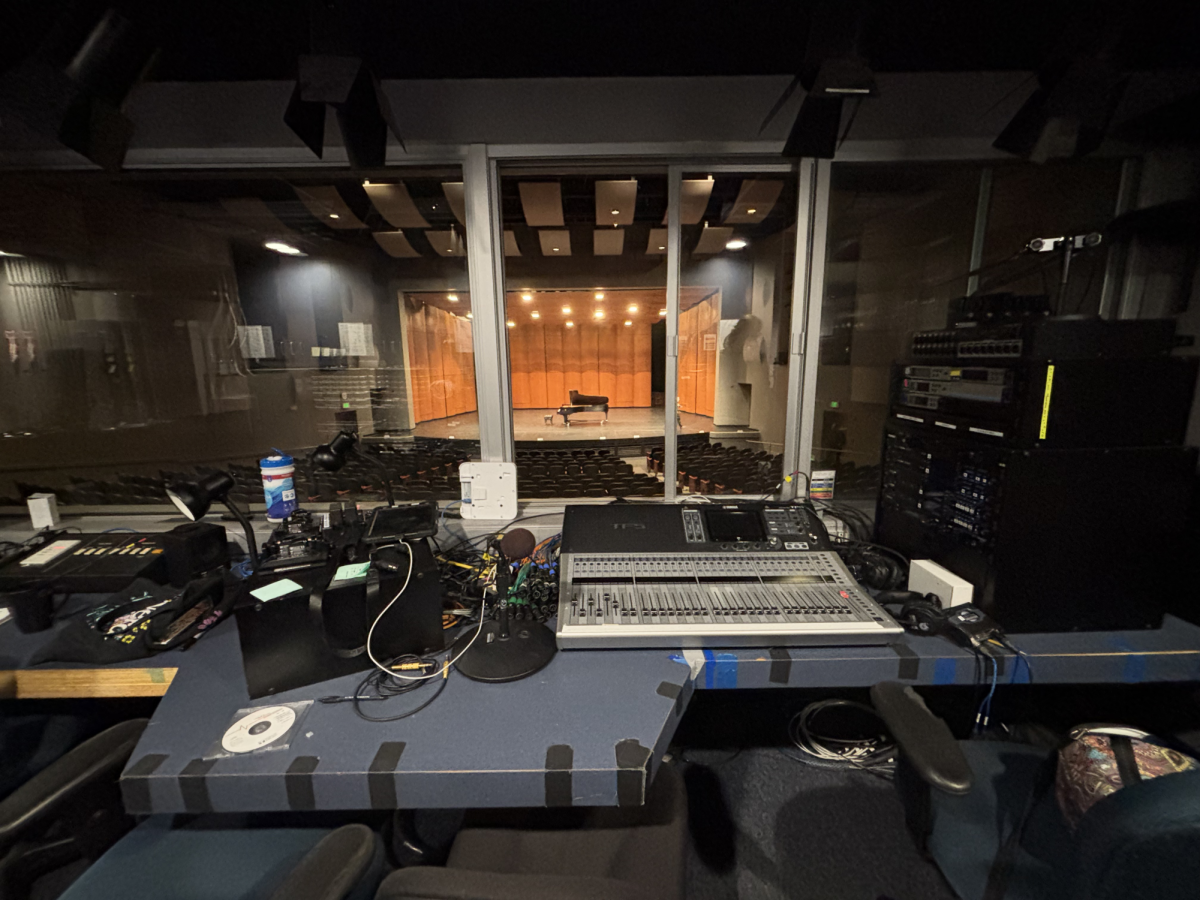
In the ‘60s and ‘70s, band and orchestra classes were held in the school cafeteria. Later, music education moved to what is now the Media Arts Annex near the science wing. Before the new music building’s grand opening in 2017, instruction primarily took place there.
However, as the program grew, they began experiencing problems with storage. Hundreds of brass, string and wind instruments filled the annex. Spillover overtook the nearby buildings, including the restroom adjacent to the engineering lab, the English palace and the present day student center.
“It was all over the place,” Boitz said. “We were in six different buildings for class and storage.”
The district was reluctant to offer the music program a new music building, as it was estimated to cost over $10 million to construct. However, on a rainy day, Class of ’15 oboist and percussionist Katie McLaughlin captured a video showing rainwater leaking into one of the percussion rooms, and district leadership eventually saw the necessity of finding a way to fund the new building and it was part of the reasons offered for the Measure E bond campaign.
Although the building had been approved, planning the process was another struggle entirely.
Boitz and Jonathan Pwu (a former SHS student who was a band director from 2012-2016) had to inventory everything necessary for the building — from music stands to method books — and the notes were eventually compiled across 12 binders. With the help of friend Thang Do, the architect of James Logan High School’s music building, Boitz submitted 20 copies of the inventory relevant to the music building at the board meeting to be officially approved for the construction of the building.
The construction began under the assumption that the faculty would remain a single-story building. But, realizing there wasn’t enough ground space to fit the necessary facilities, the architects quickly shifted their design to making a two-story building.
Boitz was determined to make the building simple and functional. With a tight footprint and hundreds of people and instruments in the building, a design maximizing the usage of space was necessary.
“[The architects] wanted to create this beautiful, grand entrance to the music building to make it very aesthetic,” Boitz said. “And I was like, we have a lot of stuff. We have so many instruments. We have a lot of human beings. There’s different seasons, different instruments. I just needed it to function.”
While the interior furniture and instruments were financed by SMB, the physical music building was funded entirely by Measure E, a $99 million bond to fund changes for school facilities. The construction of the 22,000 square foot facility was finished in 2017; it was a 5-year process that cost $13.7 million.
Looking to the future
No matter how much the music department changes through time, what will always remain is the legacy these five moments have left on the community — and the bonds it helped form.
“Everything is based upon relationships. The only reason we have this building, or any of our other accomplishments, is because of other people, not just because of me,” Boitz said.
Boitz is also looking toward new tour experiences and locations, including Korea, Slovenia and Italy, and combining the music tour with the World Language department’s annual trip to Spain and France.
“What happens in the classroom is important but it’s also really fun for kids to have projects to work towards, like performing at Midwest Clinic or in Japan,” Boitz said. “We’re not just learning because we want to have a more complete musical vernacular. We’re doing it because we’re actually going to take it somewhere and put it into practice.”