




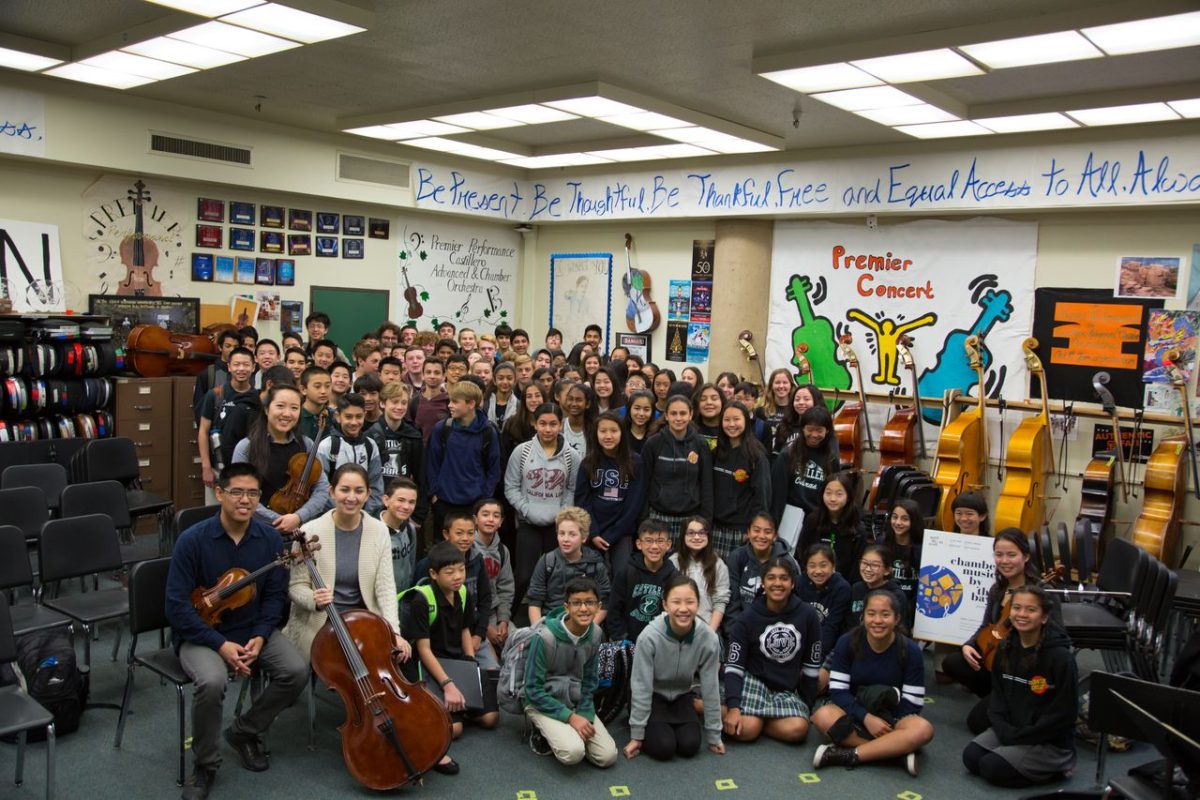
















This summer, the largest-ever group of SHS student musicians — 283 — will tour Japan for the first time in school history.
Altogether, the trip will include 512 travelers: 27 additional performers from Lynbrook High’s choir, 27 chaperones, 16 staff members and a shadow tour of parents, family and friends making up the remainder of the group.
As students prepare to depart for Japan, few of them probably realize that the trip has been more than 15 years in the making. In fact, the idea originated in 2011, according to longtime musical director Michael Boitz.
Boitz visited Japan in 2012 to put together a tour and to participate in the country’s summer music events. However, due to various factors, including an unfavorable exchange rate, the pandemic and lack of prior district approval, the department-wide trip was postponed for more than a decade.
Now, that wait is finally over.
On June 9, the 283 student musicians, including 27 from Lynbrook High’s choir department, will depart for Japan and spend 15 days visiting the popular destination. The partnership with Lynbrook can be attributed to the desire to create a more balanced instrumentation.
“For any ensemble to be successful, you must have a great balance of soprano, alto, tenor, and bass voices,” Boitz said. “Supplementing the choir with 27 more voices from Lynbrook creates an ideal balance, and a greater opportunity for the choir students to be received well among exclusive performances and exchanges.
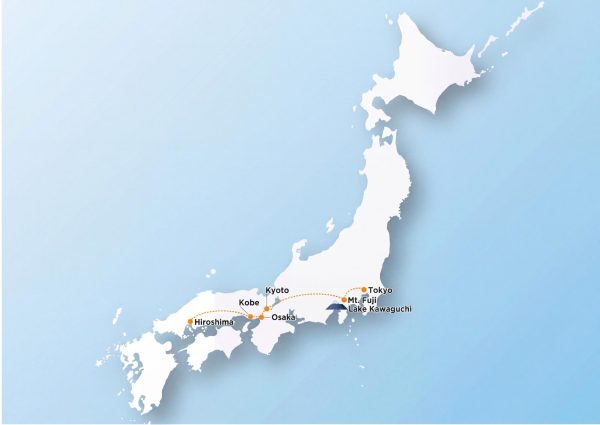
The travelers will visit sites like Tokyo, Mt. Fuji, Kyoto, Kobe and Hiroshima; in addition to popular points of attraction, they also will be taken to varying historical memorials, including the atomic bomb memorial.
Courtesy of BMC Tours
The music department will travel to six cities over 13 days.
In addition to performing at the prestigious Mount Fuji Music Festival, the musicians will perform “friendship concerts” alongside local high school orchestras throughout Tokyo, Kyoto, Kobe and Hiroshima, aimed at sharing culture.
Securing a spot at the festival was a rigorous process. According to Boitz, the music department had to send recordings, a biography of past accomplishments and complete an application. The group earned its spot by sending a list of awards and performances from each ensemble, along with video and audio recordings.
One of the main reasons the music department chose Japan as its destination is its rich, youthful music culture. Japan offers more than 5,000 public concert halls and 1,600 orchestras, mostly amateur and school ensembles. Assuming an average of 60-80 members per orchestra, more than 100,000 Japanese people are actively involved in bands or orchestras in some way.
The persistent musical scene in the country made Japan the perfect destination for a cultural exchange tour, Boitz said.
“The student exchanges to us are really important, because we want the students to have a chance to meet students from Japan and be there during the school day, so they get a chance to really absorb the culture and meet people,” he said.
Japan’s unique history and tradition also guarantee a rich cultural immersion experience. During the two weeks, students will visit a variety of iconic and historic sites, including Mt. Fuji, Asakusa, Arashiyama and Kobe Harborland.
Students will get the chance to dive deep into the celebrated culture of the country — everything from riding the silent bullet trains to experiencing the escalator etiquette that operates like clockwork in daily commuter life.
“It’s just fascinating to witness the high level of function, organization and courtesy [in Japan],” Boitz said.

To prepare students for the vast cultural differences between Japan and America, the music department engaged students in a series of activities last November — including lectures on Japanese culture, learning conversational Japanese and watching anime movies.
The music department is also working on an etiquette list to ensure that students respect local customs and traditions. For example, the Japanese don’t wear outdoor shoes inside the classroom — a stark contrast to customs here. Another conflict is eating while walking, which is all-too-common among busy American high school students on a frenzied campus.
“When you’re visiting another country, you want to try to be as respectful as possible to the culture and not be an obnoxious foreigner,” Boitz said. “Our goal is to help students be ambassadors.”
Moving hundreds of teenagers — including students from both schools — across the country presents massive logistical challenges, with bus schedules and hotel assignments leaving little room for error in the tour.
But following the current conflict with Iran, a major hurdle emerged — a new fuel surcharge imposed on airlines due rising jet fuel cost resulting from tensions in the Strait of Hormuz.
Fortunately, department leaders are prepared this time thanks to the lessons they learned from the 2003 summer tour. Shortly after the U.S. invasion of Iraq in March 2003, airlines imposed fuel surcharges, resulting in an additional $500 charge per person.
Since then, the department has always built in a financial cushion when planning a tour, meaning they budget conservatively to cover potential price increases. The current expenses total approximately $2.9 million, with contributions averaging about $5,800 per student to help cover travel, lodging, meals and other costs.
Any amount not spent directly on the tour is returned to all travelers in cash as “meal money.” The department will be able to use the buffer expense to reduce the impact of the airline fuel surcharge this year.
Instruments can also create complications in flight and bus commutes. As a result, Boitz plans to rent instruments from Japanese vendors for most students, excluding some who have indicated they want to bring their own instruments on the tour.
“We always brought [instruments] from home and traveled with them, but in 2022 it was such a disappointment — the airlines were just out of control,” Boitz said, referring to how many instrument cases were damaged during the Europe tour. “We’re keeping our fingers crossed that [the rentals] are good quality instruments.”
In terms of music preparation, the music department has had afterschool rehearsals weekly that alternate between one hour on Tuesdays and Thursdays and two hours on Wednesdays. Additionally, students have attended tutorial rehearsals throughout the school year to ramp up their preparation for the music festivals.
The music for each ensemble is handpicked by the directors. For example, Aaron Copeland’s “Appalachian Spring” serves as the perfect American soundscape and is selected for the Saratoga String Orchestra (SSO) tour ensemble. Not only is Copeland’s piece indicative of America, providing the essence of American culture, it also happens to be the piece requested by the director of the Mt. Fuji festival.
Additionally, the music department features two pianists — seniors Justin Jiang and Esad Melikzade — playing Johannes Brahms’ Piano Quartet No. 1 in G minor, Op. 25 adapted into a concerto for piano four-hands and string orchestra. “Appalachian Spring” also features senior harpist Julia Cheng as a unique voice in the orchestral suite.
“In choosing repertoire, we always want to maximize the opportunity for the graduating class to perform rewarding music before they leave our program,” Boitz said.
The final piece — an orchestral adaptation of a theme from the 1978 anime “Galaxy Express 999” — was a personal request from music office technician Takako Hasegawa, whose connection to her Japanese heritage made the selection especially meaningful.
“It’s one thing to play our orchestra rep in the music building, but getting to share our music and connect with students halfway across the world will be really exciting,” junior violist Maahi Agarwal said.
As the countdown begins, student excitement across all three departments of music grows daily; but beyond the planned itinerary, Boitz hinted at additional experiences awaiting students abroad.
“There are some little surprises along the trip,” Boitz said, “but I don’t want to give it away now.”

