



















Courtesy of Sony Pictures
Ryan Gosling’s acting is a major highlight of the movie.Editor’s Note: Minor spoilers for “Project Hail Mary.”
“Project Hail Mary,” one of the most anticipated movie adaptations of the year, wowed the crowd with its high production quality and a unique interpretation of events that give it a slightly different spirit from the book. After releasing its domestic debut on March 20, the film has grossed $638,401,805 worldwide, far exceeding its budget of $200 million and has received overwhelmingly positive reviews.
The movie’s theatrical run was extended past the usual 45 day window due to high demand, but is now available for streaming.
The movie follows Ryland Grace, portrayed by Ryan Gosling, an astronaut who wakes up in space with no memory of who he is or why he is nearly 12 light years away from Earth.
Grace slowly regains his memories as he explores his surroundings; he finds out that he used to be a middle school science teacher before being recruited as a part of a mission to save Earth from the “Astrophage,” an organism that is eating away at the Sun’s light. During his journey to return back to Earth, he meets an unlikely companion in the wide expanse of outer space: an alien, whom Grace names Rocky, voiced by James Ortiz, whose planet faces the same predicament.
I read the 2021 novel by Andy Weir in middle school and enjoyed it, so I watched the movie with high expectations. It did not disappoint.
Both Grace and Rocky’s appearances and mannerisms in the film are all extremely accurate to the book. Gosling’s ability to portray Ryland’s emotions — like hope, despair and loneliness — allow the plot to feel much more meaningful and engaging. One of the memorable scenes occurs when Grace awakes from his coma, with Gosling’s acting making his character’s confusion seem real.
Since the book does not describe the settings of the story in much detail, the filmmakers had to take certain creative liberties with the appearance of the setting, including those of the different planets and spaceships. Despite this challenge, they did a fantastic job, as there were many well-executed, interesting shots of the setting that enhanced the film and made it seem more realistic. One particular sequence during Grace and Rocky’s attempt to collect a sample of Taumoeba — a predator of Astrophage — featured wide, sweeping shots of outer space, showing just how isolated they really were and emphasizing the consequences if they were to fail.
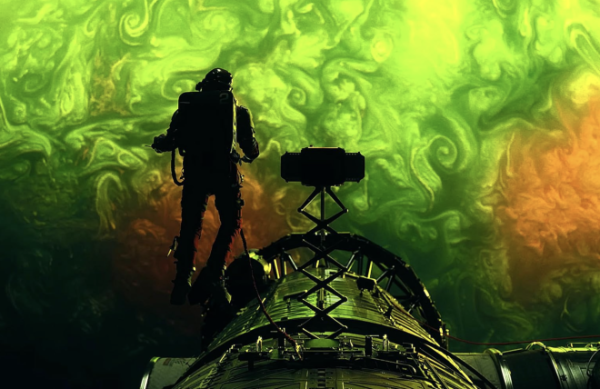
The distance between the pair and any other sentient forms of life — both Rocky and Grace’s fellow crewmates had died — causes a close bond to form between them. Rocky’s quirky personality and sense of humor is the same as it is in the novel, which I appreciated, while his expressive body language — a creative liberty taken by the directors — gives some additional dimensions to his character since he didn’t have facial expressions. Rocky’s friendship with Grace is also demonstrated quite creatively through Grace’s video diaries, which were not a part of the original novel.
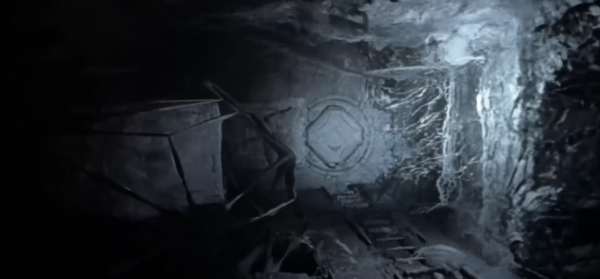
Another element of the film that I appreciated is the visualization of Rocky’s “sight.” Because Rocky has no eyes, he relies on echolocation to navigate the world around him. Throughout the movie, the audience is able to experience how Rocky perceived things by interpreting light waves as grainy, textured and slightly distorted visuals.
These shots make the film much more immersive and are also similar to the movement of grains of sand on a chladni plate — which were used in a science lesson that Grace had taught in one of his flashbacks.
However, since the novel is told from a first-person perspective with an internal monologue, the film does not have as much of an emphasis on Grace’s thoughts. And, certain plot points were tweaked or omitted to fit the film’s narrative better.
In addition, many technical aspects of the book are not included in the movie, most likely to prevent the running time from being too long.
This meant that Grace’s scientific prowess was not really demonstrated, making him seem more like an average science teacher rather than a talented physicist who was qualified to be on the mission of saving Earth. Additionally, some parts of the story were slightly easier to understand for those who have read the book than those watching the movie without knowing the plot, due to much of Grace’s scientific work happening offscreen.
The movie’s tone also deviated from the novel, though the difference did not take away from the enjoyability of the film. The book has a bigger focus on the seriousness of Grace’s situation, while the movie focuses on Grace and Rocky’s friendship, making the overall tone more light-hearted.
Though there are a few extremely minor inconsistencies, the film’s visuals, soundtrack and perfect casting are out of this world. If you enjoyed the book or are a sci-fi movie fan who is looking for a feel-good movie, this one is for you.
Rating: 4.5 out of 5 Falcons
