




Courtesy of Daps Magic
Yang on the red carpet during the premiere of the live-action adaptation of “American Born Chinese.”Last October, the school honored seven people in the re-established Saratoga High Hall of Fame.
Among the honorees was Class of ‘91 alumnus Gene Luen Yang, who is best known for his best-selling and critically acclaimed graphic novels such as “American Born Chinese” (2006) and “Dragon Hoops” (2020). He has also written and illustrated comics in the “Avatar” and “Superman” franchises and been one of the premiere creators in the comic industry in the past two decades.
Yang’s journey to the top of this industry began in fifth grade and was significantly shaped by his years at Saratoga High.
Yang remembers opening the DC Presents #57 Comic at about age 10 and falling in love with everything about it. The flashy cartoon drawings and the ability to tell a story through pictures instantly entranced him. From that point on, Yang said he took every opportunity to bury himself in the world of comic books as both a writer and illustrator. Now, 52-year-old Yang writes and illustrates comics and graphic novels full time for a living.
Yang’s journey to success
He started as a part-time cartoonist while working as a full-time computer science teacher at Bishop O’Dowd High School in Oakland starting in the late 1990s. His earliest comics were self-published — he self-published them and then sold them at local shops and conventions such as WonderCon, San Diego Comic-Con and Eastwind Books.
Eventually in 2004, his comic “Gordon Yamamoto and The King of Geeks” caught the attention of SLG Publishing, a publisher located in San Jose.
Around the same time, Yang was introduced to Mark Siegel, an editor at First Second Books, the largest publisher in the U.S. After the editor looked at his work, he signed Yang. Signing with a publisher allowed him to distribute his books globally while also gaining credibility in the industry.
Yang’s career was truly kickstarted, though, in 2006 by the publication of his groundbreaking graphic novel “American Born Chinese.”
When Yang was writing the graphic novel, he came up with three storylines that ended up intertwining; most originated from his own memories and struggles with grappling with his identity.
The first plot-line was “The Monkey King,” a Chinese folktale that he heard as a kid. The second was a Chinese American boy growing up in a predominantly White neighborhood — a mirror of his own experiences in Saratoga. And last was the story of a popular white teenager with a stereotypical Chinese cousin.
Since Yang couldn’t decide which one to use, he combined them into a single story.
“The interweaving of those three worlds reflects what it’s like to be an immigrant’s kid, since we feel like we live in one world at home, and we feel like we live in another world at school,” Yang said. “That was the hope for ‘American Born Chinese.’”
Besides gaining popular success, it was the first graphic novel to be nominated for the National Book Award in 2006. It also won the Michael L Printz award from the American Library Association and the Eisner Award for best graphic novel, even becoming a part of the curriculums in schools around the world.
In 2023, the novel was turned into an 8-episode show on Disney+.
“It was surreal. I never imagined that a comic I made would be nominated for something like the National Book Award,” Yang said.
In 2013, he released “Boxers and Saints,” a 2-volume graphic novel about the Boxer Rebellion in China. In 2020, he released “Dragon Hoops,” a graphic novel about the basketball team at Bishop O’Dowd.
“Being Chinese-American and Catholic ends up in my stories again and again, since those are two worlds that I know really well,” Yang said. “Stories are about characters working through conflict, so looking at the conflicts of our lives is a great place to start a story.”
Alongside his original graphic novels, Yang partook in numerous career-shaping freelance comic opportunities, including working with DC comics and Nickelodeon.
These projects have also given Yang an opportunity to collaborate with other artists alike, with many of his popular franchises, like Teenage Mutant Ninja Turtles, with artist Freddie E. Williams II.
When the Avatar: The Last Airbender (ATLA) live action movie was released in 2010, Yang remembered being excited to watch the film until he discovered that the cast of the movie was almost entirely white.
“I was mad about it, and I ended up writing and drawing a two-page comic expressing how I felt,” Yang said. “I posted the comic on the internet and it got a lot of traction.”
A couple years later, when Dark Horse Comics acquired the license from Nickelodeon to write ATLA comics, an editor read Yang’s comic as well as some of his other works and offered him the chance to write the comics. Yang has written five ATLA comics, the last one in 2022.
In 2014, while Yang was still working on the ATLA series, DC Comics reached out to his agent and asked him to write Superman comics.
“The very first comic in my collection was a Superman comic, so that felt like an opportunity that I couldn’t pass up,” Yang said.
As the years went on, Yang was hired to write and illustrate Superman comics such as 2020’s “Superman Smashes the Klan,” as well as branching out to other heroes in the DC universe, including such as “The Terrifics,” “Shang-Chi” and “Monkey Prince.” Currently, Yang writes the monthly series for the “Teenage Mutant Ninja Turtles.” Through the various graphic novels Yang has written, he always finds himself to be most passionate about his current work.
In 2017, he was able to stop working as a teacher and devote himself exclusively to his art and writing.
“The vast majority of creative people have day jobs since making money in the arts is really difficult,” Yang said. “For myself and most of the people I’ve spoken with, it takes about ten years to refine your craft and make the connections you need.”
Growing up in Saratoga
In first grade, Yang moved from San Jose to Saratoga and attended Blue Hills Elementary School, which is part of the Cupertino Union School District. Inspired by classic Disney animations such as Pinocchio, Jungle Book, The Fox and the Hound and Fantasia, he decided that he wanted to become an animator in the future.
“I started drawing when I was two years old, and I basically never stopped,” Yang said. “At some point, I figured out that the animated shows I saw on TV were just drawings telling me a story.”
Yang recalls making his first comic book, “The Hunter,” with a friend in fifth grade. It was about a superhero who dresses in all green and lives in the woods.
Besides drawing, Yang pursued other interests. The summer before middle school, he learned how to code at a summer school program and took those skills into high school. Along the way, Yang faced parental pressure to conform to a more traditional career path.
“My dad, especially, was not very approving of me pursuing anything artistic,” Yang said. “He really wanted me to be a doctor or a lawyer or an engineer. And that is another reason why I chose to major in Computer Science and became a programmer for a little bit after college.”
Yang took coding classes at Saratoga High. When he took AP Computer Science A, he said his teacher Cary Matsuoka helped him fall in love with programming. Once Yang became a computer science teacher, Matsuoka continued to provide support to him. Matsuoka went on to become the district’s superintendent for a period of time and later left the district in 2011.
Although he found enjoyment in programming, Yang experienced internal conflict. He knew his true passion lay in drawing. Nevertheless, he chose to follow his parents’ guidance following college at UC Berkeley.
During Yang’s time at SHS, Asians were a minority in the area, with the Asian population being 4.6% in Saratoga at the time. Because of this, he also struggled with his identity as Chinese-American.
“There were feelings of not fitting in that came with being a teenager, and being a minority,” Yang said. “A lot of the emotional realities that I was working through when I was going through SHS ended up in my books.”
For example, Jin Wang, the main character in “American Born Chinese,” was heavily inspired by his experiences facing racial alienation at SHS.
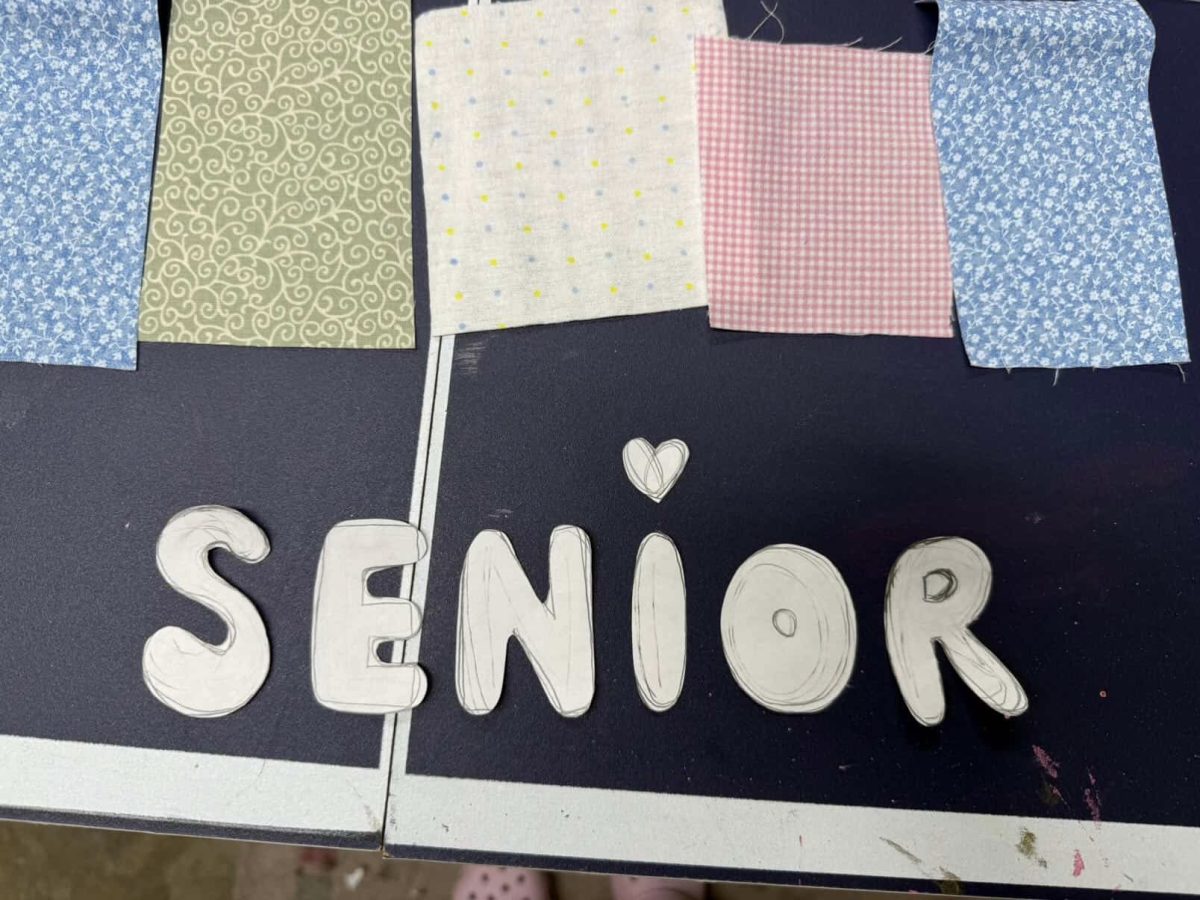
Even though he occasionally felt uncertain about his future career path, Yang still embraced his creative side in high school by joining a writing club, drawing comics in his free time and designing his senior class T-shirt.
Yang’s journey to becoming a cartoonist
While Yang graduated with a degree in computer science from UC Berkeley in 1995, he spent time there reflecting on his identity and finding his sense of self. As a child, Yang attended church regularly, but he felt his religion had been imposed on him by his parents.
“In college, I had late-night conversations with my dorm mates about God, religion and the meaning of life,” Yang said. “I started exploring, and that was when faith became something that I chose for myself.”
Yang also minored in creative writing, which ultimately ended up being more relevant to his current occupation. Yang also discovered that all his interests overlapped in significant ways.
“Computer science is not just learning how to code: It’s learning how to take abstract ideas and break them down into concrete pieces,” Yang said. “Essentially, in cartooning, you’re taking an abstract idea that you have in your head, and then you’re bringing it down into concrete sentences or comical panels.”
Although computer science connects to Yang’s artistic pursuit, his journey to becoming a cartoonist wasn’t overnight. Rather, he said it was a product of years of hard work and juggling his budding computer science teaching career with his passion for art.
When Yang graduated from Berkeley in 1995, the comic book industry was at a low point. Major publishers like Marvel were near bankruptcy, selling film rights for iconic characters such as Spider-Man for cheap. Despite the failing industry, Yang still had belief in it.
“Comics were more than a hobby for me, so I wanted to keep [drawing and writing],” Yang said. “I wanted to be serious about comics, but I just didn’t think I could feed myself doing it.”
His first job after graduating from college was as a programmer for a startup called Videosoft. Although the job was stable, Yang said he disliked working in a cubicle and spending his time in front of a screen for hours on end. Knowing this path wasn’t for him, he quit after a couple of years.
It was only when Yang went on a 5-day silent retreat during his early 20s at St. Clare’s Retreat Center that he decided his life needed a change. The retreat was intended to help adults discover their purpose in life, and it was a search Yang chose to take part in. During the retreat, Yang said he gained a truer sense of his life’s purpose.
“The retreat was a good but difficult experience. It was hard to be silent for five days, but my mind became clear,” Yang said.
He made a decision to start taking comics seriously instead of just treating it like a hobby, and he quit his office job to pursue his childhood passion.
However, due to the instability of being a freelancer, Yang decided to get a more stable job that allowed him to write comics while still being able to balance work. That’s why teaching seemed like such a good fit.
Yang’s Bay Area ties are strong
Yang still lives in the Bay Area along with his family. Besides his work, he is married and the father of four kids.
And despite his career shift into the arts, Yang still hasn’t lost his love for STEM subjects. He taught the basics of programming to one of his kids and continues forging connections between his two passions.
“I think art and science can coexist. You can love both, and you can allow one to inform the other,” Yang said. “There are lots of different communities beyond Saratoga, and there are many different ways in which people live and make their living. I think it’s all worth exploring.”

