
























Today’s teens average screen times of more than 5 hours a day on social media alone, according to the American Psychological Association.
I am one of those teens who struggles with social media addiction. So I decided to quit cold turkey for a week and see what would happen.
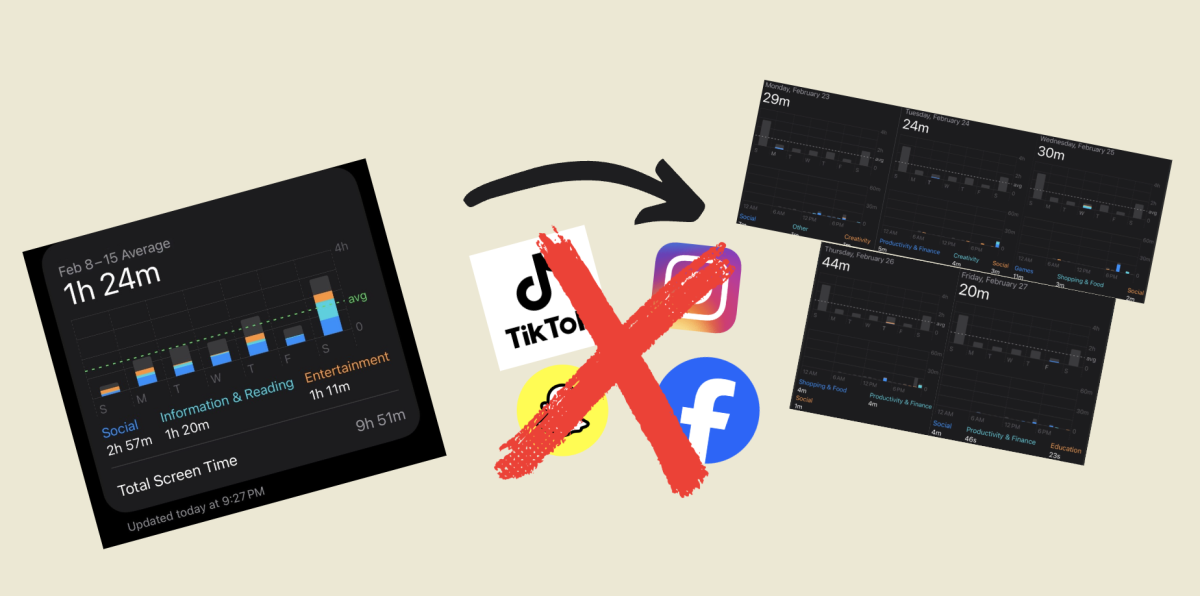
To get really scientific, I decided to choose a random week from the year — Feb. 23 to March 1 — as my “control” screen time.
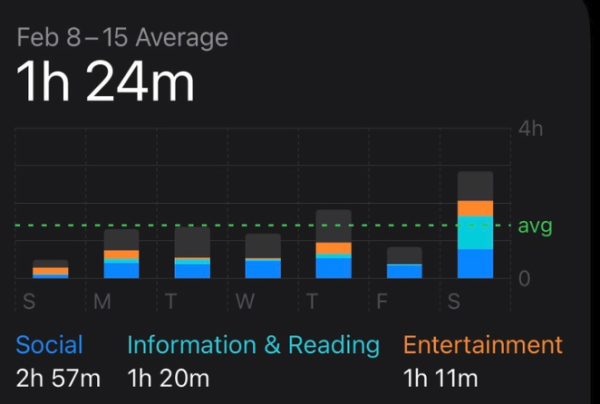
My screen time on social media apps per weekday is around 1.5 hours, with the most time spent on TikTok and Instagram. On weekends, I spend closer to two hours a day on my phone. Social media takes up the bulk of my screen time, and I only use other apps like Gmail or Spotify for 5-10 minutes a day.
To prevent myself from going on social media during this challenge, which began on Feb. 23, I had my friend Ryan Hsueh create a screen time limit for my phone and disable all of my social media apps.
On the first day, I was still adjusting to the new changes. Usually, I open TikTok or Instagram to get a quick rush of dopamine if I have nothing to do.
Even with the screen time limit, I still instinctively opened these apps as a habit, only to realize that they were blocked. When bored, I just sat and did nothing, which was difficult during the first few days. I even experienced “withdrawals” and struggled to sit still. I think that the drastic change made me physically uncomfortable, beyond just being bored more often.
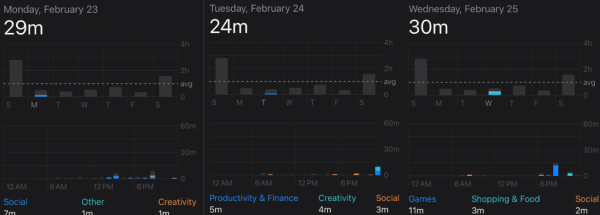
A few days into the week, I began to adjust a bit more. I noticed that my screen time had dropped even more than before, as I almost had no reason to go on my phone except to check my email or look at my schoolwork on Canvas.
Instead of being a distraction, my phone became a tool for my work. I only used it for important things like responding to emails or checking assignments that were more convenient to do on a mobile device.
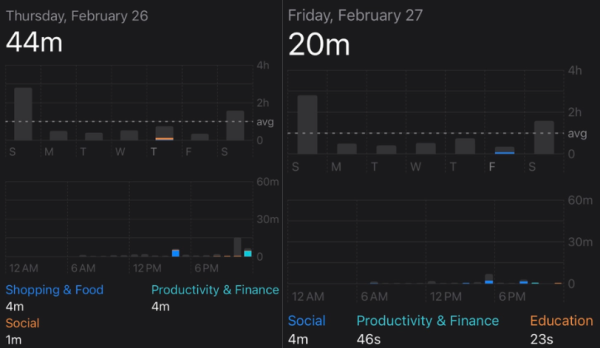
Around Day 4 or 5 mark, I started to become more productive. When doing homework, I didn’t get distracted and go on hour-long scrolling sprees as I might’ve before the challenge.
Since I was a lot more efficient with my homework, I also noticed that I started going to sleep earlier. The extra few hours of sleep helped me stay energized for classes the next day, which helped me learn the material a lot better.
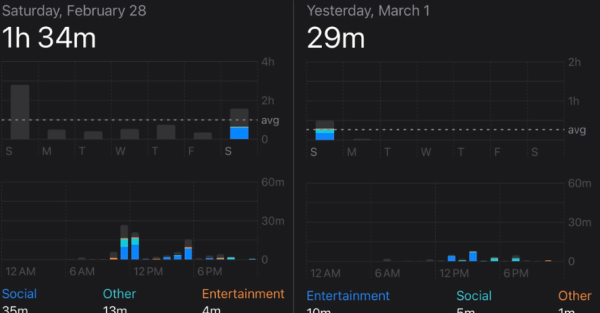
By the end of the week, I was used to life without access to social media and didn’t feel as uncomfortable as when the challenge started. No social media had become the norm for me.
Not using social media had a considerable impact on my mental health. Before, I experienced more emotional spikes and became easily frustrated with trivial things like stubbing my toe, but with the absence of social media, my mood became a lot calmer.
After the end of the week, I finally unblocked social media on my phone. The lack of social media for a week had made me accustomed to not using my phone.
During boring car rides, instead of scrolling through TikTok, I had grown used to looking out the window and appreciating the view.
After the experiment, I didn’t find myself using social media as often as I did before starting this challenge, which helped me build up a lot more positive habits. Now, my phone screen time is only half an hour with 15 minutes spent on social media apps.
My conclusion: This experiment was a great success. Not having social media boosted my productivity and helped me pursue healthier habits. Now, though I don’t have any restrictions on my phone, this experiment has led me to become a lot less addicted to my phone and a lot more focused.
