















Courtesy of Reuters
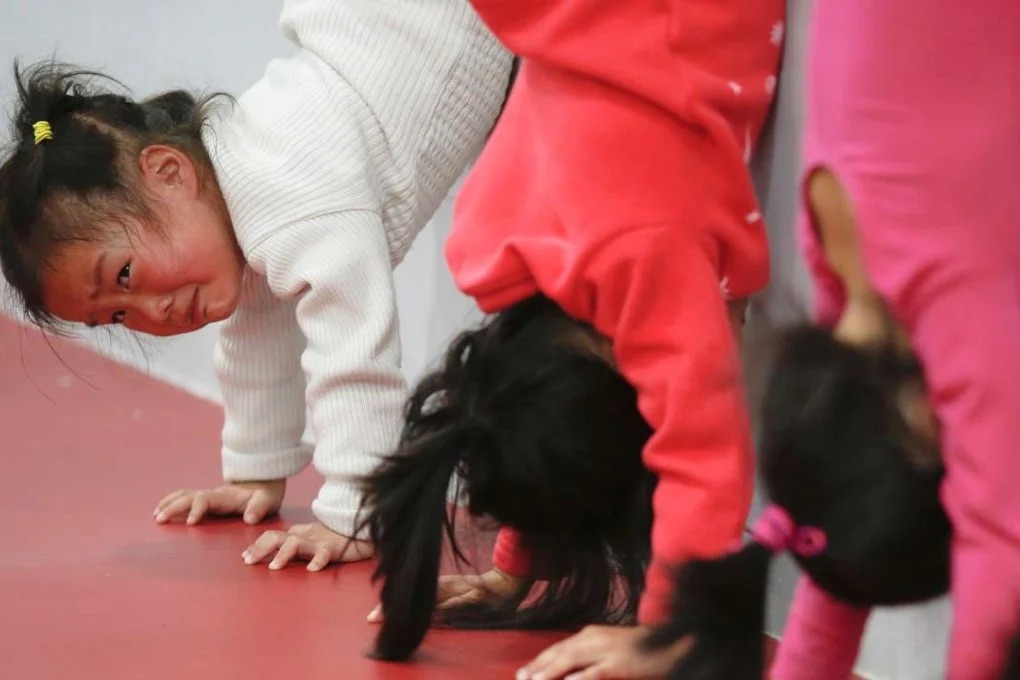
Children as young as four are recruited into sports schools and spend their lives training for their sports.Between 1996 and 2020, China accumulated a total of 520 medals in six Summer Olympic games. This success was fueled largely by the communist nation’s “medal machine”: a state-funded sports school system that propelled it to become one of the top athletic powers in the world.
In the 1950s, China drew inspiration from the Soviet Union’s sports model, allocating funds from national resources to establish numerous schools specialized in nurturing elite athletes. Today, with 2,183 sports institutions spread across China, the system produces 95% of the nation’s Olympic athletes, with the remaining 5% of athletes being naturalized citizens.
Athletes are recruited into sports schools as early as age 4. They’re separated from their families to train and live at the school. Parents often consent to their children being recruited by sports schools because of the financial incentives that come with earning medals. Lower-income families sometimes rely on their children’s success to sustain their livelihoods.
Young athletes are often chosen to specialize in a sport that favors their physical characteristics. For example, children with long arms are selected to compete in weightlifting. Though this selection process increases the likelihood of success in their careers, young athletes often have no love or interest in the sport they are forced to play.
At these sports schools, young athletes can train up to 20 hours per week — their exposure to heavy physical stress often leaves lasting injuries that impact the rest of their lives. It’s hardly surprising that such a rigorous schedule often robs children of traditional childhoods and introduces them to intense pressure that can lead to chronic mental health problems like anxiety.
In 2008, a Time magazine article covered the realities of the living conditions at Weifang Sports School, one of many sports institutions in China. Reporter Hannah Beech reported seeing a cluster of “self-criticism essays” taped on the walls of the school, written by young athletes, along with shabby dormitories and poorly lit training rooms, exposing the harsh conditions these athletes — most of them pre-teens — are forced to endure.
Chinese sports schools provide academic education and support to athletes, but they are often too exhausted to study after long days of training sessions. Upon graduating from sports schools, most of the elite athletes have the education of elementary school graduates and are unfit to join a standard age-appropriate public school.
After retirement, high-profile athletes are left with only a few options: attend a sports university or be invited to attend a normal university to play on the school team. Even upon graduation with a university degree, many of these athletes lack the social skills needed for them to be successful in society.
Through this brutal system, China has been able to produce the top-performing athletes in the world at the expense of the lives of young children who are left purposeless at the end of their careers.
Even with the perceived success of the Chinese training system, they remain unable to defeat America’s impressive Summer Olympic medal count of 744 from 1996 to 2020. Despite being the top two athletic powers, the approaches China and the U.S. take to secure success differ radically from each other.
While China relies on an institutionalized and rigid sports system, the U.S. promotes individual success by using a hybrid training system.
Through this system, athletes train at sports clubs and attend competitions organized by institutions affiliated with the Olympic Committee. If they emerge as a top-ranking athlete, they can qualify for the Olympic team for their respective sport and train at Olympic training centers.
There is no financial incentive or recruitment into sports clubs, so the U.S. sports training system relies solely on the interest and self-motivation of young athletes across the nation. Perhaps a reason the U.S. system is so successful is that athletes compete because of their love for their sport, something notably absent in the Chinese training regime.
Sports clubs’ practice times are usually set after school hours and are scheduled around five times a week. Practice times range from six to 24 hours per week depending on the sport. This schedule provides flexibility for athletes to pursue sports without hindering their education, allowing them to gain important life skills that are crucial after their athletic careers. Though Olympic-aiming athletes may train for longer hours, they still have the ability to pursue academics, often in ways that lead them into elite colleges.
Though the U.S. also trumps China in medal counts, that isn’t where its success truly lies. Instead, the U.S. athletic training system nurtures the talent of athletes who enjoy playing their sport while allowing them to pursue academics. China’s brutal system, by contrast, only jeopardizes the lives of future generations with few real benefits other than meaningless medal counts.

cz • Apr 3, 2026 at 8:42 pm
cool article, reminds me of Eteri. minor detail, erm, actually 🤓 long arms usually aren’t good for Olympic weightlifting. Better leverage, less distance, and other things make the snatch and clean&jerk (used in the Olympics) easier to do.