




























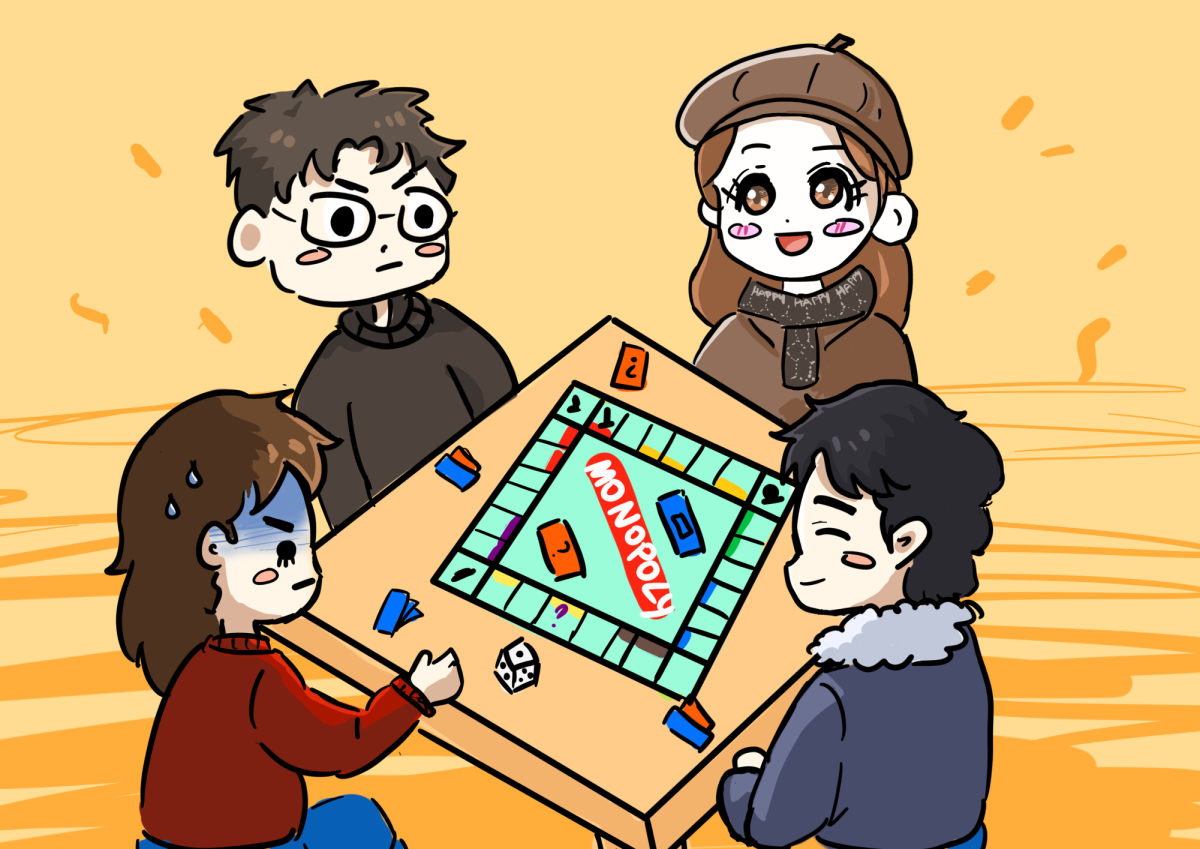
My eyelids drooped sleepily before the sudden buzz of the Nintendo Switch in my hand jolted me awake. It was my turn to roll the dice in Nintendo’s “New Monopoly,” again. For what seemed like the hundredth time, I selected the options to “Roll,” “Pay rent” and “End turn,” before passing the device to my equally bored brother and returning to my rudely interrupted nap.
Dreamily, I recalled the time I was first introduced to the traditional Monopoly board game during the pandemic — sitting on the living room floor with my family and playing for over four hours at a session.
I had expected a similar sense of being captivated from the Nintendo version of Monopoly, but I was disappointed to find that the only interesting element was its three-dimensional board. Virtual Monopoly simply did not live up to the board game’s fascinating nature.
There was something thrilling about physically moving the charming metal Monopoly pieces, being awarded a property card by the banker and an inexplicable satisfaction when someone handed me a stack of fresh, colorful Monopoly money for landing on my expensive property.
When my family played board games like Monopoly, we found a sense of connection despite our separate interests. We were able to sit down together, laugh and argue over the rules, creating invaluable memories that virtual games rarely replicate.
Board games have been played by mankind for thousands of years, and their existence is universal across all cultures and countries: Go or Weqi originated in China during the sixth century; checkers and chess originated in Egypt and India in the following centuries. The tradition of board games is deeply connected to human culture and they have historically proven themselves to be effective boredom busters for everyone to this day.
In recent years, the popularity of video games has far surpassed that of board games. As of 2023, the video game industry had global markets of over $150 billion as opposed to $7 billion for board games.
Though board games may be outdated compared to newer media games, research shows that they effectively develop executive functions (EFs) in young children. EFs describe cognitive functions including switching attention, adapting to change, restraining impulses and focusing on a task. While solo video games are also effective in strengthening EFs and improving mental flexibility, modern board games such as Ticket to Ride are associated with the enhancement of social skills, including verbal, relationship and emotional skills.
Despite the similarity between group virtual games like Nintendo’s Mario Kart or Mario Party and collaboration-based board games, they cannot completely replace the tradition and nostalgia behind board games. Additionally, I find that it’s extremely easy to get bored with pressing the same four buttons on the switch for continuous rounds.
In contrast, individual video games often isolate players as they compete against each other without face-to-face interactions. Frequent playing of violent first-person video games has proven to increase children’s aggressiveness and social desensitization. Prolonged exposure to blue light from devices can additionally induce headaches, damage eyesight and disrupt sleep schedules.
Although video games are more modern and popular, traditional board games still remain an essential part of childhood due to their nostalgic value and ability to foster closer connections with others — something we need more than ever in the digital age.

