
























Before February break started, I set a goal for myself to eat only home-cooked meals for a week and observe the benefits of this approach.
Since I’m at my dance studio for most of my afternoons and evenings, I have had a bad habit of regularly ordering fast food like Starbird and Wingstop from DoorDash: These are foods loaded with salt and artificial flavors. I didn’t notice the effects of eating so unhealthily on a daily basis, but once I started the challenge, it was clear that my fast-food eating habits had been taking a toll on my well-being.
I knew eating home-cooked meals would improve my health and be more cost-effective; however, I found that the value of eating home-cooked meals extended far beyond just that.
Technically speaking, a home-cooked meal is anything composed of ingredients bought from a grocery store and prepared in your own kitchen. Often, a home-cooked meal can also become a memory or a specific taste only possible with the pots used in your home — a unique blend of produce from different markets and seasonings from diverse cultures.
However, it can be difficult to always choose home-cooked meals, especially when other less beneficial but more convenient options are available.
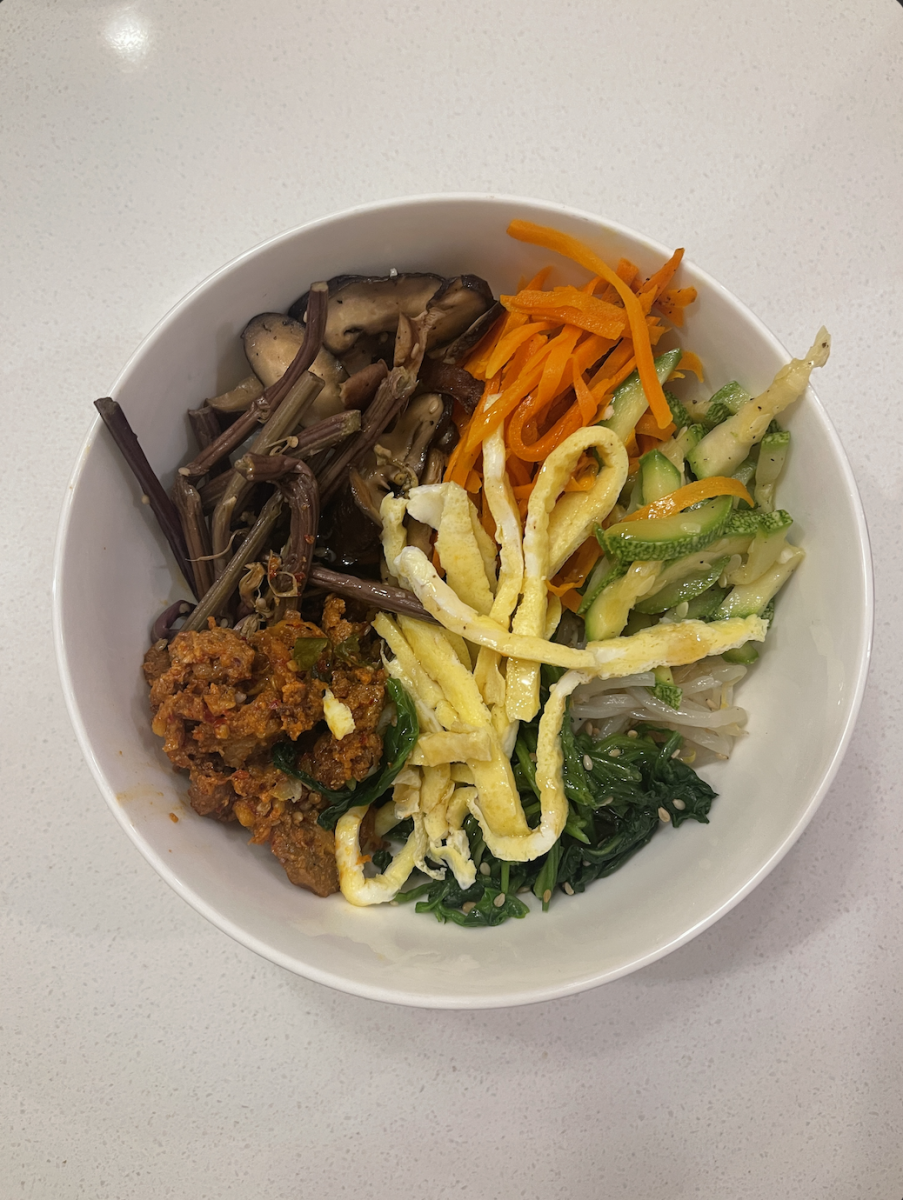
I remembered how when I was growing up, my mom would always make bibimbap, a Korean dish comprised of a rice bowl of interchangeable ingredients such as seasoned veggies, gochujang (Korean chili paste), bulgogi (describe) and a fried egg.
Not only is this meal easy and affordable to make, but it is also delicious and healthy. There is a substantial amount of protein from the meat and egg, vitamins and antioxidants from the veggies and a rich source of carbohydrates from the rice. Eating bibimbap also reminds me of family dinners and sharing the food that I love with my loved ones, forming memories that I still cherish today.
Aside from bibimbap, I also prepared easy, ready-to-make meals with ingredients like white rice with eggs, beef and sautéed vegetables. Not only were these straightforward in preparation, but they consisted of healthy amounts of carbohydrates, proteins and fibers, while avoiding preservatives and excess sodium and fat.
During this homemade-only week, my mom started packing me lunch that I would bring to school. These lunches were normally a salad with some type of protein like salmon or steak. Not only were they healthier than school lunches, but they reminded me of the care and effort my mom must have put into making it that morning.
Some other foods included dumplings, kimbap (similar to sushi) and sandwiches my grandma and mom would make. The more I committed to eating solely home-cooked meals, the more I began to question why I had sacrificed health for convenience by ordering fast food prior to this challenge. Of course, ordering food is a lot more convenient time wise; however, prepping the ingredients on the weekends makes putting together meals on the weekdays (when I’m busy) easier.
In addition, I started opting for the healthier alternatives to snacks. Instead of eating chips or candy for midday snacks, I started eating healthier options like hummus, carrots and babybells — not out of obligation, but simply because I enjoyed the feeling of eating something organic rather than processed.
If you think about it, you never really know what the cooks in the restaurant are putting into your meal or how unhealthy they’re becoming. Making meals at home is a great way to give yourself the peace of mind about how your food is being made and the ingredients that you’re making it with.
What were the results of my dive into home cooking? One benefit was that I felt more athletic and capable when I went to my dance practices and competitions. In addition, I was able to reconnect with both my family and my culture. While I was in the kitchen spending quality time with my mom, I learned recipes that had been a part of our family traditions for generations — ones like doenjang jjigae (soup) and bulgogi.
Since the week of the challenge, I have been eating out, but not nearly as much as I used to. I’ve come to appreciate the simplicity of homemade dishes and have even come to prefer them over takeout. Even though it did come with certain reductions to convenience, the ultimate gains from the challenge were enough to convince me that it was worthwhile.
While I embarked on my home-cooked meal journey with hopes of helping both my body and bank account, I discovered something much more valuable along the way. Home-cooked meals aren’t just a way to stay health-conscious or to save money. They can provide comfort, evoke memories and be a way to connect with family through a shared love for food.