



















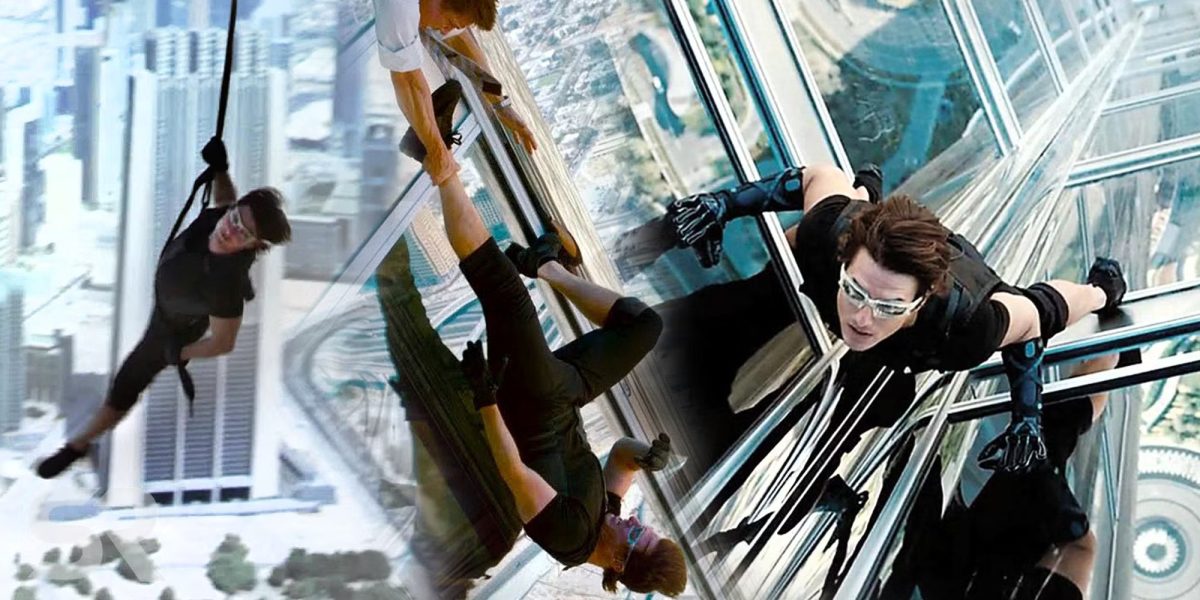
Courtesy of Screen Rant
“Mission Impossible: Ghost Protocol” was critically acclaimed as being a successful soft reboot.As I sat in the cold movie theater this past summer, the bright screen lit up as the iconic Superman character, played by David Corenswet, appeared on the screen. It was yet another version of “Superman.”
From Christopher Reeve to Brandon Routh to Henry Cavill and all the others from 1978 to now, over 10 different actors have played Superman. This time, writer and director James Gunn repeats Superman’s well-known origin story, but this time with a departure from some of the recent dark versions (like the ones starring Cavill). Gunn offers a sunnier outlook of the hero that embraces the classic, hopeful nature of the character.
Reboot movies, unlike remake movies that retell the same story, are films that restart a film franchise from scratch, creating a new timeline, tone and cast. Hard reboots are a complete restart with no connections to previous films, while soft reboots are films that exist in the same film universe but partially acknowledge the past.
Directors hope to attract pre-existing fanbases, evoke nostalgia and modernize the plot to the audience in order to appeal to the younger audience. The producers also hope the movie’s well-known brand name will lead to marketing success, as movies capitalize on recognized intellectual property and reduce the need to build interest from scratch.
In my experience, I find that most reboots fall short of the previous movie’s standards, with only a selective few exceeding expectations.
One of the main flaws of reboots are its lack of originality and creativity. For example, in “Jurassic World” (2025) — a soft reboot of the 1993 film “Jurassic Park” — some critics noted that despite the high-energy reviews and groundbreaking CGI, the film re-iterates motifs from the original “Jurassic Park,” including the parentless children, theme park disaster and anti-nature plot points. The overwhelming number of Easter eggs inserted to evoke nostalgia also ruined the plot, dragging down the entire film.

Courtesy of Game Rant
“Jurassic World” was noted by some as being too similar to “Jurassic Park.”
I also find that some reboot movies are unnecessary, as I am already satisfied by the previous franchise.
Some fans see these films as part of a marketing strategy to benefit the franchise. In “The Amazing Spider-Man,” while critics praised Andrew Garfield’s acting and the romance, the soft reboot was released only five years after the previous Spider-Man film. The films were seen as a mechanism for Sony to maintain its rights for Spider-Man, as Sony Pictures signed a contract in 1998 that bound Sony to produce a new Spider-Man movie every 5 years 9 months or else it would revert to Marvel or Disney. Because “Spider-Man 4” was cancelled, Sony decided to reboot the franchise.

Courtesy of Vulture
Andrew Garfield’s acting and the romance in “The Amazing Spider-Man” was praised, despite the movie being viewed as a marketing mechanism.
While there are many criticisms of reboot movies, some have surpassed their original movies. These reboot movies often successfully implement a new storyline that encapsulates the viewer with a fresh take on the character.
Considered a soft reboot, “Mission Impossible: Ghost Protocol” (2011) — the fourth film of the franchise — shifts the focus from a single-agent story centered on Ethan Hunt (Tom Cruise) to a team-based dynamic with Benji Dunn (Simon Pegg), Jane Carter (Paula Patton) and William Brandt (Jeremy Renner), establishing the “Tom Cruise (And Friends) Stunt Show” structure used in future films. A fun, lighthearted, action-oriented tone also marked a shift away from the darker tone of “Mission: Impossible III.”

Courtesy of MovieWeb
Hunt and his team in “Mission Impossible: Ghost Protocol.”
Unlike previous films of the franchise, this movie is the first of the series to prioritize death-defying stunts, featuring Cruise’s ascent of the Burj Khalifa as the main attraction. Through Hunt’s fear and mishaps while climbing the building, I enjoyed Hunt’s transformation from an invincible superhero in past films to a human super-agent. This shift made him more relatable along with blending nail-biting suspense and comedy.
Furthermore, while “Mission Impossible: Ghost Protocol”
is the first sequel with a tangible connection to previous installments, it requires little prior knowledge of previous movies, allowing new viewers to easily join the franchise. Accessibility was especially important because the movie revitalized the series after a 5-year hiatus. As a mark of their success, the film grossed $694 million worldwide, becoming the biggest box office success of Cruise’s career at that time.
While there are numerous benefits and disadvantages in reboot movies, they will undoubtedly continue to be attempted because of their safety as box office bets. At their best, reboots add life to a franchise with a creative storyline and a fresh perspective on beloved characters.
