














When junior Evelyn Phan went to an international summer program at UC Berkeley this past summer, she was shocked by the difference in how students from around the world thought about academics. Talking to students from Spain, Colombia, China, Korea and other countries, she realized that for them, academics weren’t necessarily at the center of their world, unlike at Saratoga High.
Overhear any conversation at SHS — whether it’s during tutorial, class or lunch — it would hardly be surprising if it’s about academics. Sometimes, students find schoolwork as the only thing there is to talk about: The AP Calculus BC test sixth period, the “Beloved” essay everyone finished the morning of the day it was due or the AP US History project still waiting to be completed.
In an environment where so much revolves around scholastic achievement, the SHS student body faces disproportionately high academic pressure and toxic productivity compared to many other communities.
What is toxic productivity?
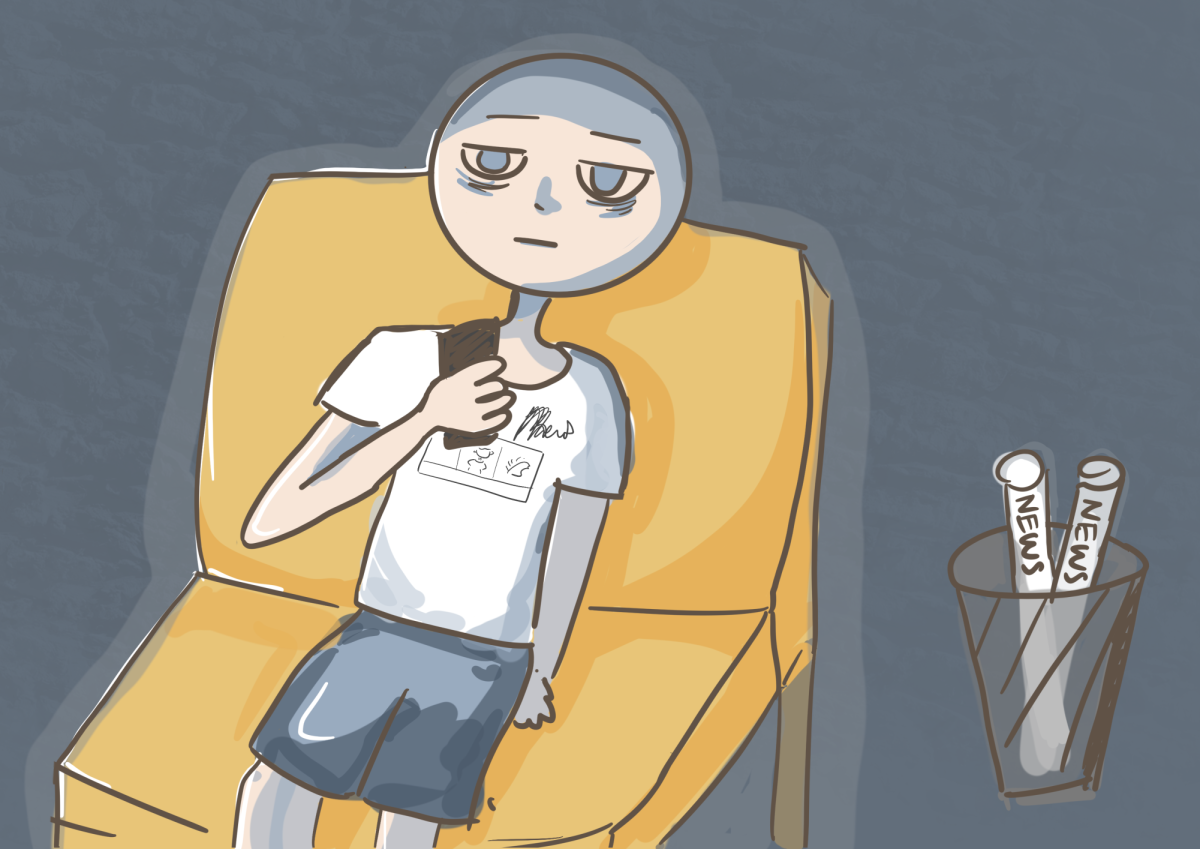
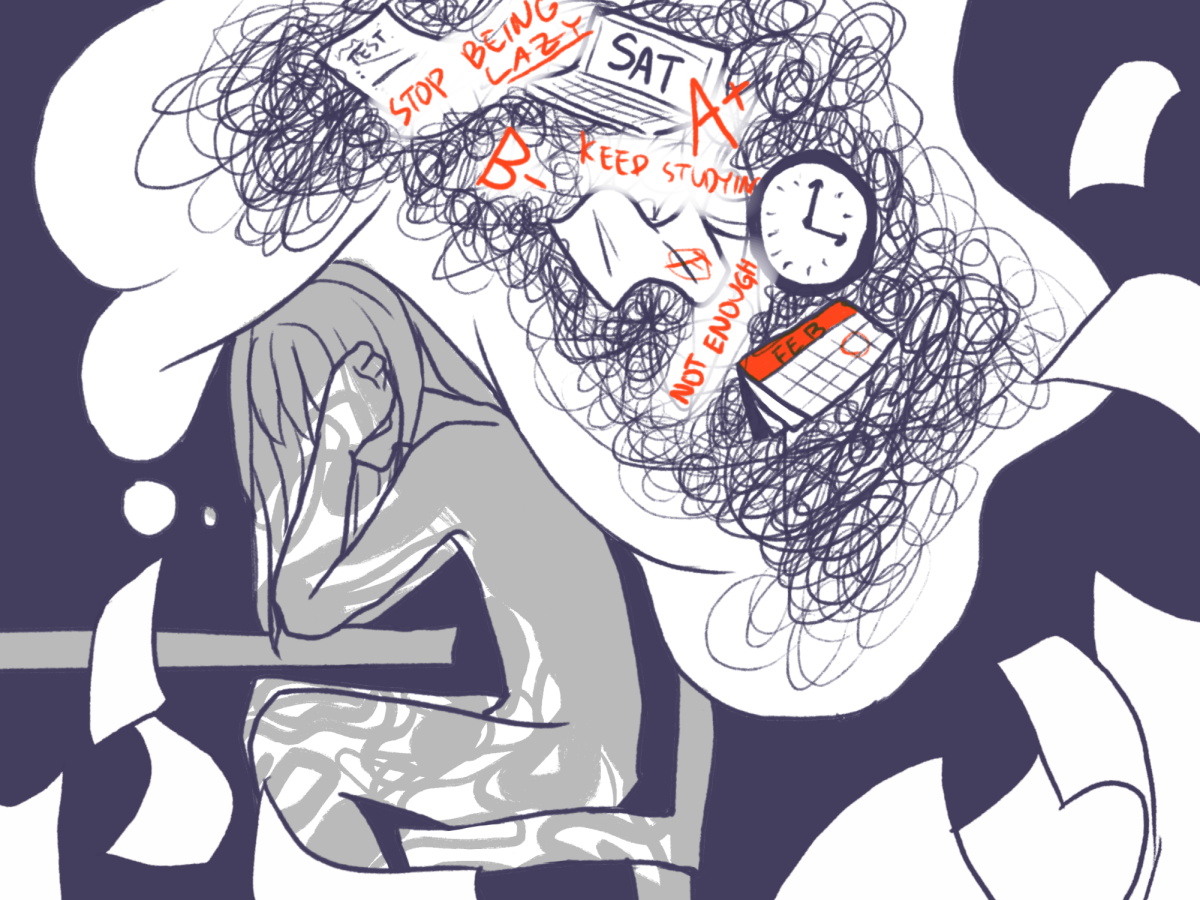
According to Harvard Health, toxic productivity is “an obsessive drive to be productive at all times.”
The mindset can lead to viewing rest as a form of laziness and a sense that each moment needs to be productive.
Many students here push themselves to achieve their goals, and those who struggle feel constantly pressured to work harder. Partaking in difficult AP courses, summer programs and research internships has become the norm for many.
“Compared to an average American high school, SHS students are more motivated, more high achieving and more interested in selective college admissions,” guidance counselor Brian Safine said.
Though strong academic goals are a greatly positive trait in general, when so many are trying so hard to excel in school, it creates peer pressure to either do the same or fall behind. This can lead to toxic productivity — the unhealthy pressure to be productive at all times, even at the expense of physical and mental health.
Socially, Phan says that being a “nerd” is not criticized on campus — in fact, it’s often admired and encouraged. This determination to do the best drives students to new heights. In fact, Phan is thankful for this focused mindset despite the stress that comes with it.
“I wouldn’t want to be in a school without the Saratoga mentality, because it pushed me to be a better person and to develop a strong work ethic,” Phan said.
However, when academic stress is exacerbated and students get obsessed over their academic results, their mental health is at risk. According to Saratoga’s 2024-25 Healthy Kids Survey, about 30% of students indicated experiencing social emotional distress, and 42% of juniors regularly go to bed at midnight or later. In comparison, less than 25% of students statewide indicated experiencing social emotional distress, and only 33% of juniors across California reported regularly going to sleep at midnight. or later.
Having a self-worth only tied to academic performance causes students to overexert themselves or constantly feel the need to try harder — an unsustainable mindset that can ultimately lead to high levels of burnout, stress and even depression or anxiety. But where is this pressure coming from, and why at such high levels?
Causes of SHS’s toxic productivity
The root cause of the school’s strong academic environment is a combination of parents’ high socioeconomic status and a mostly successful immigrant demographic.
According to Data USA, the median household income in Saratoga residents was $241,348 in 2023 with residents mostly employed at high-paying Silicon Valley companies. Often, they come to the area having graduate degrees and strong educational backgrounds. A striking 45.8% of residents were born outside of the U.S.
According to US News and World Report, 61.8% of the school is Asian, and most are from recent immigrant families, contributing to an atmosphere that expects hard work and high achievement.
Wellness Center therapist Victor Thompson has seen this dynamic at work in his own life.
“I’m half Japanese, and my mom immigrated here … so I understand the pressure from an Asian parent,” he said. “[My mom always told me,] ‘We came here and you need to live a better life than I did with this opportunity.’ That’s the whole shtick for any immigrant, but particularly with Asian parents.”
As a trend, immigrants place stronger importance on education as a pathway for upward economic mobility, with 91% of immigrant parents expecting their children to get a college degree, compared to 72% of native parents, according to a survey conducted by Institute for Family Studies.
Plus, in wealthy areas like Saratoga, parents — regardless of race — have the resources to extensively support their children academically, with many students having taken classes from Kumon, Russian School of Math, Saratoga Vision Chinese School and private tutoring as early as elementary school.
The pressure that is put on these students by their parents, even from an early age, reinforces a mindset of toxic productivity and a need to succeed — meaning that these students later put this same mindset on themselves and others.
However, this pressure doesn’t come only from parents. Thompson believes this heavy pressure to succeed comes from peer pressure as well, which ultimately stems from the ideas of parents and their teachings.
“I think there’s a sense that the actions made here, like grades, or even the college that you go to, is the end-all be-all to how life will turn out,” Thompson said. “That is a really gross misrepresentation of what the future will be.”
These pressures manifest in many different facets of academics, putting pressure on student psyches.
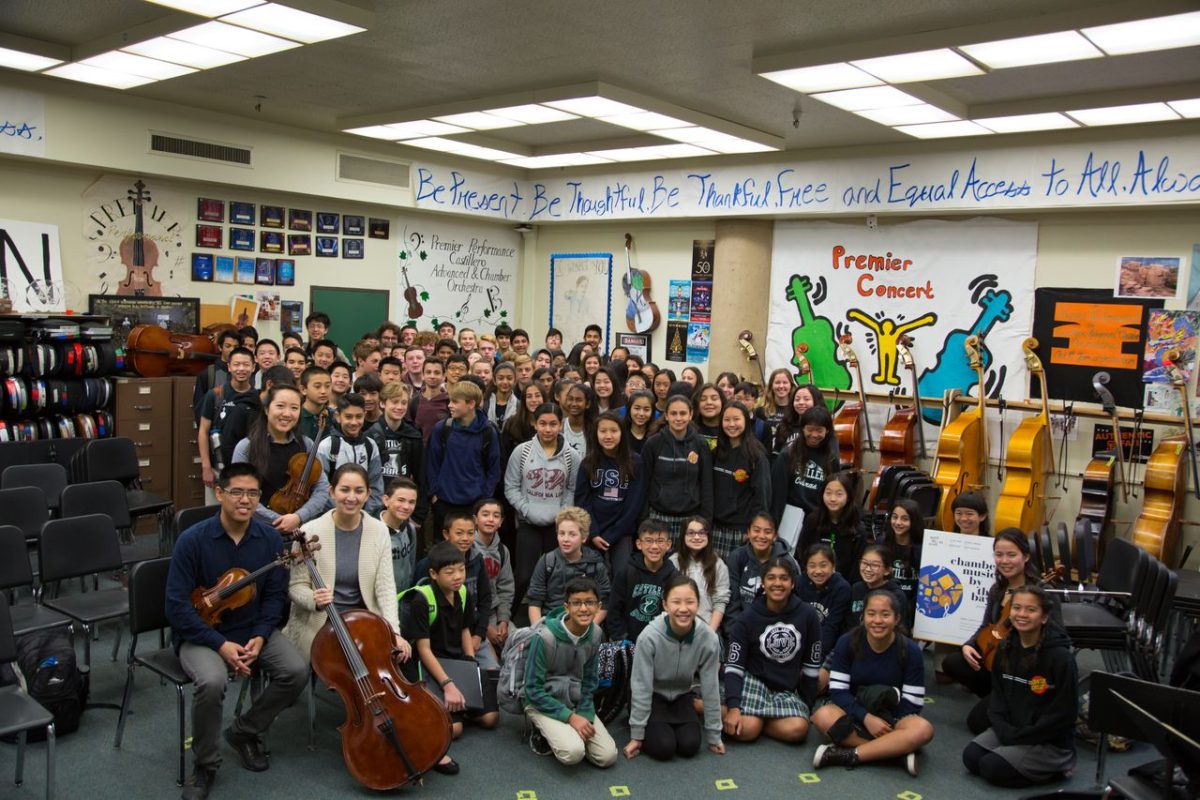
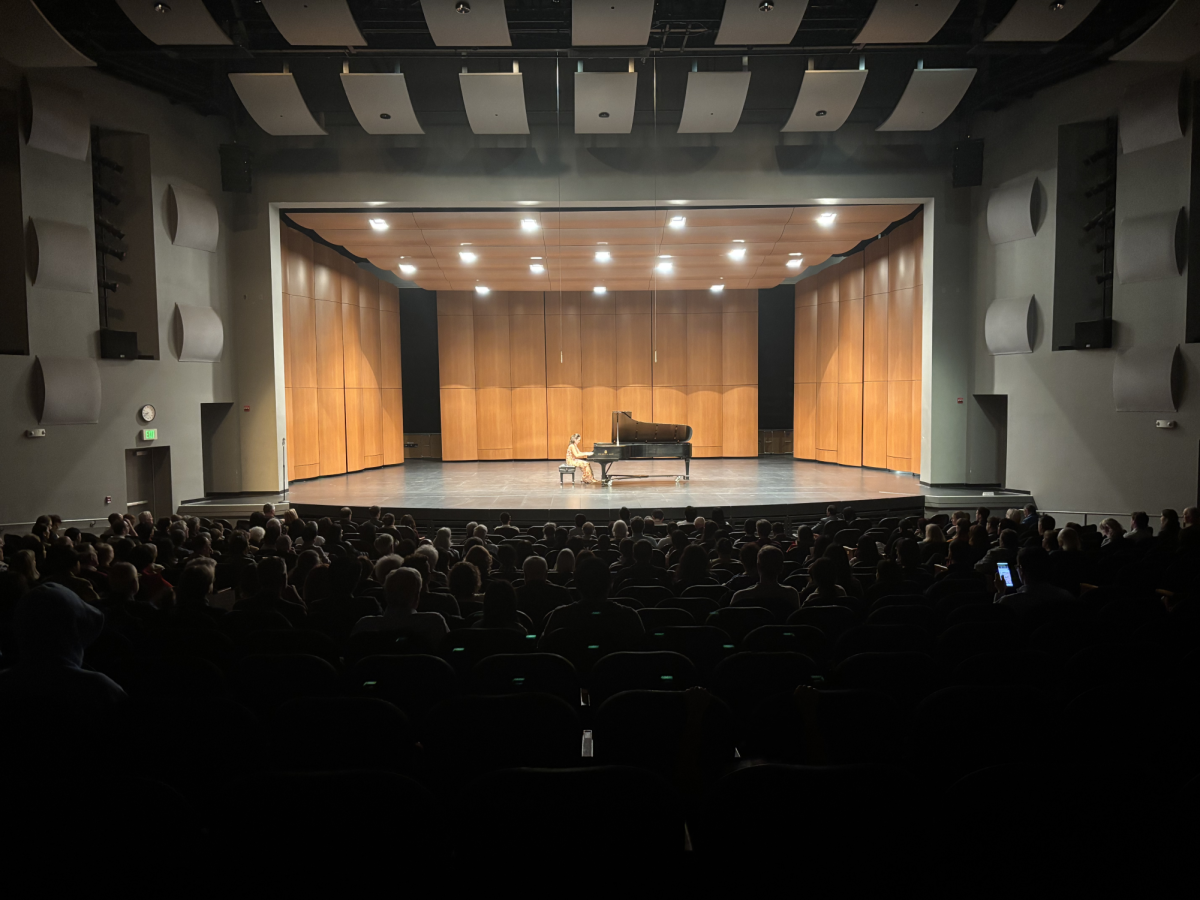
“For example, in music, it’s so toxic, and people just can’t stop comparing each other constantly and arguing about other people,” one student who asked not to be identified told The Falcon. “People are like, ‘OK, so what chair did that kid get?’ I know so many people who go to their private teacher… The parents and kid, they’re crying all over, and they’re like, ‘Why? Why the f— did I not get it? But he got it. All I hear is that he doesn’t even practice.’”
The official school mission is to promote “lifelong learning, personal integrity, social responsibility and good physical and mental health.” This dedication is especially prominent in the creation and financial support that goes into the Wellness Center, therapists and monthly MOSAIC social and emotional learning classes.
Comparing SHS culture to non-South Bay schools
In terms of achievement, however, Saratoga’s model seems to work. SHS prides itself on being one of the highest-achieving public schools in the nation: In the US News and World Report ranking, it was 227th in the U.S. and 25th in California. For its part, the district as a whole was the only one in the state this year to achieve a perfect score on the California School Dashboard.
Compared to the 87% average graduation rate nationally, SHS boasts a 97% graduation rate. On top of this, the mean SAT score here is 1450 — nearly 1.4 times the international average of 1050. — and had 35 National Merit Semifinalists in the class of 2025, which is about 12 times higher than what would be expected from a normal high school.
According to Safine, a typical student in the U.S. applies to 6.8 colleges through the Common Application; the average student here applies to nearly 20.
For Tejasi Hublikar, a senior at Hamilton High in Sussex, Wis., the school culture looks very different.
Hublikar said Hamilton High’s student body, with almost 1,600 students, is less focused on academics, despite still ranking 16th in Wisconsin based on standardized assessments.
“Many students at Hamilton don’t feel strong pressure to go to highly selective colleges as most students either stay in-state or choose schools based on fit rather than prestige,” Hublikar said.
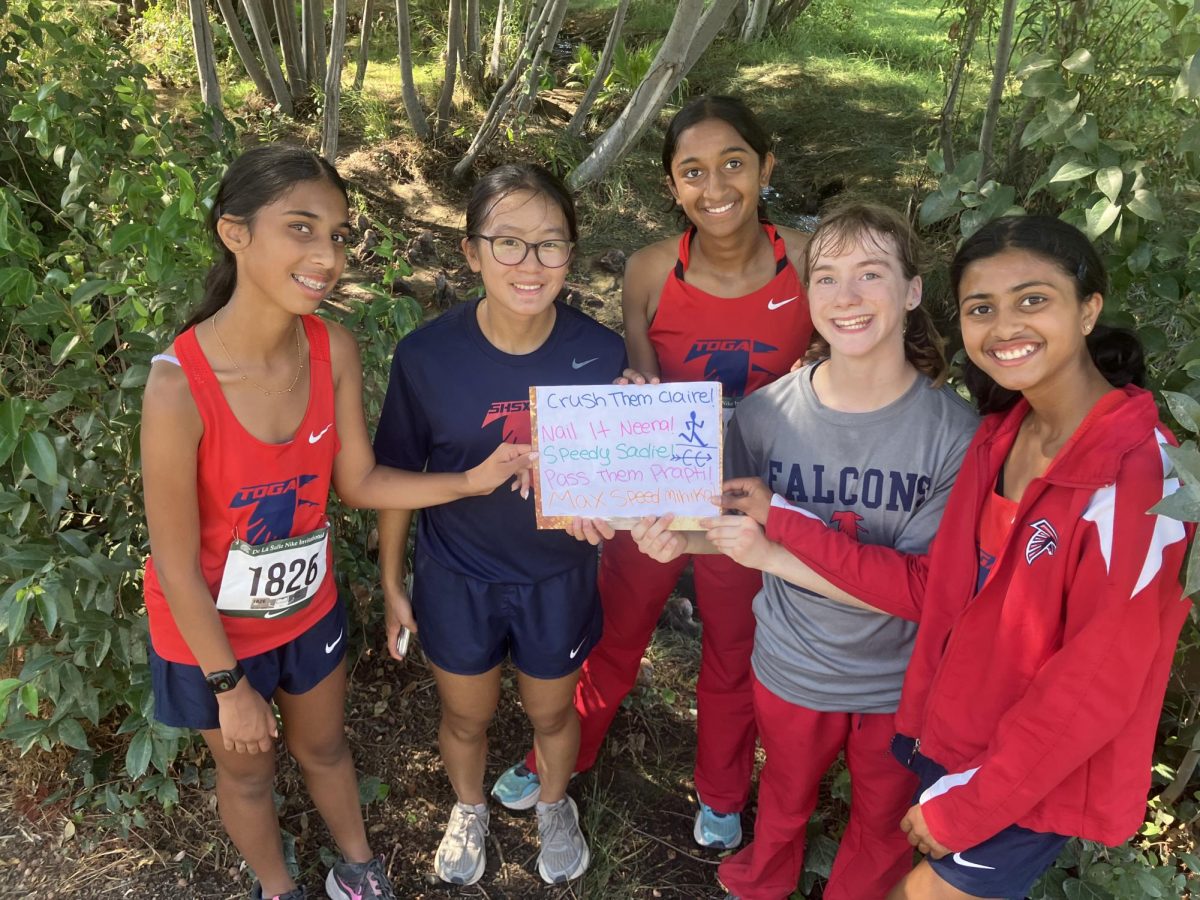
Unlike SHS, where many students join school groups solely to boost their college application, Hublikar says “Students [at Hamilton] generally join clubs and activities because they enjoy them.”
However, a strong focus on academics often makes the jump into college easier for SHS alumni like Class of ‘22 alumnus Viraaj Reddi, who is now a senior at Johns Hopkins.
“For me, doing well at college is almost second nature, because I came in knowing how to work,” he said. “A lot of people, especially the first year or two, have to develop that [study skill]. But the transition for me [into college] felt like 13th grade.”
Students from Saratoga are more prepared for college because of how the environment improves their work ethic as a whole. The environment encourages students to take difficult AP courses — resulting in an AP participation rate of 72% — and to do large amounts of extracurricular activities.
Several high schools around the Bay Area like Monta Vista and Gunn have similar environments. According to the California Healthy Kids Survey, roughly 70% of students at Gunn, Monta Vista and Saratoga stated that they were academically motivated — while the state average is 60%.
“[In college], people say if you meet someone and they’re from the Bay, you can tell immediately,” Reddi said. “The first three questions they’ll ask are pretty much, ‘Oh, where’d you go to high school? What were your grades? Why are you here?’”
Can students maintain high scores while living a healthier lifestyle?
The community’s heavy focus on academics has produced one of the highest-ranking high schools in the country. Thousands of alumni have gone to high-ranking universities and excelled in college because of this work ethic, not to mention the myriad skills they learn in their four years that put them ahead of their college peers.
And of course, getting the level of education that SHS provides for students is a privilege.
It’s important to note that being a SHS student doesn’t mean higher levels of stress compared to others — while they may have more academic pressure, a higher socioeconomic status and financial stability means less stress or likelihood of domestic abuse, substance abuse or struggling to keep food on the table.
According to the California Healthy Kids Survey, across the state, roughly 60% of 11th graders felt that they had caring adult relationships. In Los Gatos Saratoga, this statistic was 77%. Yet the percentage of students statewide who felt the weight of high expectations was 70%, even in Monta Vista, and 80% in Saratoga.
According to Safine, the real problem with Saratoga’s toxic productivity isn’t its focus on academics. It’s the focus on academics at the detriment of everything else, whether that means skipping out on social outings or interactions, neglecting mental and physical health or disregarding passions and hobbies.
“Our campus culture would be much healthier if there were more conversations about ‘What are you learning? What are you interested in outside of school? What did you do on your last vacation?’” Safine said. “I love that our students are involved in many different things on and off campus, and I think we should get to know each other better in those areas, rather than have conversations that can be focused on limited academic metrics.”
At her summer camp, Phan realized that other students talked less about academics and more about their lives outside of school, and it changed her perspective on how academics should be weighted in her day-to-day life.
“Someone I knew who was really cool, he builds haunted houses and that’s like his thing outside of school … So after that experience, I tried more to talk to people about non-academic stuff,” Phan said.
But to change the mindset of any community, even one as small as SHS, is extremely difficult. Thompson says that the easiest way for students to feel less stressed is the clichéd but necessary advice to intentionally have fun.
“It sounds cheesy, but people aren’t going to stop being stressed about trying to achieve the highest thing. The school probably pumps out a ton of really high-achieving people, and that’s awesome, but I would really urge them to figure out what they enjoy and balance it with academics,” Thompson said. “You’re kids, go be kids and have fun! You’ve got enough time in the rest of your life to be super serious and super work-heavy. So enjoy this space while it lasts.”

