
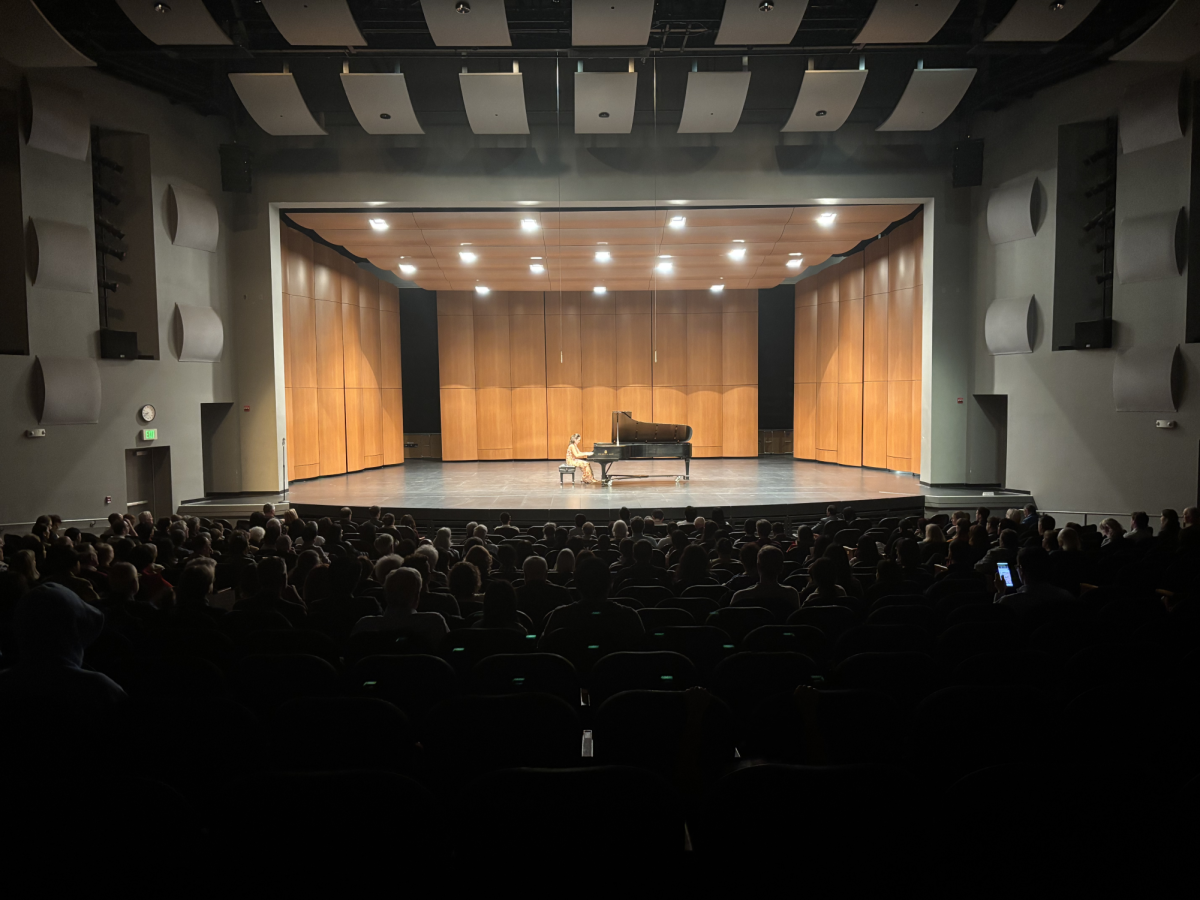





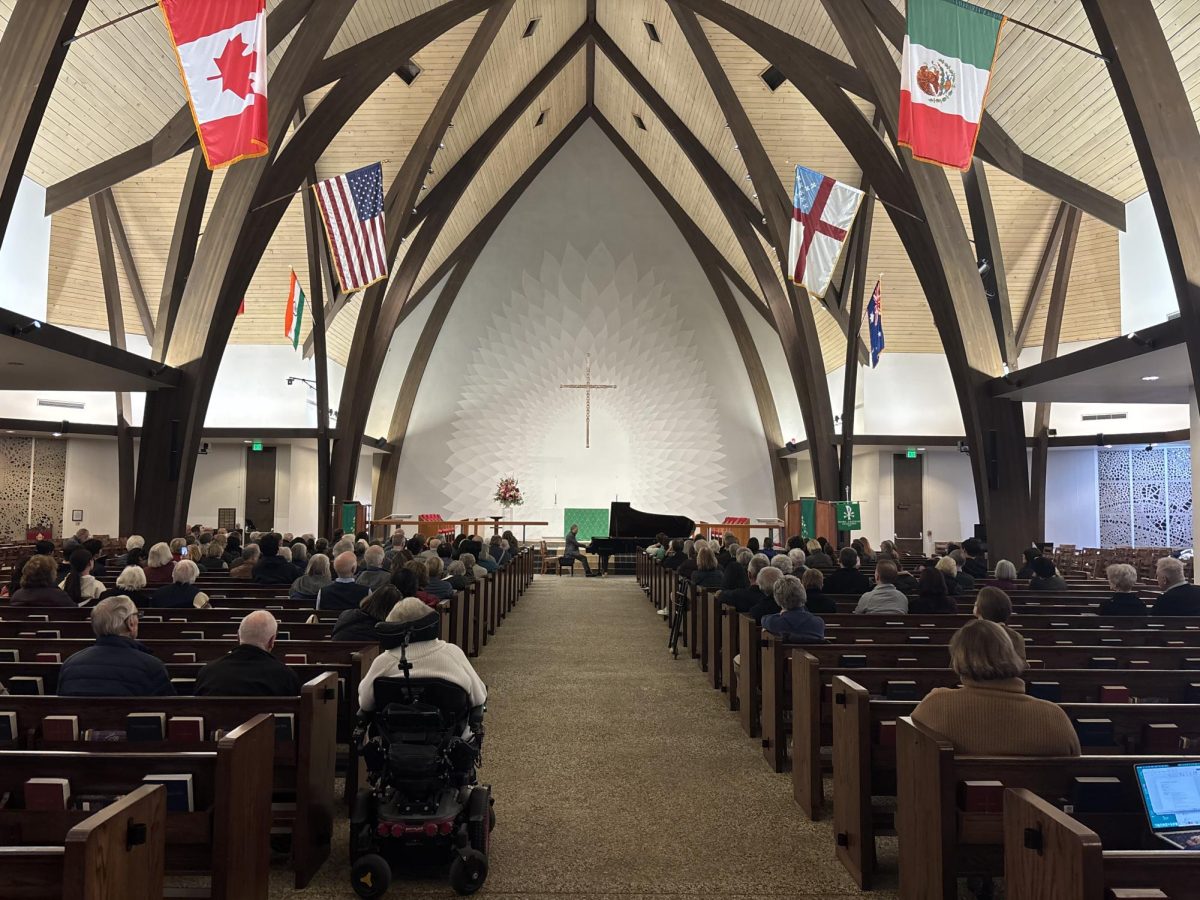
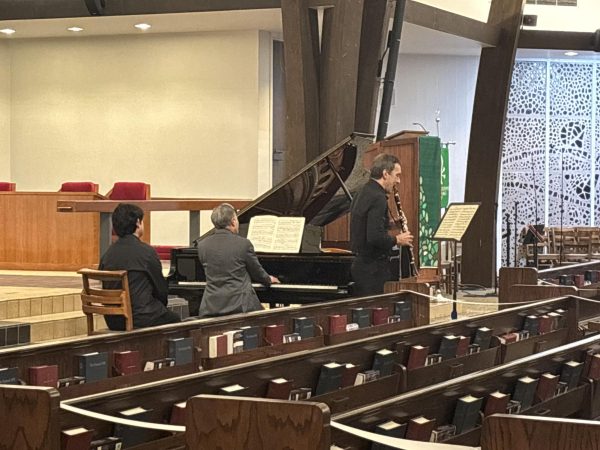
Pianist Jon Nakamatsu’s fingers danced across the piano’s chromatic tiles, reverberating a passage of Johannes Brahms’s Sonata No. 2 in E-flat Major throughout St. Andrew’s Episcopal Church halls. To his side, clarinetist Jon Manasse weaved his clarinet’s rich and expansive tone with the strong piano voice. The duo — who met around 20 years ago — brought the audience on a journey through six pieces spanning from classical lyricism to contemporary specials last month on Jan. 23, holding the audience in a captivated awe from the opening phrase to the final encore.
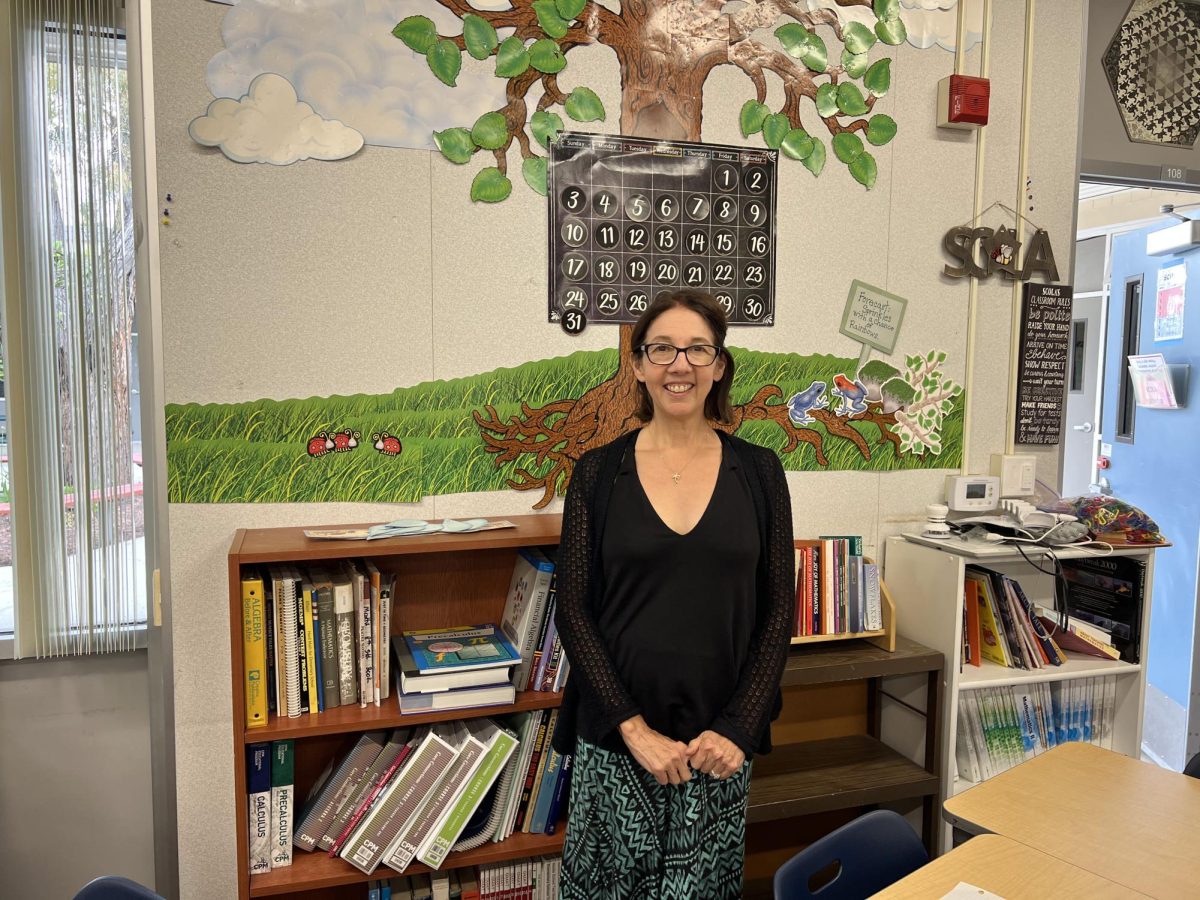
Nakamatsu — husband of chemistry teacher Kathy Nakamatsu — is a 1997 Gold Medalist and current competition juror of the Van Cliburn International Piano Competition.
Interestingly, Nakamatsu began his professional career as a German Teacher at Saint Francis High around 30 years ago. He met Kathy in grad school while both were studying to be teachers at Stanford.
Nakamatsu’s path into the professional piano was an unusual one, having no formal conservatory training and instead studying privately to reach the top levels of the craft.
Today, his career consists of constant flights to performances and rehearsals to fine-tune his musical voice. Outside of his touring schedule, Nakamatsu is a faculty member at the San Francisco Conservatory of Music with a piano studio where he teaches a small group of students.
“Since I’m away so much, I can’t teach a large number of students,” Nakamatsu said. “But I love teaching and enjoy interacting with the students very much.”
Nakamatsu’s passion for piano began at a young age. He said the first piano he ever saw was at the Challenger preschool in Saratoga — where he grew up — which planted a seed of curiosity. The only times he was connected to its sound was when the teacher at school would play while the students sang in a circle.
“One day, I touched one of the keys and got in trouble,” Nakamatsu said. “Then I thought: ‘Well, if we’re not allowed to touch it, the piano must be something incredible to learn.’”
Nakamatsu voiced this interest to his mother, who was surprised at his enthusiasm — his family had given him no prior exposure to music. Nevertheless, he received a toy organ from his parents for Christmas, which became his musical outlet for two years. When Nakamatsu’s parents noticed how much time he was spending with this toy, they offered to buy him a real piano on the condition that he would take lessons to ensure his growth in the instrument.
From there, Nakamatsu’s connection with music grew exponentially. His teacher took him to many concert halls, which revealed an expansive dimension of music far more than what he had perceived before. Originally, he was overwhelmed by the music and by the whole idea of performance and communication; his interest increased the more he heard many people play, ultimately drawing him into viewing it as a viable career path.
“Then the older I got, the more serious I became about really wanting to pursue music over a lifetime,” Nakamatsu said. “Even though a career in the art is very tenuous, I felt like I couldn’t not try.”
Nakamastu’s performance on Jan. 23 brought him back to his Saratoga community, where he could share the classical pieces that he once admired. Before and after every piece, Manasse gave brief introductions and stories. The clarinetist’s witty remarks often sent the crowd in laughter, setting a lighthearted atmosphere.
The opening piece — Sonata in E-flat Major No. 2 by Brahms — offered an intense emotional journey ringing from majestic chords to flowing, conversational melodies with sustained dynamics. The piece is also significant for the duo.
“When I first met Manasse, we played the piece together and that was the first piece that we rehearsed,” Nakamatsu said. “It really was an eye-opening movement for both of us because even though we’ve been in the professional world for a while and had many collaborations, there was a level of unspoken understanding and aesthetic cohesion between us that made it really magical.”
Even after 20 years of collaboration, the Brahms Sonata has been a big part of their performance life. Their shared intuition shaped performances across concert halls nationwide and recently Saratoga.
Nakamatsu then continued the concert with a solo piece, playing “Fantasy in F-sharp minor” by Felix Mendelssohn.
Notably, the final two pieces of the concert were pieces composed directly for the duo, containing personal stories. The second-to-last piece — Vivian Fung’s “Fifth movement from ‘Down and Dirty’” — stems from a personal and professional relationship between the two performers and the highly acclaimed composer.
While planning a summer chamber music festival, Nakamatsu asked Fung to compose a piece to celebrate a close colleague’s birthday.
Performing live remains one of Nakamatsu’s most rewarding experiences to this day. He believes trying to deliver musical messages to people is really something unique and extraordinary.
“I think there’s no substitute for the communication that goes on between an audience and the people on stage,” Nakamatsu said. “There’s this electricity that you can feel with the audience, and when it works, there’s nothing really like it. On the stage is where we’re most excited and at home.”
