
















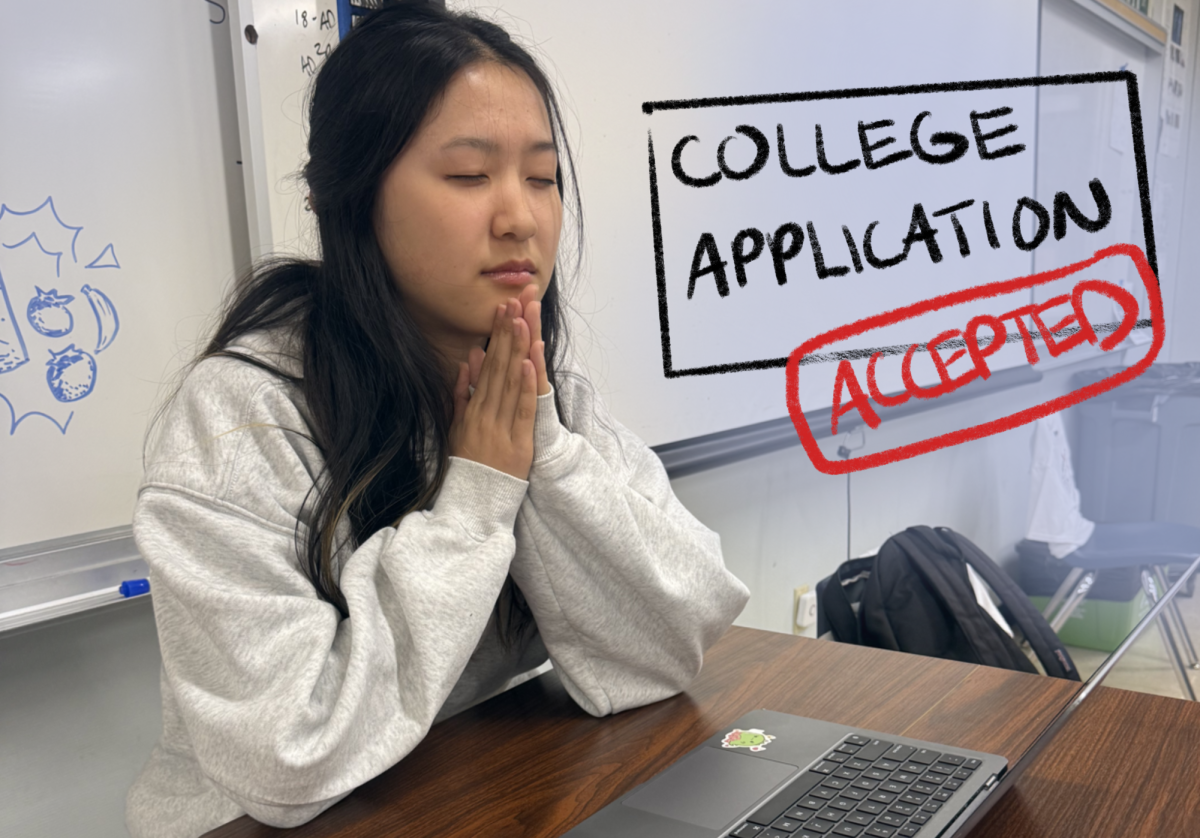
My entire junior year, I was dreading the eventual arrival of college applications. I had heard horror stories about having to cram-write five essays in one day and getting no sleep.
Trying to get ahead, I started writing my UC Personal Insight Questions (PIQs) in the summer. I needed to choose four out of the eight prompts to write 350-word essays. My counselor recommended I start with these first, as a form of brainstorming for my personal statement. Spoiler alert — I ended up writing about a completely different topic, but I feel like the exercise was still helpful.
I chose not to apply through Early Decision (ED). I didn’t like that the decision would be binding — meaning I would have to go to the school if I were to be accepted. I felt there was no school that offered ED that I wanted to go to that much. Now, looking back, I kind of regret that decision, for several reasons I will cover below.
The most important part of the process, to me, was the college list. The list captures the range of colleges you want to apply to. There should be a good mix between reach, target and safety schools. I recommend keeping the list shorter — around 20 schools — and they should be only the colleges you would actually consider going to.
To find the colleges that are best fit for your list requires a lot of research, which can be quite tedious. But if you do your research early and well, you can use it for “why college” supplemental essays as well. I attended a few information sessions from colleges, both online and in person, and I found them to be pretty irrelevant, so here’s what kind of research you should be doing instead.
Your searching should target your specific interests, both academically and recreationally. The easiest point of information comes from the school’s website. They will display links to clubs and student organizations, as well as a long list of majors.
I recommend searching for the course catalogs of your major. This includes the types of courses offered, and you can pull what interests you the most. If you are interested in research, take a look at the professors and the areas of research they specialize in.
Think about what really matters to you in a school that you will attend for the next four years (or more) of your life. If you are looking for high levels of school spirit, the No. 2-ranked college for your major may not necessarily have what you’re looking for.
Once you have a list, you can start writing. I started my process with Early Action (EA) applications, which have earlier deadlines but aren’t binding. I liked the option of applying early because the pool of applicants is smaller, which gives higher chances for acceptance. While I was drafting my PIQs, I started working on my supplemental essays for my EA schools.
When I started writing, I realized I had a giant problem: not knowing what to write about. Not only did I keep coming back to the same activities, but I forgot most of the details of my experiences.
So, that leads me to my first tip — keep a diary or journal while in high school. When you go to an interesting internship or even if you are just going through a difficult period of your life, writing down important details will save you later on.
During EAs, the process was actually quite smooth. I was ahead and satisfied with my performance. During Regular Decisions (RD) is when everything went downhill.
With the second semester having started in January, my academic load picked up, so I had a lot more to juggle on my plate. My RD schools were also more important to me, so I felt pressure to make my essays even better.
This is when I started to wish I had applied to schools via the ED route. Some of my peers had already gotten accepted into universities, and they would no longer have to worry about completing additional applications. But for me, there was still a long road ahead.
I had heard that it would be helpful to recycle essays, using the same essay for prompts across different schools, so I decided to try it to save time. However, as I did it, I realized there were pitfalls to this strategy.
While many college essay prompts may have similar themes, the wording of the questions is always slightly different. When trying to paste an essay with a similar idea, I found it usually didn’t answer the prompt specifically.
I would then fall into the trap of trying my best to edit what I had, turning my writing into a convoluted mess. Sometimes, I found it’s easier to start writing from scratch, so you have a clear goal for what you are writing about.
Coming out the other end of this 7-month process, I have now completed all of my applications and am just waiting for the results. Throughout the process, I was forced to reflect on myself, my achievements and my values. I started to see how much I’ve grown through my various activities over the years.
The good news about college apps is that success looks different to everyone and you get to decide how to define it for yourself. Good luck to you on your college app process, and cheers to whatever comes next!
