


















Courtesy of Beryl Liu
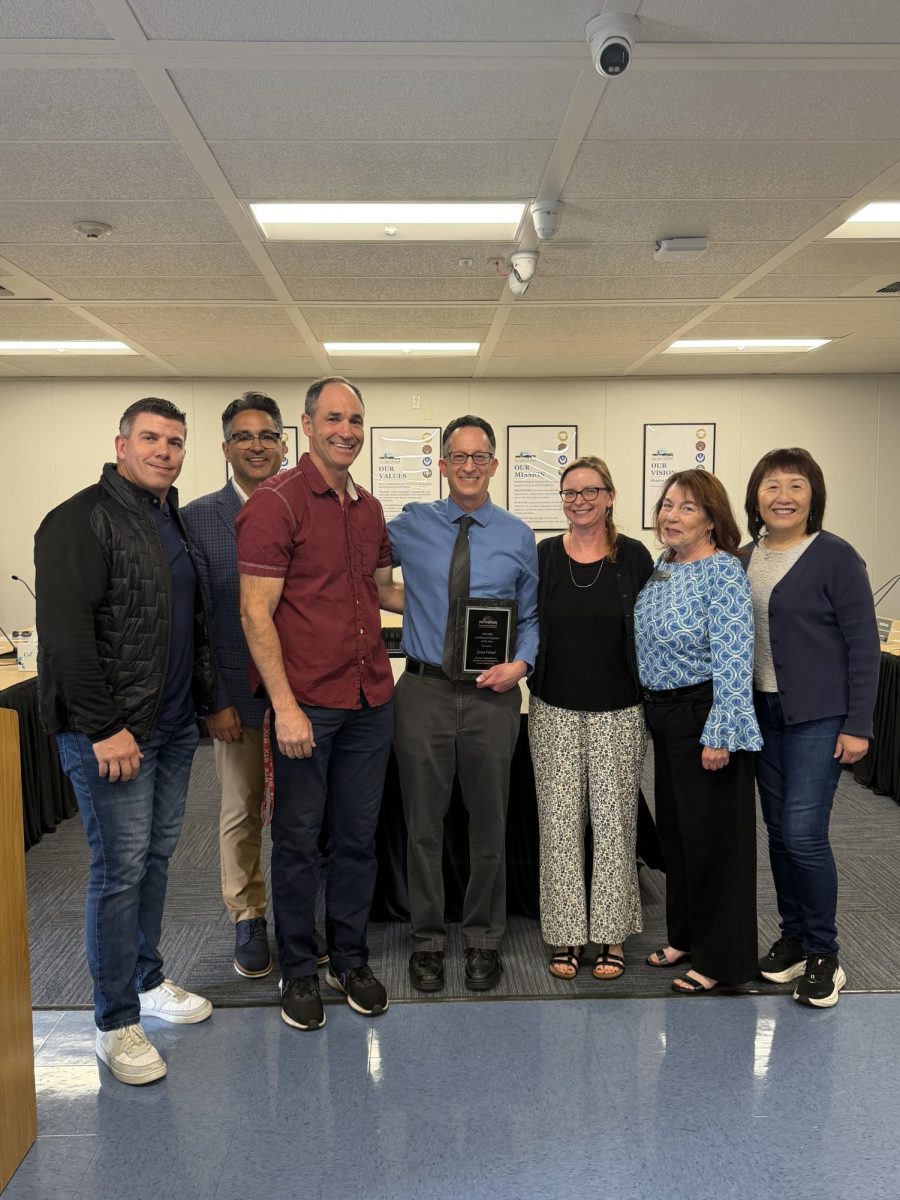
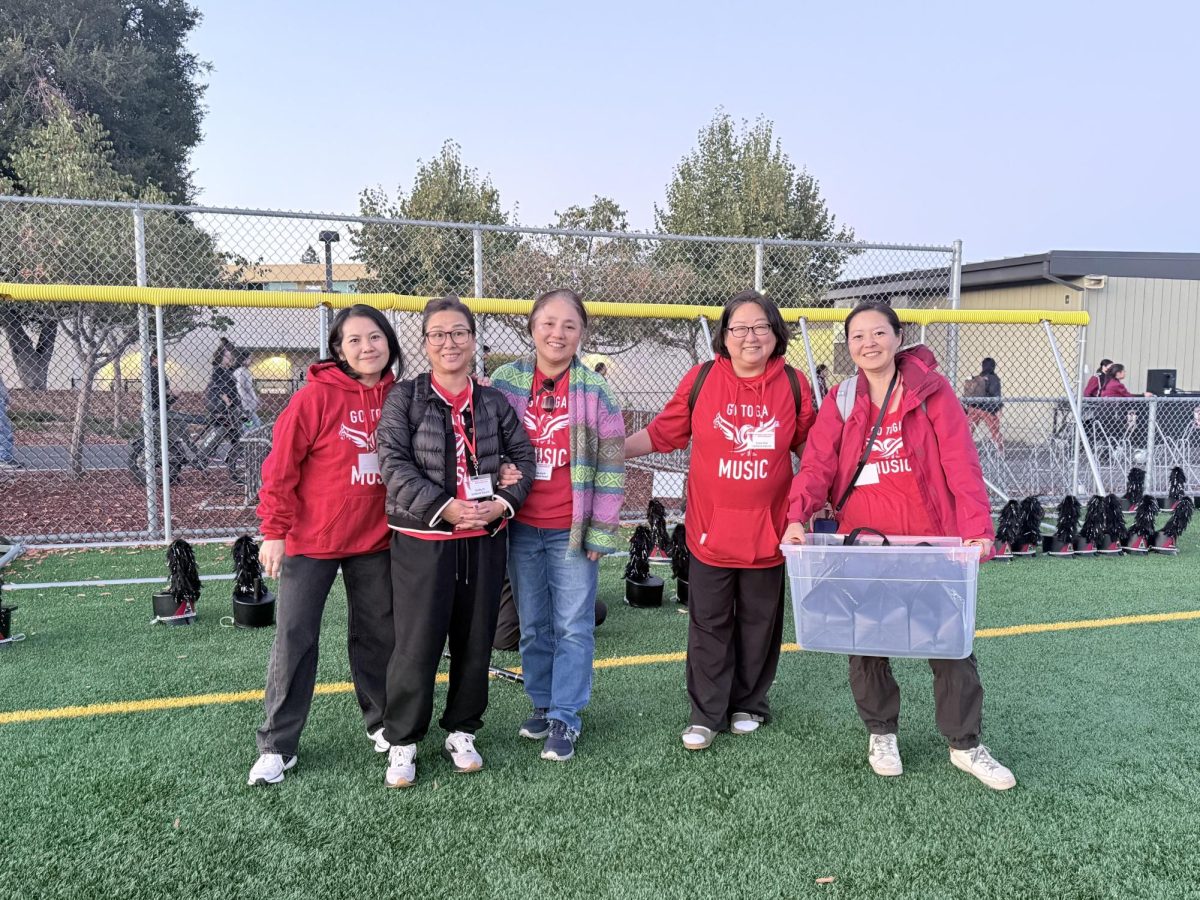
Marching band parent volunteers pose for a photo in recognition of their behind-the-scenes support.Every August, before most students ever step foot on campus, the music building’s uniform room hums with the shuffling of shoes and the cleaning of clothes. Parent volunteers line up rows of jackets, brushing lint from the sleeves and polishing silver mirrors until they gleam.
In one corner, a student manager carefully organizes the assignment of garment bags to each marching band student. In another corner, members are swiftly and accurately measured by the remainder of the uniform team.
Two decades after they first appeared in performance on Benny Pierce Field, the uniforms still look brand new, thanks to the hands that refuse to let them fade.
Over the years, the marching band directors contemplated on whether or not to replace uniforms. The band’s uniforms have endured rain-soaked parades, halftime shows and sweaty non-deodorant wearing teenagers. While most spectators only see the shine under the stadium lights, few realize the behind-the-scenes effort involved in keeping them looking good.
Raymond Zheng, a senior drumset player, said, “[The marching band uniforms] are clean, they’re comfortable, and they’re durable, which are the three things that you need when you’re marching in a field show.”
In total, the room holds about 300 marching band uniforms, while each student gets to keep their own shiny black shoes. The uniform consists of five to seven pieces: the jacket, pants, sequin piece (similar to a sash), mirrors, gauntlets (decorative wrist attachments or gloves), shakos (the tall hat) and marching shoes. Each uniform costs about $500, garment bag and all.
Over the course of 20 years, teams of parents and the band’s student managerial team have cleaned, repaired and preserved each part of the uniforms with the same pride as the musicians who wear them.
“[The uniform] turns all 200 people in the band into one entity, and when you’re on that field, performing, you’re wearing the legacy and the dreams of the people before you,” Zheng said.“I was proud to wear that uniform and I wouldn’t want to wear anything else.”
In 2007, one of the first students to wear them was Jason Shiuan, the current band director who donned them in his freshman year.
Even then, he said, volunteer parents spent hours keeping the uniforms spotless. Shiuan said that at most schools’ marching band uniforms can last up to a decade; however Saratoga’s red and white striped uniforms were designed to look classic and be long lasting — a goal that has been achieved as the uniforms go into their third decade.
“There was a lot of care and making sure things were done the right way from the very start,” Shiuan said. “I think that’s been passed down for so many years.”
The 2025 parent volunteer team in charge of the uniforms consisted of parents Tina Pao, Lily Chow and Ivy Yeh. Like previous parents who volunteered, they often came in during school hours and attended every football game and competition the band went to.
”We see how great this music community is,” Pao said. “[The volunteer parents] form a great community. We’re friends, or we’ve become friends, even if we didn’t start out that way.”
The process of taking care of the uniforms includes tasks such as drying them, cleaning them, ironing them and measuring the fit for each student. Other jobs include organizing the uniforms and repairing any signs of wear and tear before every show.
Every August, every member attends a fitting session whether they’re returning or new to the group. For returning students, they try on their existing uniforms from the previous year, while new students find jackets, then pants that fit them based on their measurements.
During competitions certain parts of the uniforms like the mirrors and gauntlets are examined individually to get cleaned or sanitized. This past year and the year before, parents washed the uniforms at their homes in an effort to save money.
“We’re here because we want to be able to support the program,” Pao said. “We want to be able to support the band, support the students.”
