





















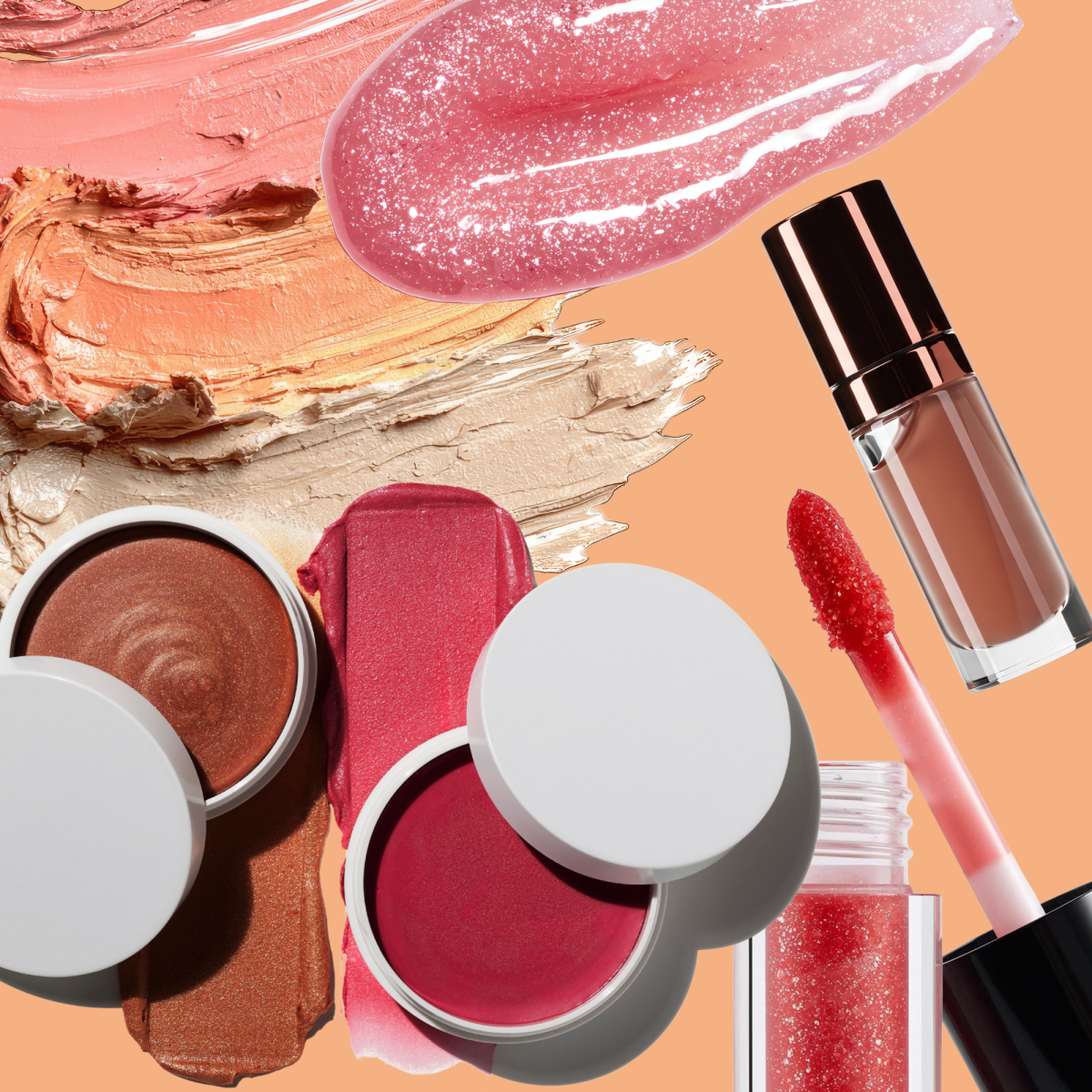
The most popular and well-known celebrity cosmetic brands have been building their reputation for years. Actress Gwyneth Paltrow launched Goop Cosmetics in 2008 and Kylie Cosmetics by Kylie Jenner launched in 2015.
But especially over the past decade, this industry has exploded in size: Rihanna, Millie Bobby Brown, Lady Gaga, Selena Gomez, Halsey, Ariana Grande, Scarlet Johansson and Hailey Bieber are only a fraction of the celebrities who have hopped on the train. These brands have been caught in an evolutionary arms race of sorts with traditional cosmetic companies like e.l.f, Charlotte Tilbury and Danessa Myricks to stay trendy — magnified by the continuing boom of social media advertising.
In the last two decades, the beauty industry has transformed as influencer culture and shortform videos created platforms for companies to market products to an ever-growing customer base. With consumerism reaching all-time highs in the United States, these companies have saturated the market with “innovative” products — now, celebrity lines have become some of the most defining features of makeup, skincare and wellness products.
But no matter how many new brands emerge, there are only so many makeup products that can be reinvented and repackaged. Some celebrities stand out with new quality products, while others are simply leveraging their fame and audience for a consumer base, selling the brand rather than the product.
Take Kylie Cosmetics: Initially famous for her lip kits, Jenner’s brand lost steam as the beauty industry became oversaturated with products. But to celebrate 10 years of her brand, she launched the King Kylie Collection in October. Featuring her classic lip kits, the launch put her brand back on many influencers’ radars, with popular ones like Jefree Star and the Lipstick Lesbians reviewing the collection.
However, Jenner’s brand has faded since then — the norm for unremarkable products in a market with such a fast turnover time.
It’s difficult to tell whether trending products are trending because they are reliable or because they come from everybody’s favorite celebrity: I’ve tried three products from constantly trending brands and from what I’ve observed, if a brand has a history of inclusivity and a longstanding dedication to quality, it’s worth a try.
One brand that does not fit the bill is Rhode, which was acquired by e.l.f in last May. Hailey Bieber still serves as creative director, and I would go as far as to say that without Bieber’s platform and the drama that surrounded her in the years prior, Rhode’s popularity would be nowhere near where it is.
Personally, I’ve used Rhode’s peptide lip tint in the shade “Espresso” — and it was underwhelming at best. It lacks pigment (maybe more suitable for lighter skin tones), is not longwearing, doesn’t feel nourishing and the formula is just meh. It does have really nice packaging, but factor in the price ($20, and in this economy?), there are so many better options for a much more comfortable price point.
Meanwhile, certain brands consistently hit the mark with their products — specifically with shade range.
Shade range has long been an issue in the makeup industry, with a lack of shades for darker skin tones and a lack of undertone variability. The top three well-established celebrity brands that seem to be doing it the best (based on my feed and supported by further investigation) are Haus Labs, Fenty Beauty and Rare Beauty.
Fenty Beauty is best known for its “Pro Filt’r Soft Matte” longwear foundation, which initially broke the market because of its shade range. Before it released its 40 shade foundation (and later expanded it to 50 shades), there was a blatant lack of representation of women of color both in production and marketing.
Advertisement campaigns exclusively featured fair-skinned, blue-eyed blondes. But Rihanna marketed her brand with women of color, especially with darker skin tones. The first video on Fenty’s official YouTube channel uses a model with darker skin, a marketing strategy they have continued to employ.
The brand also has other high-performing and inclusive products — contour sticks critically acclaimed for actually being cool toned (which creates shadows to sharpen features as opposed to warm toned bronzers which only achieve Oompa-Loompa levels of orange), highly pigmented/iridescent lip products and extremely pigmented blushes. The company is currently valued at $2.8 billion, a testament to successful product launches.
It’s extremely difficult to stay a front runner in the makeup industry for a long time, but Fenty Beauty has products launched in 2017 that are still bestsellers.
I use a couple of their products and, as a whole, I really like the formulas and shades. Their cream blush has a really smooth application and the pigment is really buildable — its simplicity and built-in mirror make it a personal go-to. Their gloss bombs are extremely pigmented and comfortable, but aren’t super wearable for daily use; I prefer tinted lip balms and sheer glosses, but if you like bold colors, you’d enjoy this.
Selena Gomez’s Rare Beauty offers a “Soft Pinch Liquid Blush” as its bestselling product, known for being one of the most pigmented blushes on the market. Because it’s so pigmented, you don’t need a lot, so a lot of people (including me) have trouble finishing the product. Because you get so many uses out of a single purchase, I feel like it’s a pretty high value product. It’s useful for performance makeup, which typically requires higher pigmentation. Their complexion products also have a good shade range and I’ve never heard of any scandals surrounding the brand. In terms of beauty politics, the brand’s accessibility initiative is a great first step towards truly inclusive products.
In a market worth tens of billions of dollars, it is extremely difficult to innovate. Shifting the focus to inclusivity and product quality feels like the right next step, and these celebrity brands in particular are effectively using their platforms to promote those values.
