














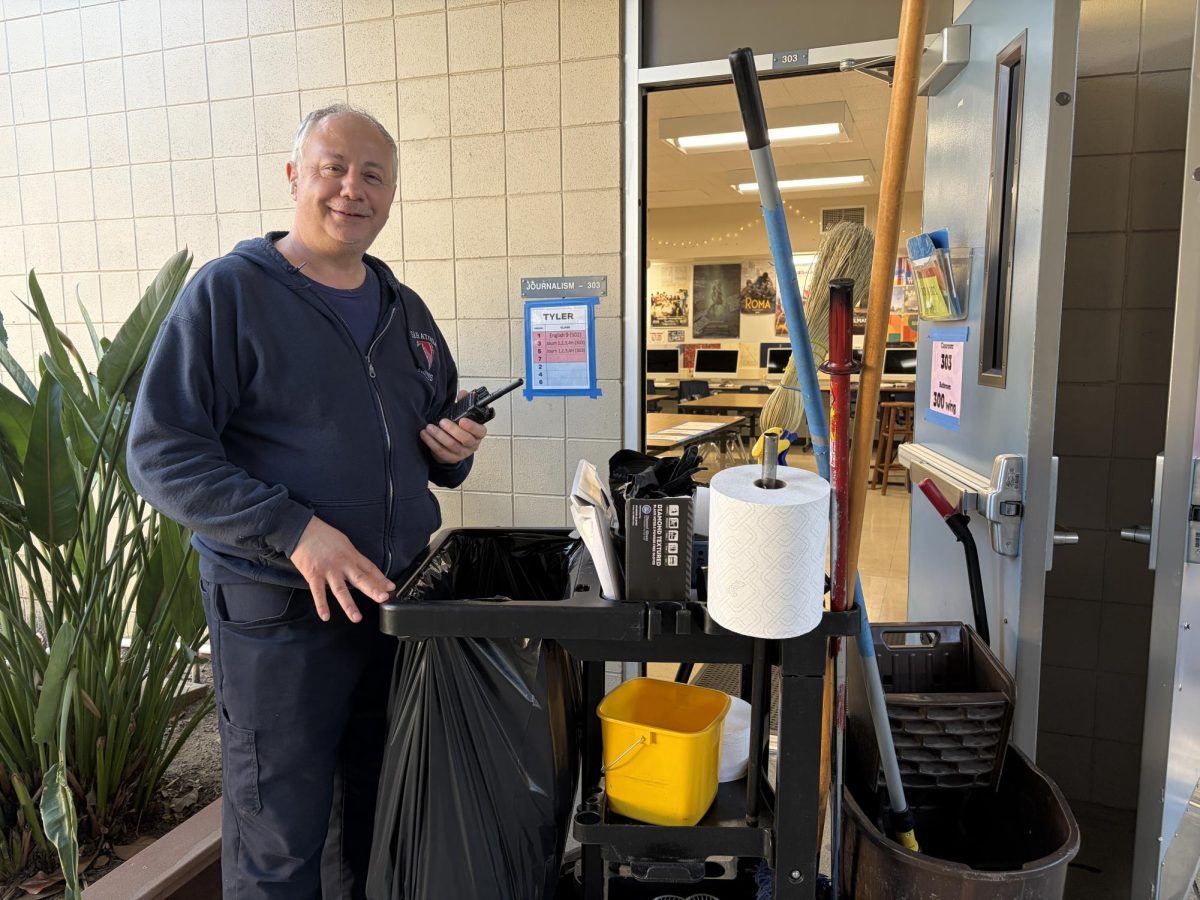
As most teachers and students head home or are in 7th-period classes, the school’s six night crew workers are just arriving on campus at 2:30 p.m. for their 8-hour shift. Their job is to clean and prepare classrooms and other spaces so that they are ready for another day of learning and activities.
The crew starts each shift with a quick meeting in the maintenance building with their supervisor, Henry Arellanes, to review the schedule and any events happening across the campus. In that meeting, the crew asks Arellanes about large events happening in spaces like the gym, cafeteria and theater so they can plan what needs to be cleaned first.
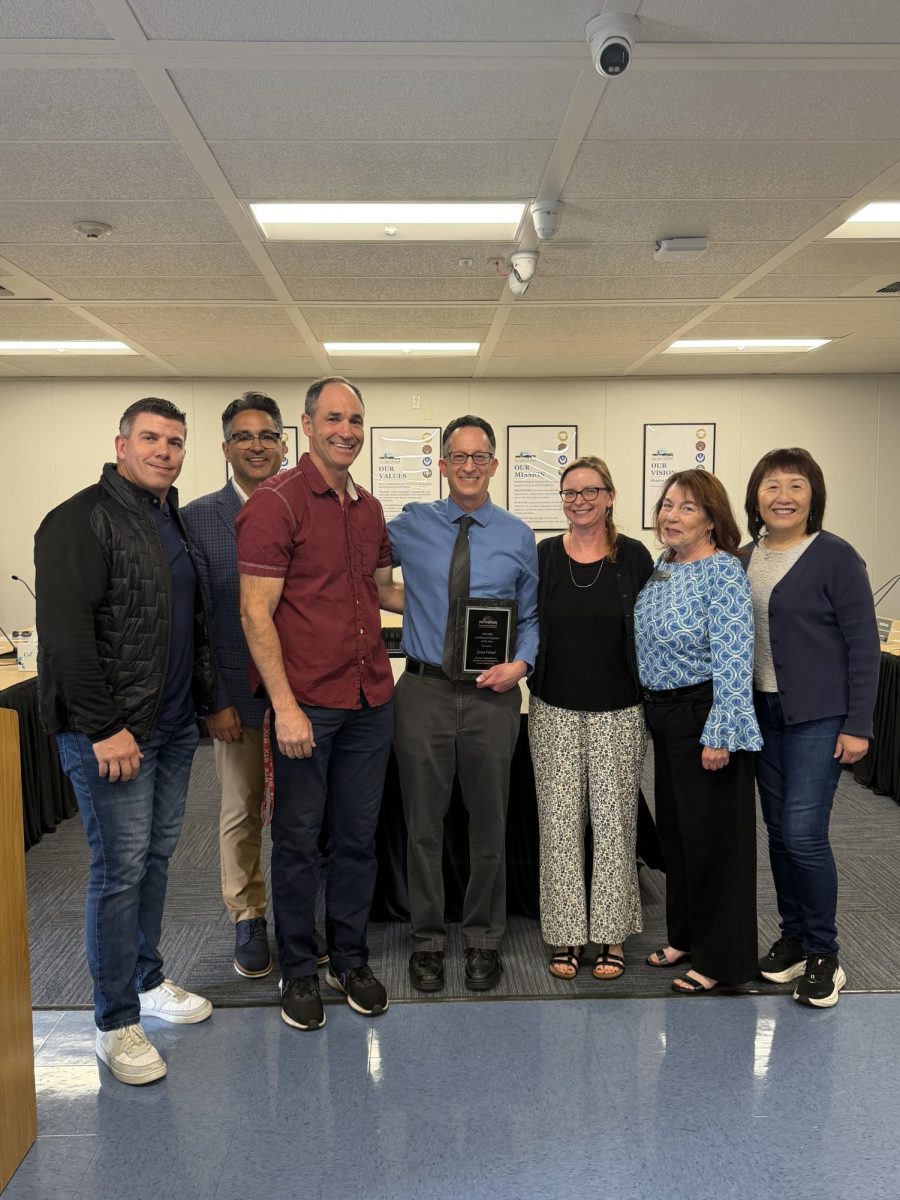
The team is structured so that each member is responsible for a specific section of the school. For instance, Archer Gurleroglu, who has been part of the night crew for almost 10 years, manages the 300, 500, 700 and 800 wings. However, if one member is out sick, the rest of the crew will substitute for their absence by covering their section of the school. The other members of the crew are Uriel Villavicencio, Ruth Quintanilla, Irma Guzman, Luis Machuca and night crew lead Octavio Escobedo.
Despite the meticulous planning, the schedule can change on a whim. According to Gurleroglu, if an event is added later, assistant principal Matthew Torrens may notify the crew during their shift so they can adjust their priorities. When that happens, the night crew may also need to meet again to briefly confirm what changed and who covers the extra work.
The crew’s primary tasks involve sanitizing restrooms, classrooms and offices. In a standard classroom and office cleaning procedure, they use antibacterial sanitizing wipes to clean all the desks, light switches and door handles. Some classrooms require extra sanitization, like ceramics, which requires mopping the floor two times to clean any clay debris, and the science classrooms, where every lab table and sink needs sanitizing every night. For restrooms, they mop the floors using H2 Orange Sanitizer/virucide cleaner and sanitize the toilets with Lysol toilet bowl cleaner.
Alongside the classrooms and restrooms that are used daily, Gurleroglu noted that the crew focuses on other spaces like the gym, weight room, locker rooms, student center, library and cafeteria.
Late-night student activities, such as basketball games or music rehearsals, can also change the crew’s routine. When events like football games take place in the evening and require their attention, the staff may have to spend less time in offices and classrooms to prioritize sanitizing the restrooms before the next school day begins. Beyond cleaning, the crew also handles physical setups for sports and events in the cafeteria.
Additionally, the night crew helps manage campus security after the front office closes. After their half-hour lunch break between 5 p.m. and 5:30 p.m, the crew transitions to monitor daytime visitors and parent volunteers for late-night programs by checking their badges.
Because they work in specific areas each night, the staff members get to know which students usually stay late and which adults belong on campus. Gurleroglu said he watches for people he doesn’t recognize and checks whether they are connected to a student or school activity.
“If I don’t recognize the person on the campus, I will check if he or she is a parent,” Gurleroglu said. “If not, we contact administrators.”
Outside of work, crew members balance their sleep schedules with personal and family responsibilities. Staff members often use their daytime hours to care for relatives such as grandchildren, shop for groceries and spend time with friends. But with their swing shift hours extending close to midnight, they have to structure their lives around not seeing their families in the evening.
To make up for this, Gurleroglu especially uses his time outside of work in the mornings to spend time with his son, Berk Gurleroglu, a college student who graduated last year. During Berk’s time at school, Gurleroglu developed strong relationships with many of his teachers, such as science teacher Jennifer Lee. Together, they even discussed college choices for Berk after graduation. These connections remind Gurleroglu that the night crew is part of the school community, even if students don’t always see them during the day.
To assist the crew in the future, Gurleroglu suggests that students place all trash in the appropriate bins and keep food out of areas where it creates extra cleanup. He said a simple greeting also goes a long way for the night crew, who spend a lot of time preparing students for their next day at school.
“If you see us, just say ‘Hi’ and ‘Thank you’,” he said.
