

















Courtesy of Kelly Kwan
Kwan lives primarily in San Francisco, but also spends time in New York, Seattle, and travels for work often.“Try the new Huda Beauty Lip Contour stains with me,” said social media influencer Kelly Kwan as she swatched all eight shades of the new lip stains on the back of her hand.
The collection, which retails for $200, was one she received as a gift from the company. This reel is one of dozens on Kwan’s page dedicated to reviewing various beauty products. Each batch is sent by different makeup manufacturers to promote their products to Kwan’s 4,000 followers.
Twenty-five-year-old Kwan is hardly alone as a product-focused influencer. These days, it seems almost every influencer engages in unboxing public relations packages to advertise different brands. The practice is how many influencers make their living. But there’s a deeper effect to constantly pushing so many things on the mostly young consumers who consume social media — increasing overconsumption.
The term was coined by economist John Galbraith in the 1950s and has evolved to encompass a cultural and economic phenomenon characterized by the excessive purchase and subsequent disposal of goods beyond what is necessary. The problem has been a trend in American society since the end of WWII, and it is a sign of what some economists call late-stage capitalism.
Late-stage capitalism occurs in a society when companies pump out excess goods beyond what is necessary, trying to convince consumers to spend money on products they realistically don’t need — in turn sending money back to the brands for them to continue the cycle. The trend has worsened since the advent of social media and influencers who make their living from pitching products.
Social media brands, particularly in the beauty and lifestyle sectors, have taken the opportunity to overload influencers with hundreds of products in the form of PR packages in the hopes that they’ll get marketing and advertisement from the lavish displays.
“I see products all the time — every five to ten videos on Instagram,” junior Ria Abraham said. “Influencers are marketing their products, and there’s Instagram ads promoting products and pushing stuff on to me.”
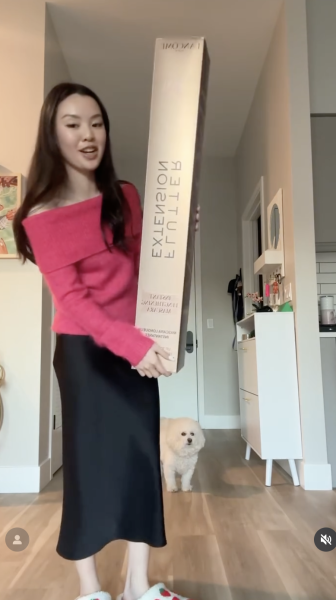
Earlier this year, Lancome, a popular makeup brand, gave Kwan a 4-foot-tall package shaped like a tube of mascara. Inside were only a few tiny products. While not all packages are this wasteful, there remains a strong incentive to make the PR packaging as innovative as possible.
“Cool packaging is what makes me want to post the brand,” Kwan told The Falcon.
The psychology is simple — interacting with the products is one of the best ways for influencers to create excitement around new items.
Courtesy of Kelly Kwan
A 4-foot-tall PR package sent to Kwan by Lancome, a popular makeup brand.
A 4-foot-tall PR package sent to Kwan by Lancome, a popular makeup brand.
Many teens are drawn to influencers because they represent something they find lacking in themselves — beauty, intelligence and charisma. When influencers recommend a product, viewers feel compelled to purchase it in the hope that by using the same products, they become a bit more like the influencers they admire.
“On social media, everyone has the ‘perfect’ closet and the ‘perfect’ house, and it definitely makes me feel like I need it too. Not having it feels like I’m missing out,” one freshman told The Falcon.
Influenced by the trend of assembling “boo baskets” in celebration of Halloween, she and her dance team decided to do their own version of it — each one gifting and receiving a basket. The items she bought included a viral Tree Hut body scrub, a Laneige lip mask, multiple ELF lip glosses, a set of necklaces and rings from Louvisa, and a bunch of candy. A lower estimate for that basket would come to approximately $75.
She also noted that another person received the iconic Rare Beauty Blush — which costs $25 — in a shade that didn’t even match her skin tone.
Additionally, material goods are a sign of wealth, and being up to date on material trends symbolizes economic stability and prosperity.
“Overconsumption is super normalized on social media,” said the freshman. “When I see a TikTok of an [extravagant] shower routine, where the [creator] uses so many products and in the comments, people are recommending stuff too, it makes me buy excess [products] as well.”
The harm of this mindset is twofold.
First, influencers promote a life that is economically impossible for the average consumer. Most of the products influencers use are gifted by the brand themselves while viewers have to purchase everything with their own money.
Second, buying a new wardrobe every season, or having 12 lip glosses when just one, damages the already strained environment, perpetuating unethical labor practices and increasing resource depredation across the globe.
Overconsumption perpetuates the mismanagement of personal finances
Spending hundreds on a back-to-school wardrobe each year is unrealistic and unnecessary for the average person, especially given the rising cost of living — up 88% since 2000.
Yet many influencers act like these lavish lifestyles are completely normal. PR packages sent for free perpetuate a false image of how many material goods the average consumer should have.
Kwan confirmed that before beginning her career as an influencer in 2020, she had a modest makeup collection, with only one or two of each type of product. But after becoming an influencer, she has accumulated more than 10 units of each product as well as an entire dresser of unopened packages. And that only accounts for 50% of the products companies give her, she said.
“When you see beauty influencers with tubs of makeup, it feels like ‘whoa, is that normal?’” Abraham said.
So how does this image truly affect the viewer’s shopping habits — and their wallets?
Approximately 53% of Americans are guilty of overspending — meaning that they spend more than they earn. While it might seem irrational to spend money on material goods while struggling to pay base expenses like rent, US News attributes this dangerous habit to a combination of three phenomena: social pressure, lifestyle creep and irresponsible financial judgments.
Lifestyle creep occurs when people feel pressured to spend their money to fit in with a social group. As that lifestyle slowly becomes natural, things which were once luxuries become everyday essentials, making a frugal life much harder to lead.
Additionally, many people often lack the willpower and education to set realistic financial goals for themselves.
“People are avoidant,” Demi Tang, the head of finance at electronics company Frore Systems told The Falcon. “Managing your personal finances is not a pleasant activity, which is one of the reasons why there’s a disconnect between what you should be doing with your money and where it actually ends up going.”
Oftentimes, brands send every single shade of each product for influencers to feature in the hopes that it’ll incite a better promotion for the brand. They even send out their entire lines in products like foundation and concealer, when each influencer can realistically only use one or two shades, Kwan explained.
With these brand deals, influencers like Kwan can make anywhere between $10,000 to $50,000 annually. That doesn’t even include the monetary value of the free products they receive in PR.
To their credit, some influencers like Kwan donate makeup and other products to homeless shelters as a way of cutting down on waste.
“While I can only use about 50% of the products I’m gifted, I give my products away to my family, friends and boyfriend. I usually do a clean-out every few months,” she said.
Kwan also hosts “giveaways” of her makeup for her online audience. While that might also be perceived as additional marketing, it also serves to share Kwan’s products with people who want them.
Environmental effects of overconsumption
Experts say that overconsumption is one of the leading causes of climate change, since it over-streaches the Earth’s natural resources.
When people see consumption increasing around them, they are prompted to buy more — leading to a vicious cycle of overconsumption. People, especially in a community as wealthy as Saratoga, are able to purchase the newest iPhone, makeup products and trend items — and so they do, Abraham explained.
But when it’s not trending anymore, the products get thrown out.
“It’s not meant to be sustainable,” AP Environmental Science teacher Kristen Thomson said. “Every new year, there’s a new fashion, so people are going to keep buying things every season, and a lot of resources are getting used up. We have one Earth. Once we use it all up, it’s gone.”
The per capita consumption — how much one person consumes — in the richest countries of the world is rapidly intensifying the demand on our already-overstretched planet.
“Normally, when people shop, it’s never just one thing,” Abraham said. “It’s always in a pack of two or four. Someone once gifted me a pack of six lip balms, and I didn’t even like four of them because they smelled bad. Costco does a similar thing, where everyone buys in excess just to save a little money.”
The excess demand driven by marketing leads to the depletion of resources like minerals, fossil fuels, timber and water. Countries are overconsuming Earth’s resources 1.7 faster than the Earth can regenerate, according to Global Footprint Network.
Resource depletion happens primarily in Africa, Asia and South America — which aren’t actually the primary drivers of overconsumption. It’s a product of deforestation, overmining and overfarming these environments. Many of these practices are closely linked with unethical labor such as illegal conditions or slavery, with approximately 12.2 million people working for environmentally degrading activities.
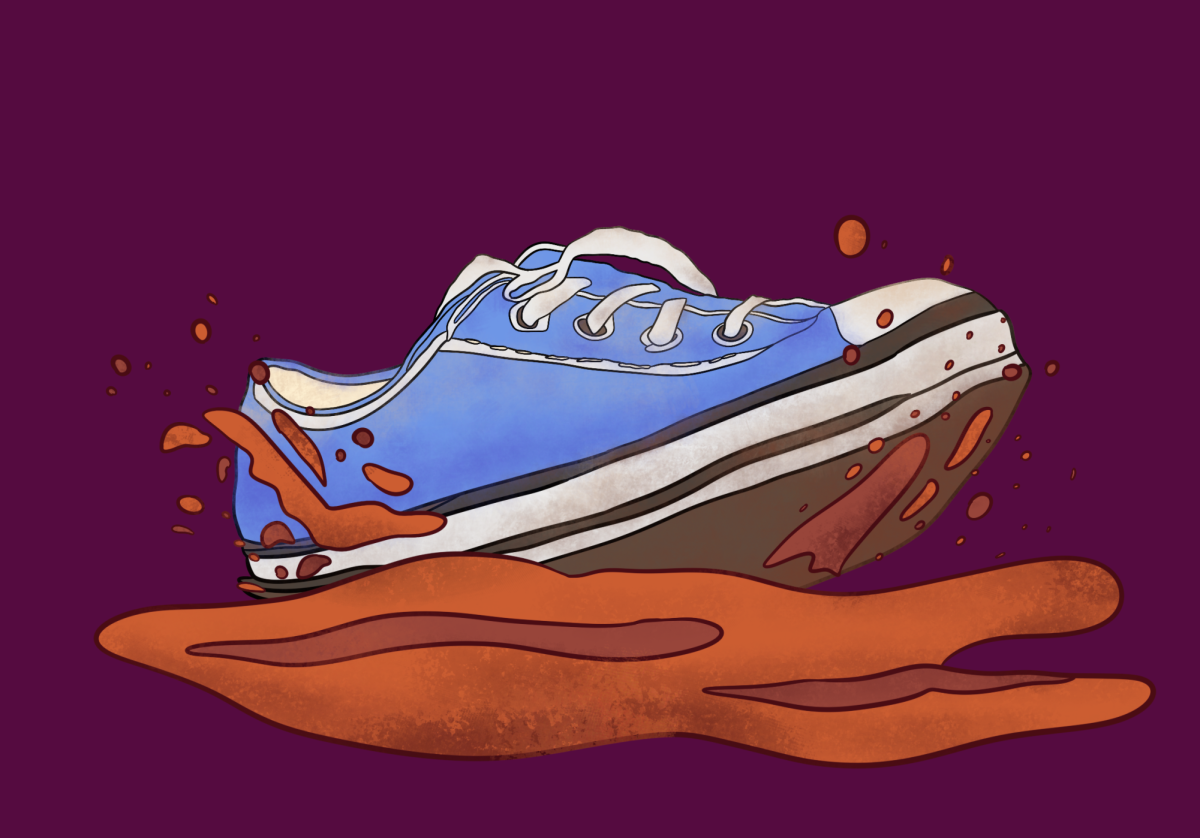
Beyond the damage sustained in the making of the products, the items’ lifespans are often cut short by shoddy design and production and the rapid cycle of fashion trends causing excess waste.
According to the Bank Vogue, the average American throws away 81.5 lbs of physical products each year. Annually, the world’s population generates 2.12 billion tons of solid waste. High income countries like the U.S., United Kingdom, UAE and Germany make up only 16% of the world’s population and yet generate 34% of global waste — almost 683 million tons.
Global waste is set to grow 70% by 2050, damaging the Earth’s natural habitats, pushing ecosystems to states where they cannot take care of themselves as they normally would.
“It’s a societal issue,” Thomson said. “Big business wants to make a profit very quickly, and it’s good for the economy when people buy. But then if you look for sustainability, if you look for stuff to help the environment to clean up what we’ve done, that takes time, and it takes money.”
However, this degradation is not inevitable, Thomson said. By reducing unnecessary consumption and supporting sustainable production, consumers can slow down the damage to the planet.
“It starts small,” she said. “Take shorter showers, buy less stuff, don’t ask for a new prom dress every season. It’s all pretty basic, and everyone knows what they need to do, but it’s uncomfortable to start.”
Making small changes in daily habits can help reduce overconsumption. Consider whether your next purchase is “a need, or a want,” Thomson said. By making these choices, students can save money, reduce waste and build habits to create a more sustainable future.
“After a while, it becomes natural,” she said. “Saving water, or mending your clothes becomes a part of your daily routine and it’s almost effortless. But it makes all the difference. If you want to make a change, be better not just for you, but for the world.”
