





From the brilliant mind of Dana Terrace, creator of “The Owl House,” comes indie animation’s latest hit, “Knights of Guinevere,” a 2D-animated, cyberpunk horror-thriller that laughs in the face of large animation corporations and American capitalism — and proves that artistic freedom is an essential ingredient in any great story.
“Knights of Guinevere” is set in space, where Park Planet, the show’s Disney-inspired floating amusement park in the sky, hovers over the surface of the planet. The park’s mascot, Princess Guinevere, roams around as a hivemind of androids. The pilot episode follows Andy, an engineer at Park Planet, and Frankie, her best friend who dreams of working alongside Andy at the company. When Frankie uncovers a broken Guinevere android, the two girls break into Park Planet to steal a repair halo in hopes of fixing her.
The stunning animation and compelling writing resulted from a highly anticipated collaboration between Terrace and Glitch Productions, an Australian indie animation studio that has been steadily rising in popularity over the past few years.
While largely known for their 3D animation, like in their popular webseries “The Amazing Digital Circus” or “Murder Drones,” Glitch shocked fans with its first ever 2D-animated series. Similarly, Terrace, 34, shocked her own fans with her first ever indie-produced series.
Having worked at Disney for several years, Terrace has had a hand in creating some of their most beloved animated series such as “Gravity Falls,” “Ducktales” (2017) and of course, “The Owl House,” which is personally one of my favorite shows of all time.
“The Owl House,” though widely loved and well received, was cancelled prematurely and had its third season shortened to just three 45-minute-long episodes. Many theories exist as to why the series was cut short, but the official explanation was that it simply didn’t fit the Disney brand.
As Disney aims to market its shows to younger and younger audiences and focus on episodic content, more serialized shows like “The Owl House” will end up on the chopping block, as will the talented artists who make them.
In fact, in a promotional interview for Glitch, Terrance noted that, unlike at Disney, there was no Standards and Practices department breathing down her neck in her new studio. A Standards and Practices department’s role is to regulate all the content that comes out of its studio and determine whether it aligns with company policy and values. Though a seemingly useful device in moderating content, especially in large corporations that have to worry about pleasing shareholders and aggressively maximizing their profits, this department seems to be a rather unpopular one for artists.
As a huge fan of Terrace’s work, I think her gritty, grotesque style of writing and animation is able to shine in “Knights of Guinevere” in ways it was not able to in “The Owl House,” which was likely watered down to fit Disney’s increasingly younger target audience.
This lack of creative freedom was even satirized in the pilot episode, when we are shown Park Planet’s early Guinevere sketches. They’re marked up in red with nonsensical comments like “NO WRINKLES” and, in reference to the tip of her hair poof, “This point feels too violent. Let’s brainstorm.”
Suffice to say, Terrace had not developed a very healthy relationship with her former company. She had to fight for her stories and characters to be portrayed the way she intended.
However, she has no problem repurposing this conflict into content. Her new show was reportedly born from a grievance that took place during her time at Disney — a likely story considering “Knights of Guinevere” is filled with references to the company.
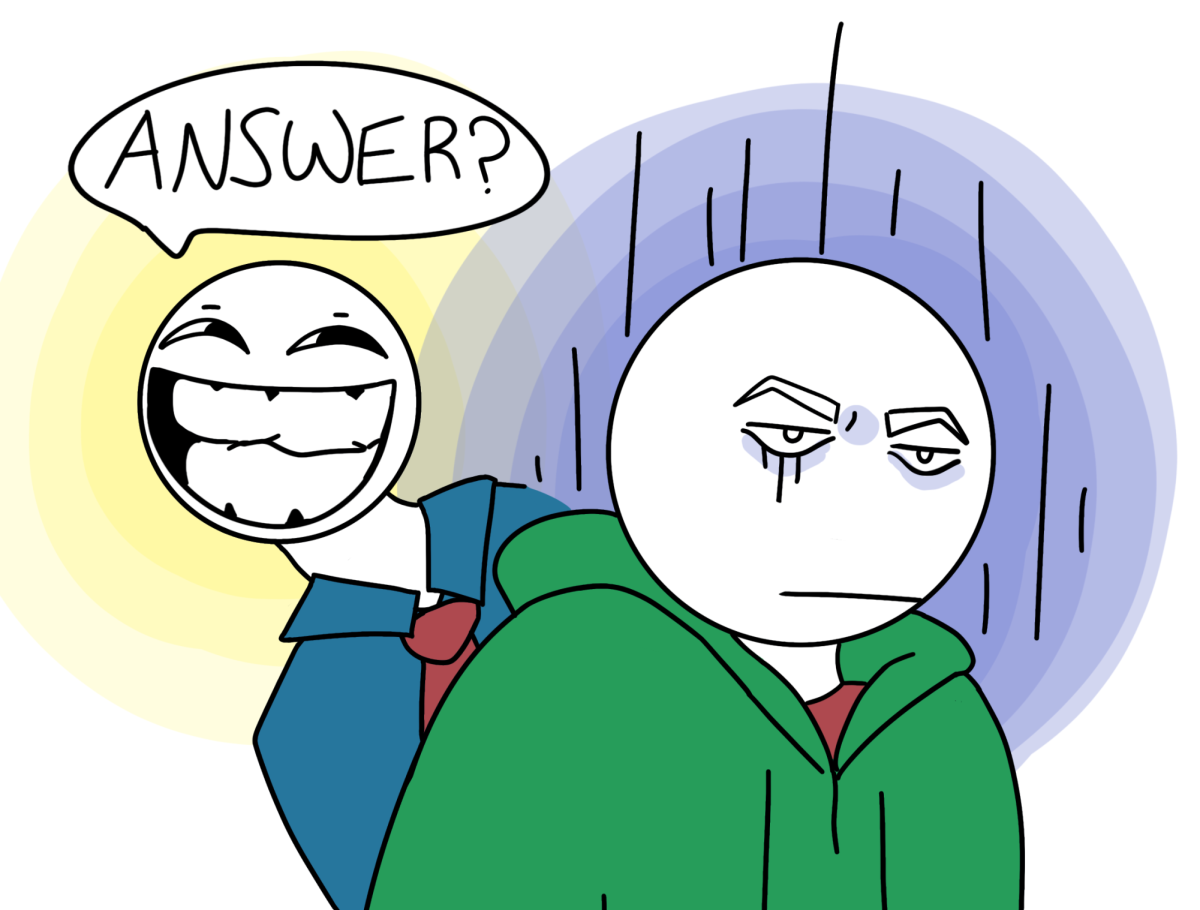
Frankie and Andy, for example, are clear allegories for the unfair treatment Terrace and her coworkers endured during their time at Disney. Frankie represents how they had dreamed for forever of working as animators at Disney in hopes of recreating and spreading to others the joy the company gave them as children. Andy represents their experiences after joining the company — in the show, she is constantly tired, overworked and treated expendably. Frankie aims to join Andy as a Park Planet engineer, but Andy, knowing what working there is really like, shows a distinct lack of enthusiasm at the idea. The frustrating duality between Disney’s magical beginnings and capacity to spread positivity, and its favor of monetary over artistic value makes it a conflicting occupation for the aspiring animator.
From a broader perspective, “Knights of Guinevere” is a criticism of corporate greed and the quagmire of consumerism in the production of children’s media. The pilot makes plenty of in-your-face references to Disney itself, with Princess Guinevere being a stand-in for classic Disney princesses and Mickey Mouse and the hostman having a striking resemblance to Walt Disney. But the abundance of small details throughout the episode that subtly highlight the industry’s flaws are, in practice, the most prominent marker of how indie animation can support the ambitions of its animators.
My personal favorite references include the continual hinting of a dangerous disease called “Blue Lung,” which audiences can infer is caused by or, at the very least, related to the blue substance that powers Park Planet. Through frequent depictions of sick, suffering people as well as background warning signs and posters, the episode paints a picture of a large corporation that exploits and poisons its workers in favor of profit.
Watchers can also draw connections from “Blue Lung” to prominent real-life industrial diseases like black lung, which miners are susceptible to through prolonged exposure to coal dust, and white lung, which textile workers have been known to contract through prolonged exposure to cloth fiber dusts.
More of my favorite details include the episode’s hidden QR code that leads you to three pages of a vandalized Guinevere fairytale. The pages having red and black crowns scratched all over them, a likely derogatory symbol showing how the reign of Park Planet has tainted Guinevere’s image.
Though inspired by Terrace’s experiences at Disney, these moments offer a criticism of the wider animation industry as a whole.
In practice, these small, almost unnoticeable details give the episode a strong indie feel — though it also boasts industry-standard animation quality — and show just how much thought and care went into its production.
These details are proof of how the indie route offers artistic freedom. The indie space gives Terrace and her co-creators, who were also writers on “The Owl House,” the opportunity to write freely without the need to water themselves down to please executives, shareholders or even audiences sometimes. Instead, audiences are treated with authentic and original content.
“Knights of Guinevere” is an underrated gem. Not only are its characters endearing and its animation stunning, but the pilot episode creates an immense amount of intrigue. Audiences are left with so many questions, the most prominent one being, “Will ‘Knights of Guinevere’ be greenlit for a full season?”
Having been made under an indie production studio, there is no certainty that it will get the content it deserves. But as it stands, the “Knights of Guinevere” pilot is a true feat of indie animation and a testimony to what can be achieved through authentic creative expression.
Rating: 4.5 out of 5 Falcons
