



















Courtesy of @Dh.flix on Instagram
Weighted down by college applications and senior year, varsity soccer goalkeeper Orion Tamas King decided not to play for his senior year.Junior Victor Wu remembers the rush of sprinting across the pool, the sting of chlorine and the thrill of scoring goals beside his water polo teammates.
For his first two years at the school, the exhilarating sport was a major part of his life. In junior year, however, he decided he didn’t have the time or energy for it and didn’t join. He was too busy with late-night homework, looming AP tests and SAT preparation.
“I enjoy playing water polo because it’s a team sport where I can have fun with my friends,” Wu said. “I miss the sport, but waiting to be able to play more freely next year is worth it.”
He isn’t alone in facing this decision to quit a sport in high school. These days, only 39% of the high school seniors nationally are participating in sports. This is a steep decline from the nearly 90% of kids who participate in sports in seventh and eighth grade, according to a study by Dr. Bianca Edison from the Children’s Hospital of Los Angeles.
Why is there such a steep decline in participation as kids move through their teenage years? One reason is simply time.
Sports entails a significant time commitment to games and practices and sometimes there are even more time-consuming tournaments that take whole days or weekends.
For just a regular after-school game, the time spent easily adds up to several hours, including commute time for away contests. What’s worse, student athletes may have to miss their last period’s class at school, potentially missing out on test days or important projects. They can also return home extremely tired, having low energy to tackle any assignments or tests.
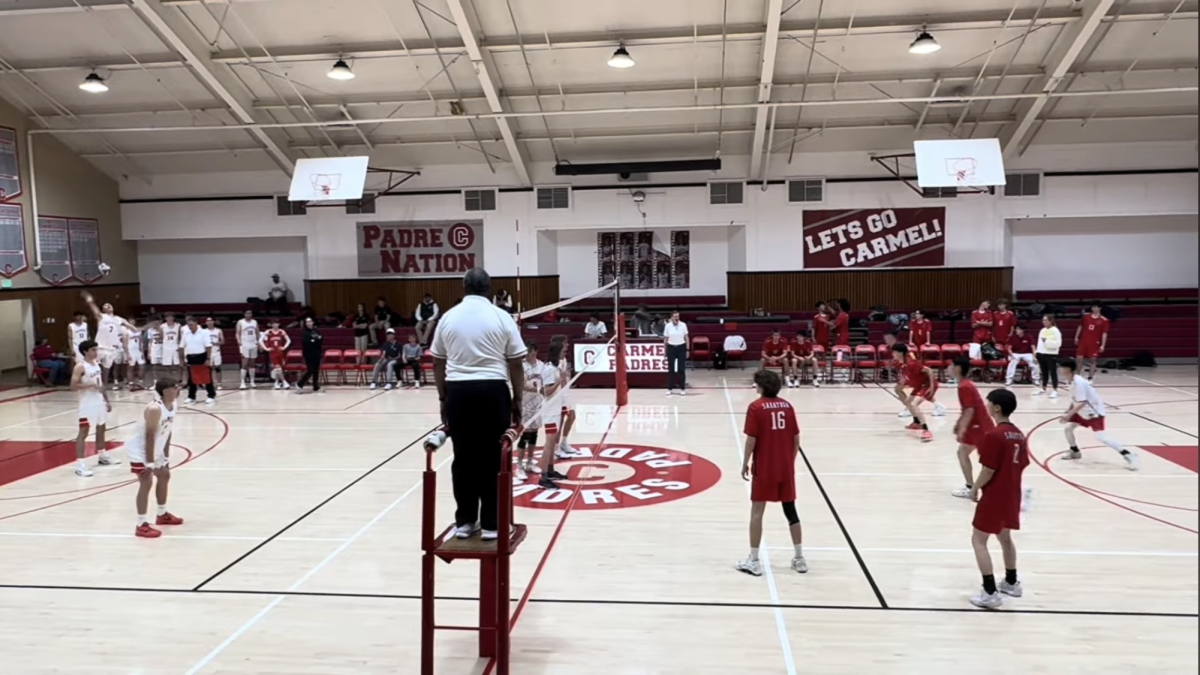
This year, the girls’ volleyball team has only one senior player, exemplifying the trend of reduced participation among upperclassmen.
According to athletic director Rick Ellis, upperclassmen face difficulties in choosing whether to play sports.
“I think our students feel that it’s a busy academic year,” Ellis said. “They’re worried about junior year, their GPA and what it looks like for college admissions.”
Interestingly, Ellis attributes the competitive academic environment distinctive to schools like Saratoga. At Los Gatos High, the problem of upperclassmen dropping sports is not as prominent, he said; the academic loads being less strenuous compensates for athletes to spend more time on sports. Similarly, college applications are less intensive in these environments, which lowers the drop rate of seniors as well.
The decision for juniors and seniors to forgo sports comes at an athletic cost. According to Ellis, one challenge is that coaches spend years developing younger players to prepare them for varsity competition, only for some of those athletes to decide not to continue once they reach that level.
All the time they spent could have been used on an athlete who is going to be there. Dropping in later years can be a major blow to both the team and the player.
Additionally, homework drastically increases between sophomore and junior year; for example, in AP United States History, the increase in homework load is considerable over the previous year’s history class, World History.
The larger availability to AP classes also requires more time and effort compared to earlier science and math classes. Many students, even with free periods, are constantly running out of time to study and finish their homework.
This year, Wu said he is getting 7-8 hours of sleep a night. Most teens get under the recommended amount of sleep, which is at least eight hours. With the addition of a sport to the homework load, student athletes can soon face a serious sleep deficit as they fight to stay on top of all their responsibilities.
A senior’s soccer decision
Senior Orion Tamas King faced a similar dilemma with his favorite sport, soccer.
Having played on the soccer team for three years as its goalie, he found that reaching the final stretch of high school — writing college applications — began to weigh in as a heavy consideration in his decision on whether to play this year.
However, another factor started to affect Tamas King’s decision — physical and mental burnout. Many high school athletes start their sport early in elementary years, sometimes competing year-round. They participate on club teams, have private lessons and play tournaments. By the time they reach high school — especially junior or senior year — that early passion for a sport can start to fade.
“I’ve been playing since second grade,” Tamas King said. “The team is great, everyone’s great, but I would just say, I’ve just been doing it too long. It’s gotten to a point where I’m tired of it.”
Some sports see a higher drop rate than others. Sports like football, where there is less year-round game time, often have fewer players dropping. Unlike sports such as soccer, swimming or tennis — where kids often play club year-round — most high school football players don’t start playing it in early elementary school or before.
In the end, weighing all the factors, Tamas King decided not to play for the varsity team this year; however, he still believes in the benefits of playing a school sport.
“It’s just great fun, and you get to meet super cool people,” Tamas King said. “Overall, it’s just a great way to be doing something and be part of a larger community.”
