

























Universities should be places of education, not war.
Unfortunately, they have recently been placed under siege; their independence has been undermined by government interference and culture battles. Instead of focusing on providing quality education, academia now has to walk an ideological tightrope in order to secure vital government funding. It feels as if we’re inching us closer to dystopia.
A few months ago, at Texas A&M University, Professor Melissa McCoul and an unnamed student disagreed on her class’s content on gender identity: The student made claims that the class was illegal and the content was inaccurate, citing president Donald Trump’s executive orders on restoring the “biological reality of sex.”
“I’m not entirely sure this is legal to be teaching because, according to our president, there’s only two genders, and he said he would be freezing agencies’ funding programs that promote gender ideology,” the student said in a recorded video of the exchange. “And this also very much goes against not only my own, but a lot of people’s religious beliefs.”
Last month, that video, as well as another between the student and Texas A&M president Mark Welsh, who originally defended McCoul’s class, went viral on social media.
Subsequently, Republican lawmakers called for the termination of Texas A&M president Mark Welsh and other officials. And they were successful: Professor McCoul was fired and Welsh announced his resignation on Sept. 18.
If a single class teaching something the government doesn’t approve was enough to justify Welsh’s resignation, it suggests that challenging or defying this administration’s ideologies can result in disproportionately serious consequences.
Essentially, universities have been limited to teaching only what Trump and the GOP wants people to believe. Besides Texas A&M, Texas Tech also imposed restrictions on discussions around gender identity, the University of Memphis shut down its multicultural affairs office and the entire state of Florida removed classes that teach “identity politics” from its general education curriculum.
The loss of academic independence is damaging; removing these courses robs individuals of the chance to understand and formulate their own stance on important topics, providing only one viewpoint — in this case, the government’s.
Jonathan Friedman, who researches academic freedom at PEN America — a nonprofit organization whose mission is to protect free expression — reacted to the firing of McCoul by arguing universities are losing their academic freedom and being transformed into tools of authoritarianism.
This is an issue — when free thought is suppressed and education is limited to what the government wants people to know, cardinal rights are stripped. This culture war has been and is coming for universities, turning campuses into battlefields, attacking key figures and withholding funding to force right-wing agendas into classrooms.
Destroying DEI sets a dangerous precedent nationwide
In 2023, Harvard ex-president Claudine Gay resigned over mounting backlash from conservative groups who accused her of plagiarism and of failing to address antisemitism on campus.
However, according to Christopher Rufo, a primary proponent of Gay’s resignation, one of his major goals was to “eliminate the Diversity, Equity and Inclusion (DEI) bureaucracy,” with the accounts of plagiarism simply serving as a vessel to remove her from power.
The true motivation behind Gay’s forced resignation had little to do with plagiarism or antisemitism; it was part of an effort to diminish and destroy DEI in education by directly attacking its proponents.
Likewise, President Trump’s second term has come with renewed efforts to dismantle DEI, including three separate executive orders — 14151, 14168 and 14173 — which require federal agencies to terminate all DEI programs in universities and declare the existence of only two biologically recognized sexes, thus overriding many previous executive orders that supported DEI.
To enforce this shift, federal funding has been weaponized. Ivy League universities including Harvard and the University of Pennsylvania have been targets of defunding, which undermine their DEI programs and destroy student loan and scholarship programs.
These government-sanctioned funding cuts ultimately harm the students in these institutions; most universities rely on government funding to propel research programs, and government interference ultimately takes away from the overall quality of education provided at said institutions. Ultimately, the government is utilizing the education of its youth as leverage to push their own agenda.
Since the Trump administration is so dead set on terminating DEI programs, which 40% of Americans support and only 30% oppose, it is clear that they are focusing more on pushing their agenda than reflecting and serving the opinions of the people.
If universities continue to bow down, our society will have set a dangerous precedent that a democratic government can do whatever it wants to educational institutions. And with restrictions on gender identity, the dismantling of DEI and attempts to control the “intellectual conditions” of schools by regulating which ideologically pure candidates these schools hire, it certainly seems that we are headed down that path.
While Trump wields funding, universities fight back with the law
Luckily, some universities are fighting back — and succeeding. A federal judge ruled that UCLA would receive $584 million the administration had been withholding since August over allegations of antisemitism.
At the same time, Harvard has strategically renamed its DEI office to the “Office for Community and Campus Life” in response to Trump’s demands. The office seeks to bring together “people of different backgrounds, experiences, and perspectives” without fully ridding themselves of DEI ideals.
In September, the school also won a lawsuit filed against the administration for freezing $2.2 billion in federal funding. A federal judge ruled that the administration violated the First Amendment by cutting funds after the school refused to bow down to a number of demands.
But these solutions haven’t always worked — even Harvard is still making concessions to Trump. The Harvard School of Public Health suspended its partnership with Birzeit University in Palestine following longstanding pressure from Republican lawmakers; they also dismissed the faculty directors of its Center for Middle Eastern Studies.
Severing research ties and changing faculty leadership because a school does not align itself with a politician’s demands is concerning. Instead of providing an all-encompassing and unbiased education, severing connections with a university because of its country and dismantling an entire department damages free thought by confining students’ educations to narrow worldviews.
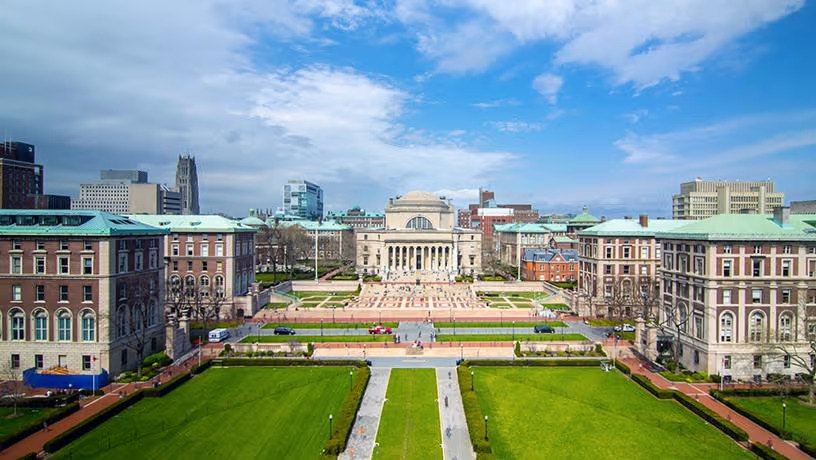
Harvard is not alone here. In March, Columbia University caved into demands made by the Trump administration to unfreeze $400 million of federal funding; in July, they agreed to pay the government $200 million over three years to resolve tensions between Columbia and government and bring an end to funding cuts for the school. Brown also accepted a similar deal.
Forcing ideologies into curricula is destroying education and free speech. Professors are being fired and courses are being adjusted over even minor conflicts with the current administration’s agenda. Universities now have to work out deals with the government over significant funding cuts, harming the institution in the process.
Universities should be the foundation for democracy — a place to foster education and exchange ideas, not a place to force political ideologies and perpetuate a political party’s agenda. Protecting these institutions and their independence should not be a partisan issue; it is essential to protecting freedom of speech and free thought both inside and outside of the nation’s independent campuses.

