

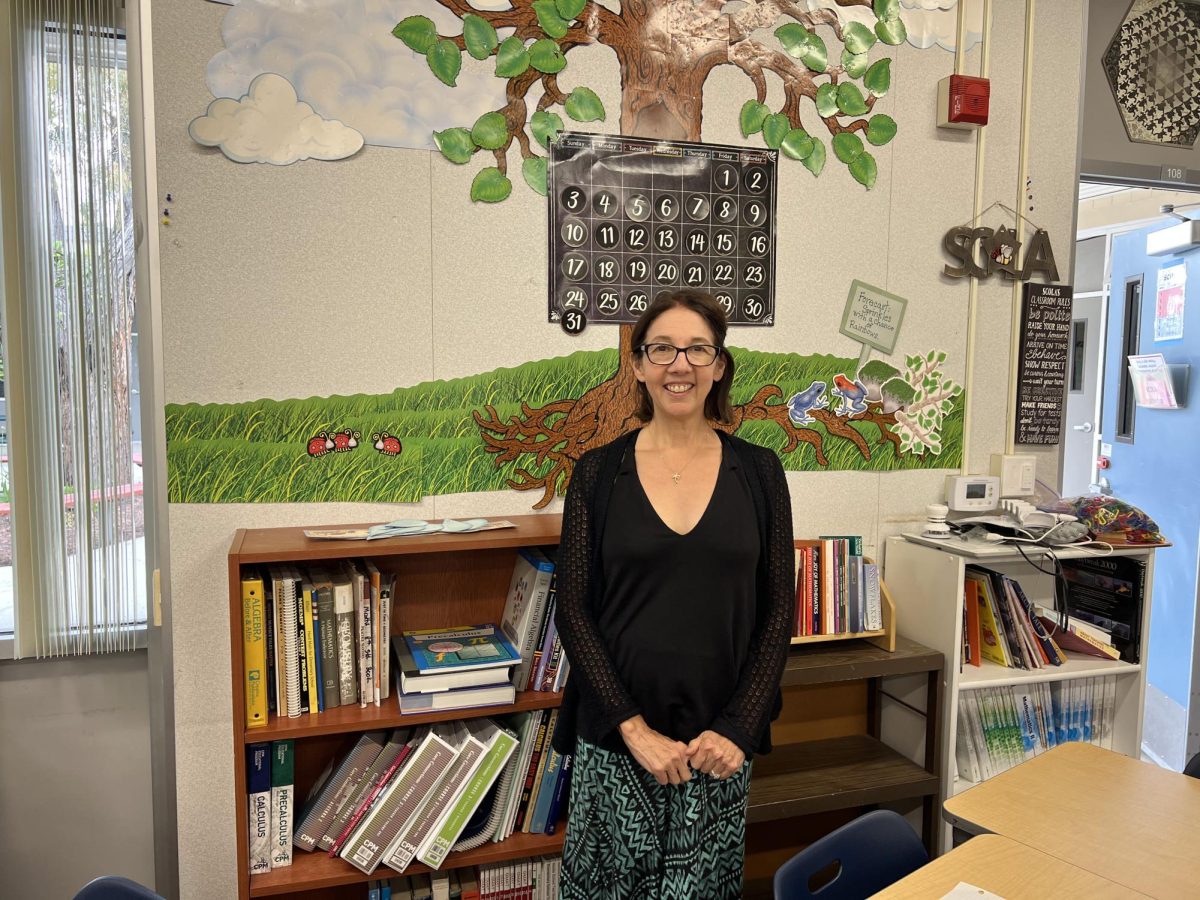












Behind the mosaic-patterned door of teacher Jennifer Mantle’s AP Statistics classroom, it’s not uncommon to see students up and about, rolling pennies down the length of the classroom or rolling dice across their desks. These seemingly random activities are part of a new, collaborative, activity-based style of learning that Mantle has implemented this year.
Mantle, who has been teaching statistics — among other math courses — since 2002, has long used the traditional lecture-based format for her class. But, prompted by a textbook shift last year, she decided to try the more active medium this year.
“Because I was already going to have to change the way I did my notes, I decided to give this ‘experience-based’ learning a try,” Mantle said. “The idea is that students try first, and formalize later — this way, they are more engaged in a class that might otherwise feel a bit prescribed.”
Now during class, students first work on an activity, which then leads them to discover the main concept of the lesson. Guided by periodic check-ins, students work with their table groups on example problems, fitting the new material into their preexisting knowledge base.
The new style of learning is also used in various high schools all over the nation. It was originally engineered by the website Math Medic. With the website’s help, Mantle reformulated her notes and lesson plans to accommodate the new way of teaching in preparation for the new school year.
“It’s a lot more work up front to prepare the activities,” Mantle said. “But the students are doing a lot more than they used to. I like that it forces students that would normally just sit there to be more active with the material. In lower-level classes that I taught in the past, I often had students writing problems on the board, but I hadn’t figured out how to do that with stats. Now, I have people writing on the board every day.”
She first piloted the program last year, giving traditional notes first semester and collaborative learning second semester, and received overwhelmingly positive feedback about the change.
While the style of the class is not as formal as traditional teaching styles, senior Nolan Woo, who took the class last year, concluded that it makes the class more engaging — a necessary change when most of the students are seniors.
“First semester, everything was more standardized. I knew what to expect on exams, so in that sense it worked well,” Woo said. “Second semester, it was a lot more fun — especially for the seniors. If there were too many lectures they were likely to zone out. With the activity-based learning, we didn’t know what to expect each day. We were working together and getting out of our seats, so it was more interactive and engaging for everyone.”
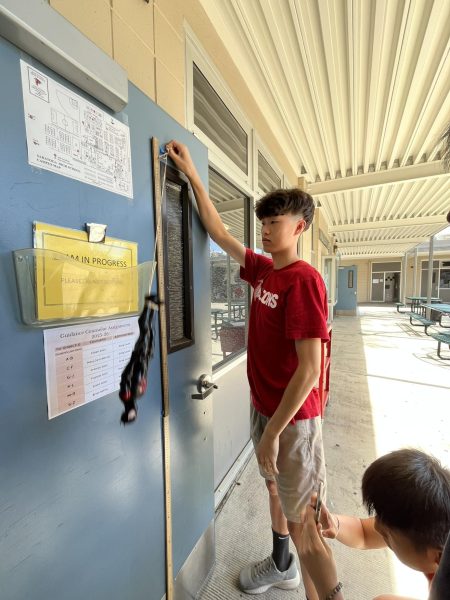
Other activities the class has done include something called “Barbie bungee jumping,” where students tie rubber bands to the bottom of plastic Barbie dolls and throw them off a ledge, making them “bungee jump” in order to visualize scatterplots.
The Math Medic collaborative lesson plans aren’t limited to just AP Statistics — there are similar activities and curriculums designed for math classes from Algebra 1 all the way through AP Calculus BC. While she has considered using the same method to teach other math levels, Mantle believes that it wouldn’t be as effective as it is for AP Statistics.
“There were some individual activities that I brought in [for the other classes],” Mantle said. “In my Algebra 2 class, I did this activity with a pipe cleaner to help students understand the idea of a radian. But, it’s a bit harder to do a full experience-based curriculum in other classes, just because it’s not quite as exploratory. Stats really lends itself to the group work, the conversations and the foundational aspects of math.”

Amy D Keys • Sep 28, 2025 at 9:45 pm
So cool to get a glimpse inside other classrooms and disciplines!