




















Courtesy of Anh Quan Nguyen
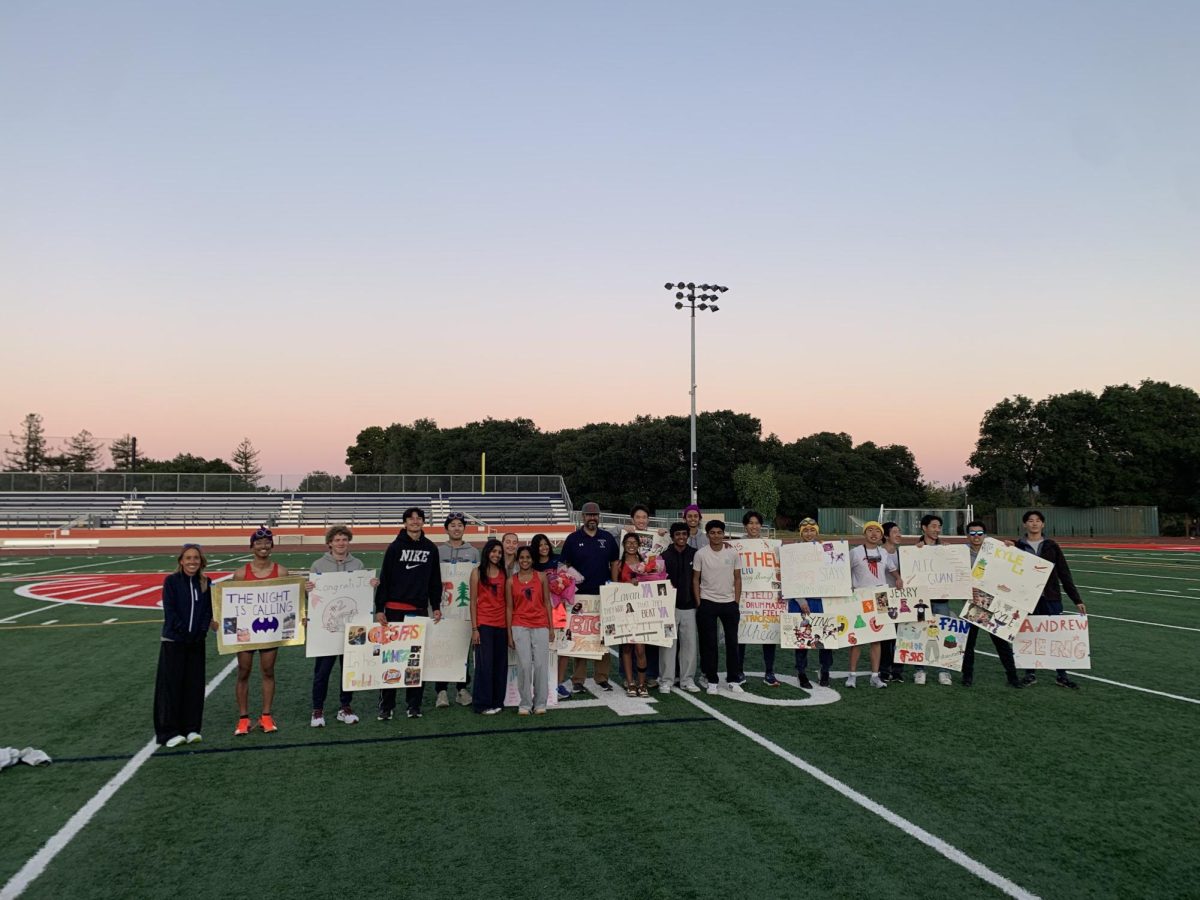
MSET Cuttlefish inspects the field for the first time.Forty-five members of the school’s three FIRST Tech Challenge (FTC) robotics teams gathered last Saturday in the MAP Annex to watch the season’s challenge reveal in a live celebration broadcast on FTC’s YouTube channel. A presenter outlined the new challenge for the 2025-26 season — and what they will have to build their robots to do.
This year’s game is called DECODE and challenges teams to create a robot that can shoot 5-inch plastic balls into a goal 3 feet off the ground. This season is particularly special because FTC has not had a shooter game since the 2020 season’s game ULTIMATE GOAL.
Mechanical Science and Engineering Team (MSET) is the organization in charge of both the FTC and FIRST Robotics Competition (FRC) robotics teams. The FTC program consists of three teams: Jellyfish, Bettafish and Cuttlefish. Each team consists of 15 members, with Jellyfish and Bettafish being the two rookie teams and Cuttlefish being the team for veterans.
The team is split into different roles, with members working on hardware, writing the code and conducting outreach.
The season, which usually runs from September to February, began on Sept. 6, with the challenge revealed as DECODE. These teams typically compete for the first time in early winter, with the two rookie teams wrapping up in February, while the veteran team aims to compete at the World Championships in April.
Unlike VEX, which has no team member limit, but is generally smaller, with a limited set of parts, or FRC, which can have a 5-100 person team and no part limits beyond a total robot weight limit, FTC teams are about 15 people, with robots that can use any and all parts, as long as it fits in an 18-inch cube, making the construction of the robot quite different from that of both VEX and FRC.
Unlike in previous years, the robot also cannot expand outside an 18cubic-inch box. However, during the endgame challenge, which is to fit the two robots on the same team into an 18-by-18 square drawn on the ground, the robot can vertically expand to 36 inches. With these limitations, it’s much harder for teams to accomplish the endgame challenge.
The teams began holding design meetings immediately after the reveal to brainstorm ideas for different mechanisms the robot could use.
“[To make sure everyone is included] we’re breaking up into groups of three, and through that, we’ll come up with an idea together, and present ideas to the whole team after,” said sophomore Serena Hu, the Bettafish hardware lead.
Over the next few weeks the teams will flesh out the designs for their mechanisms as well as prototype them through the engineering design process. For many members of the teams, building the shooter module will be difficult, as it has been a long time since the last shooter game. However, the season’s challenge also has the potential to be especially rewarding.
“I’m most excited for the driver control period of the game this year because we’re shooting objects into the goals,” Hu said. “I think the shooting part is going to be a pretty fun challenge.”

