















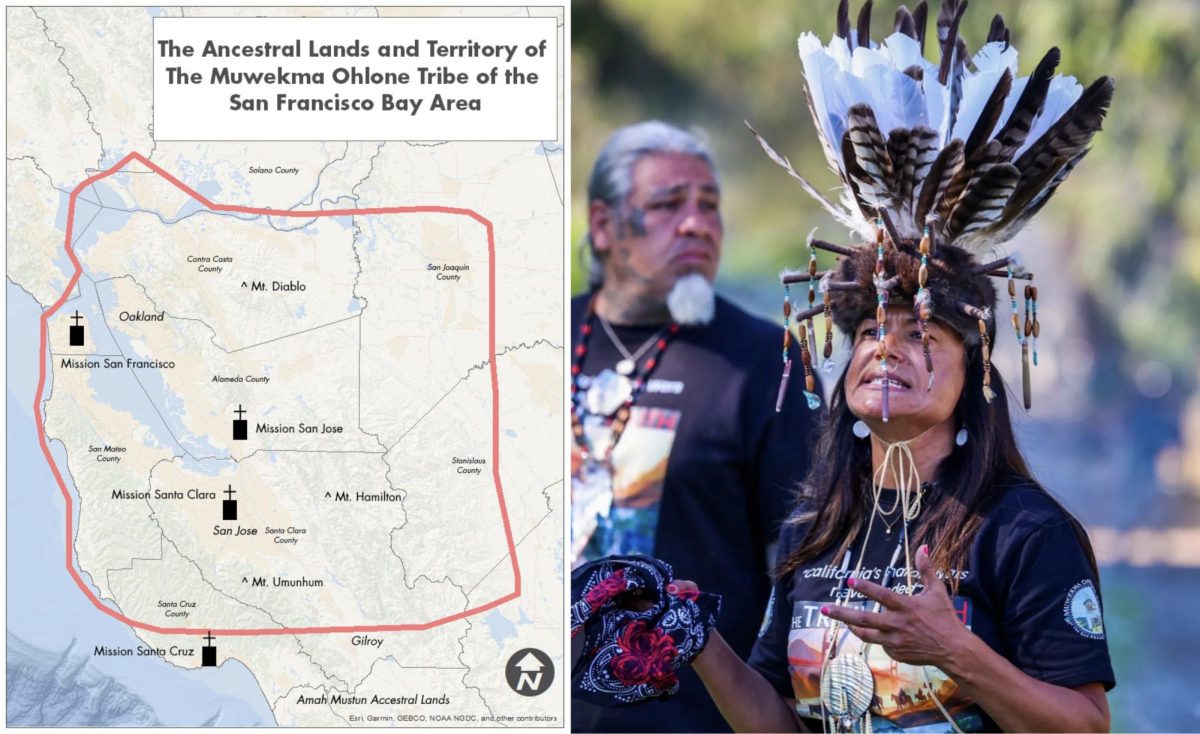












Courtesy of the California Department of Education
The California Department of Education details regulations of the ethnic studies course, but doesn’t standardize the curriculum.In 2021, an Ethnic Studies graduation mandate, AB 101, was signed into law by Gov. Gavin Newsom; the plan was for it to take effect for the Class of ‘30.
The mandate requires students to take one semester of Ethnic Studies prior to graduation. However, Newsom’s decision sparked controversy as largely conservative critics argued that ethnic studies courses promote anti-semitic and left-wing ideologies.
Getting out ahead of the mandate, the district began offering an Ethnic Studies course at SHS beginning in the 2021-2022 school year. Some community members criticized it because it taught Critical Race Theory, a concept that states racial bias is systemic and affects all aspects of society. The course sparked backlash as some parents believed such topics were fundamentally racist and would bring low self-esteem to white students.
Whatever the merits of these arguments, the Ethnic Studies legislation has an even more fundamental flaw: It lacks funding and isn’t clear enough in its objectives.
AB 101 states that local school districts can design their curriculum based on “statutes, regulations and court decisions” detailed in the official Ethnic Studies model curriculum.
One of these statutory requirements details the model curriculum to be flexible and “allow school districts to adapt their courses to reflect the pupil demographics in their communities.” While the intention of this requirement is to make the Ethnic Studies curriculum relevant to the students in their own district, it can also result in a wildly different course content.
This lack of a standardized curriculum leaves room for district misinterpretation. District curriculums could be influenced by local political and racial ideologies, which can in turn misinform students.
Furthermore, although AB 101 was signed into law in 2021, the state has not allocated any funds to implement it. The situation is so dire that the mandate has now been pushed to the Class of ‘31 at the earliest. More details will come out in May, and those details could affect future graduation requirements at both Saratoga and Los Gatos High.
According to LGSUHSD associate superintendent of curriculum Deepa Mukherjee, the district’s current graduation requirements do not reflect the Ethnic Studies requirement and will have to be revised if AB 101 remains a statewide mandate. Mukherjee states that the May revision of the governor’s budget will be the ultimate indication of whether state funding will be available to implement the Ethnic Studies graduation requirement mandate.
The course itself requires a hefty amount of funding. It was predicted to cost $276 million for teacher training and new textbooks across the state.
In many smaller districts with a lack of funding, schools have paused or stopped their Ethnic Studies course implementation altogether. Merced County School District superintendent Steve Tietjen has expressed how the uncertainty of the graduation requirement jeopardizes students’ high school plans. Some may have to substitute a course for Ethnic Studies in the future.
In previous years, freshmen were allowed to choose between World Geography and Ethnic Studies. At Saratoga High, World Geography won’t be an option once Ethnic Studies is a state requirement.
While World Geography covers topics involving global cultures and the history of the non-Western world, Ethnic Studies aims to educate students about the various racial minorities and socio-economic groups within the U.S. that are not typically covered in textbook curriculum.
As someone who took World Geography my freshman year, I found that the course was uniquely valuable as it covered modern culture around the world rather than just historical topics. Learning about current events like the Israel-Palestine conflict kept me informed about global issues. With politics increasingly gaining social media traction, heavily biased content can easily sway the public to believe that there is a “right” and a “wrong” side of a conflict.
The World Geography curriculum taught me that modern geopolitical issues often cannot simply fit under an “aggressor and victim” classification I had previously been influenced into believing.
Though it’s unfortunate that future freshmen will no longer get the opportunity to take World Geography if the Ethnic Studies mandate goes through, the new course will undoubtedly offer invaluable knowledge that is relevant to our history as a nation.
However, without adequate preparation by the state to implement the Ethnic Studies course, the class could be poorly managed and not achieve its intended effect. The bottom line is this: The state must provide the necessary funds and resources for districts that are struggling with the new law.
