

























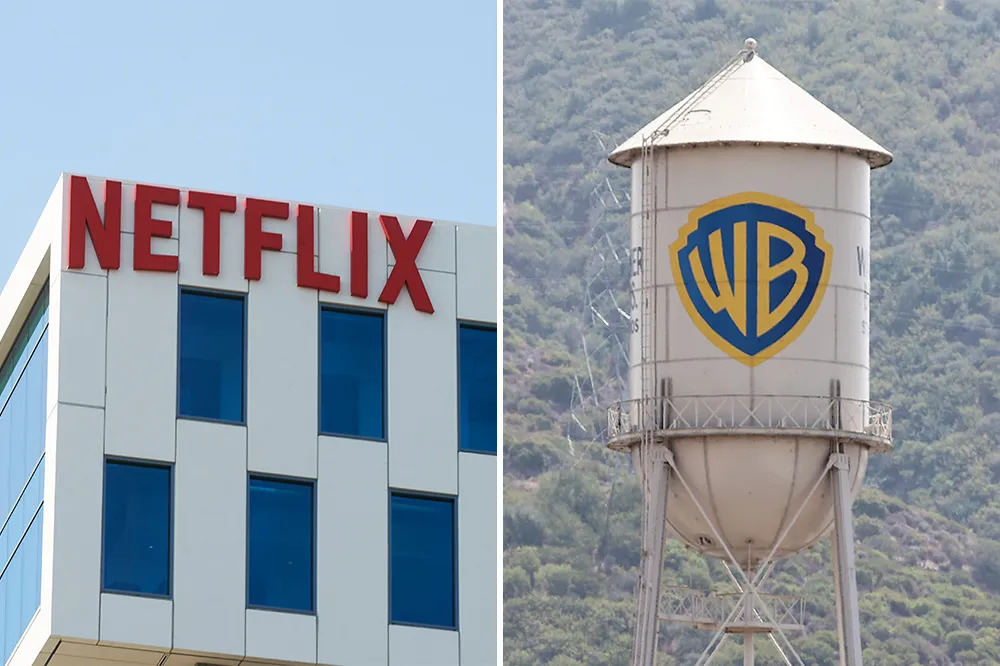
On Dec. 5, Netflix announced that it had reached an agreement to acquire Warner Bros. film and TV studios, including HBO, HBO Max and DC Entertainment.
Pending the clearing of regulatory hurdles and the fierce battle with Paramount Skydance to acquire Warner Bros., the transaction of the $82.7 billion total enterprise value is expected to close in the third quarter of 2026 (from around July 1 to Sept. 30) after the separation of WBD’s Global Networks division, Discovery Global, into a new publicly traded company.
This agreement will combine two successful entertainment companies, creating a fusion of Warner Bros.’ world-known storytelling and Netflix’s quality streaming services.
“Our mission has always been to entertain the world,” said Ted Sarandos, co-CEO of Netflix in a press release. “By combining Warner Bros.’ incredible library of shows and movies with our culture-defining titles, we’ll be able to do that even better. Together, we can give audiences more of what they love and help define the next century of storytelling.”
Benefits listed by Netflix include a wider variety of movie and TV show choices and greater value for consumers, a stronger entertainment industry through the creation of jobs from Netflix’s success, more opportunities for the creative community and more value for stockholders.
Despite these benefits, critics argue that Netflix acquiring Warner Bros. is a gamble.
One concern is losing HBO’s quality content to Netflix’s algorithm. I find that Netflix often focuses on producing as much content as possible to attract viewers, compared to HBO’s focus on producing quality TV. It is hard to imagine Netflix producing HBO’s often more compelling content, such as “Game of Thrones” and other prestigious dramas, including “The Sopranos,” “The White Lotus” and “Mare of Easttown.”
Another concern is raising prices for consumers. Currently, Netflix has three pricing tiers, which are Standard with Ads ($7.99 per month), Standard (ad-free, $17.99 per month) and Premium (ad-free, 4K, $24.99 per month). Subscribers can also add extra members outside their household, with Standard allowing one and Premium up to two. From the $82.7 billion price tag for the acquisition, critics from Collider worry that cost-cutting measures will not be enough to compensate for Netflix’s costs.
Facing less competition, Netflix can easily raise its prices, which may result in consumers moving down to a lower tier or not being able to afford the service.
Possibly the most controversial point is that Netflix may reduce the amount of time movies are in the theaters before being released on streaming platforms.
Sarandos noted that Warner Bros. films will still be released in theaters, but the theatrical window will be significantly shorter. He believes long theatrical windows are not “consumer friendly.” Contradicting himself, he has also promised to keep all future Warner Bros. movies in theaters for at least 45 days. This would be on the higher end of the theatrical release windows because the average over the last several years is between 30 and 45 days across all wide releases.
The analyst firm Cinelytic Group has challenged Netflix’s possible strategy of shortening theatrical windows through the analysis of 30 theatrical releases in 2025. They found that the best theatrical window was between 26 to 45 days, as 25 days or fewer had no theatrical nor streaming benefits.
As a person who enjoys watching movies in the movie theaters, I see this shift as devastating. While movies can be enjoyed at the convenience of streaming services, the movie experience is uncomparable.
We have all experienced being interrupted while watching our favorite shows at home or seen a student attempt to watch a movie on their laptop at lunch. In a movie theater, not only is the movie uninterrupted, but it is immersive as well. The large screens and sounds perfectly compliment the audience’s laughter at hilarious moments and “awws” at heartbreaking moments, amplifying emotions and connections to the film. While watching movies with others, people may create everlasting memories and feel immersed in the movie theater experience.
In a society where fewer people are watching movies at theaters, many people are trying to preserve this experience. Actors have also been large advocates for the preservation of movie theaters. Most notably, Tom Cruise has advocated for films being seen in theaters, insisting on big-screen releases.
During COVID-19, Cruise refused streaming releases for his major film “Top Gun: Maverick” five times for nearly three years, delaying it until May 2022. His patience was rewarded, as this iconic film was shown exclusively in theaters for nearly six months before streaming release, which was remarkably longer than average theatrical release windows.
It grossed nearly $1.5 billion worldwide and became Cruise’s highest grossing film and the current fifth highest lifetime gross of all time, pocketing $1 million a day in North America for 75 consecutive days. “You saved [Hollywood], and you might have saved theatrical distribution,” legendary director Steven Spielberg told The Hollywood Reporter. “Seriously, ‘Maverick’ might have saved the entire theatrical industry.”

Despite the controversies, Netflix is undoubtedly a dominant streaming company capable of pleasing its consumers. Only time will tell if Netflix, with near monopolistic power, will continue to be a leader in supporting consumers and artists.
