







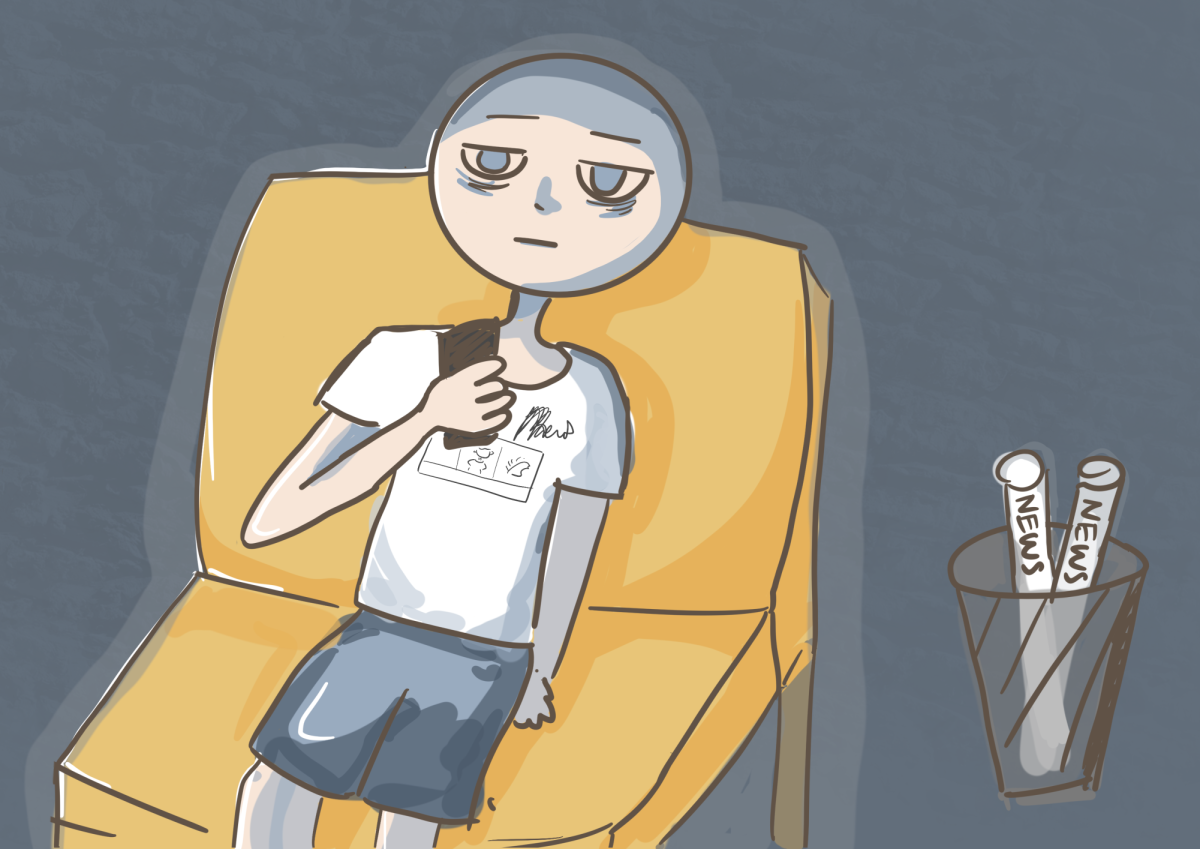








My college application process truly picked up in late August — but before that, it looked like hours of sitting and staring at my computer screen.
At the very beginning, I would “crash out” for hours doing nothing except stressing about everything I was supposed to be doing. Even with all the college advice floating around online, taking the first step felt extremely overwhelming. Just thinking about the mountain of things I had to figure out in the next few months sent my heart racing.
As is recommended, I had begun working over the summer, a few days here and there whenever I had time or felt like it. But when school started, it really started to feel real — not a distant future problem, but something current and unavoidable, and my first deadlines were quickly approaching in early November.
For context, I applied Early Decision (ED) to Rice University, which is a binding agreement that requires applicants to attend the school if they’re accepted. This school, along with several schools I applied to Early Action (EA) — where you apply at an earlier deadline and receive an earlier decision — made up my first wave of deadlines. After that came the UCs, CSUs and a few of my Regular Decision schools with earlier deadlines. To my immense relief, I was accepted to my ED school, which ended my application cycle early and spared me from completing the remainder of my Regular decision applications.
During the summer, I started by doing an initial brain dump of my activities — everything I had done in high school, no matter how insignificant it felt. Seeing these experiences laid out was extremely helpful in writing my essays. It made it easier to recall small, personal moments connected to each aspect of my life which I could potentially write about.
I believe college essays are often stronger when they focus on a specific story or snapshot rather than a major accomplishment, so restricting yourself to only your most “impressive” achievements and activities can actually make writing harder. I also drafted some of my UC Personal Insight Questions, or PIQs, early on because the prompts are pretty broad and could easily be built upon for other supplemental essays.
Once school began, I really started feeling the pressure to figure out my college list and write my Personal Statement. The Personal Statement was by far the hardest part for me. The prompt is completely open-ended, asking you to convey who you are in just 650 words, and it is something that almost every college you apply to will read. My essay had to be great. It needed to be unique, specific, nuanced and authentic, while exuding intellect, growth and maturity, without crossing the line into something sounding forced or cringe.
Trying to balance all of that sent me through a journey of 11 different versions, a few of them completely different essays and all with major changes. I rewrote it with new themes, new structures and entirely different stories. I constantly rearranged paragraphs, added and deleted ideas, and changed wording over and over again. My drafts always ballooned past the word limit, persistently staying between 800 and 900 words, even after cutting redundancies. I would spend hours editing only for little to change.
What really helped me was temporarily abandoning my draft and opening a blank document. Instead of tweaking the same sentences for the hundredth time, I rewrote my anecdotes from scratch.
That reset made a huge difference. I realized I had become too attached to my original wording. Over time, my essay had also become “overedited,” or too polished and lacking my natural voice. Stepping back and rewriting sections more freely worked wonders. That was the final barrier I had to cross to reach my final version.
Being stuck on a single essay for several weeks can be incredibly frustrating, especially when you’re well aware of how many other essays and looming deadlines you need to get to. I found it helpful to think of each essay as a process with a predetermined number of drafts to reach the final one. So with this mindset, even writing an essay and completely scrapping it would be moving down a checkpoint. I also worked on my other supplemental essays alongside my Personal Statement to stay on track while giving my mind some variety.
Beyond the logistics, the application process became an unexpectedly meaningful period of reflection. It forced me to look at my 17 years of life and consider what I had done, what mattered most to me and really think about what I wanted to do in the future and how I’ll work toward it.
What advice do I have to others who will be fighting this battle soon? The first thing I would emphasize is mindset. One of the hardest parts of college applications is maintaining the motivation and discipline to write so many essays. Starting early helps, but something equally important is going into it with a positive mindset. Going in with dread from horror stories you’ve heard only magnifies the actual difficulty. Approaching applications with excitement about writing about your life, interests and aspirations makes the motivation aspect so much easier.
There’s also a clear learning curve when it comes to writing college essays. After about a month of drafting, my essays became noticeably better as I figured out how these essays worked. When I revisited my summer UC drafts later in the fall, the difference was obvious. The earlier versions felt extremely tense and overly intentional. Those essays weren’t good, but they were a necessary start. And starting earlier allows you to move through that learning curve sooner and submit stronger essays to more of your schools.
In terms of organization, setting firm deadlines is crucial for first drafts; however, revision doesn’t follow a strict timeline. Everyone brainstorms, writes and revises at a different pace, so rigidly scheduling only goes so far. Some of the best advice I received was to work on something every day, even if that meant editing a single paragraph. If I didn’t have the motivation to work at night, I would wake up early the next morning (though I didn’t stick to this every day). Over time, you begin to understand your own rhythm and can plan according to your own pace.
When it comes to essay content, I found it best to just be authentic. I know that that’s really cliché, but it’s really true. On the same note, don’t try to fit into any kind of mold or force some theme or trait into your essays. It makes them feel very robotic and like you’re trying too hard. The key is to pick out those handful of specific life experiences that are significant to you.
Finally, when choosing schools, make sure you consider factors like geography, school size and importantly, culture and community. Many universities offer strong programs for whichever major you’re in, so it’s important to consider where you’d actually be happy. I also want to stress about physically visiting a school before applying ED there, as you want to be 100 percent sure it’s where you want to go.
However stressful and exhausting the college application process was, it was an important and necessary period of reflection for me. If there’s one thing I learned, it’s to step back and think about how my writing actually felt on the page instead of simply grinding essays out.
