























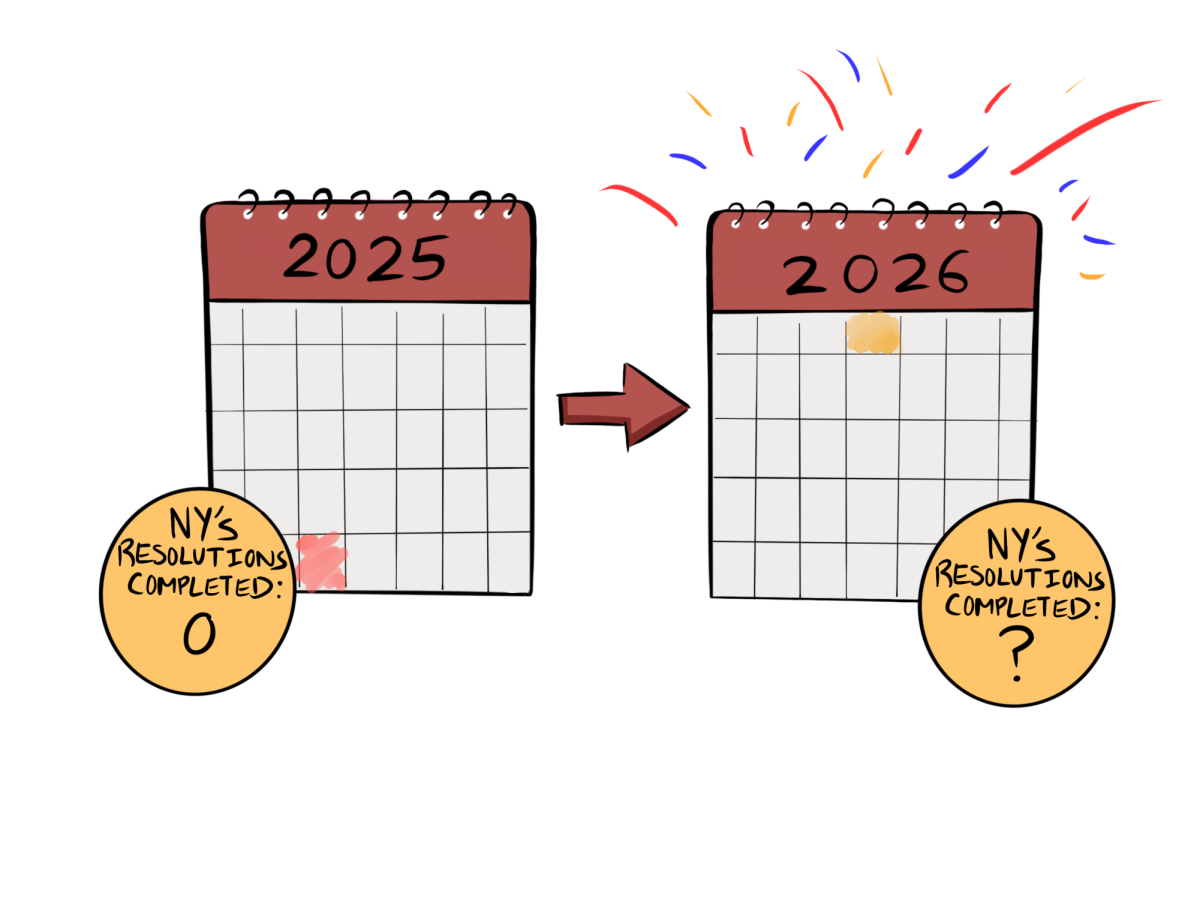
As the calendar turns over, millions of people across the world take out a piece of paper and write the same words: “New Year’s resolutions.” And every year, only 1% of people manage to commit to their New Year’s resolutions for 11 or 12 months. In fact, most resolutions go into the trash bin by February.
Because of this, people often dismiss New Year’s resolutions as futile.
But here’s the thing: I actually don’t think that New Year’s resolutions themselves are flawed.
The problem isn’t that they are too often impossible to follow. “New year, new me,” is a phrase you’ll often hear people say. There’s this belief that with the resetting of the calendar is the chance to reset their lifestyle. However, that’s where the problem is: It’s impossible to change drastically with a snap of their fingers and three weeks of effort.
Saying “I want to run five miles a day” when the most you’ve ever run is three is overreaching. There has to be a buildup if you want any chance to maintain the goal.
I ensure that my habits last by having adaptive resolutions. That means I usually set small goals first that push me out of my comfort zone but aren’t too far out of reach. For example, the New Year’s resolution I have set for this year is to drink more water, but instead of telling myself I’ll drink five bottles of water a day, I have set a goal of two per day.
Then over the course of the following months, I am hoping to build on top of that originally small goal until I reach my original New Year’s resolution — the one that seems impossible to reach right now, at the beginning of the year. This way, I’m not tossing myself into the deep end, but instead slowly taking off my life jacket.
I also remind myself that when I fail to fulfill my daily goal every once in a while, that doesn’t mean I’ve automatically failed my New Year’s resolution completely. Change takes time. Small setbacks are part of the process of forming better habits.
While anyone can make a change to their life at any point in the year, New Year’s is much more appealing because of how it feels like a fresh start. We should look at Jan. 1 not as the starting line for a race, but a time to think about what we want out of the next 365 days and take things one gentle step at a time.
