

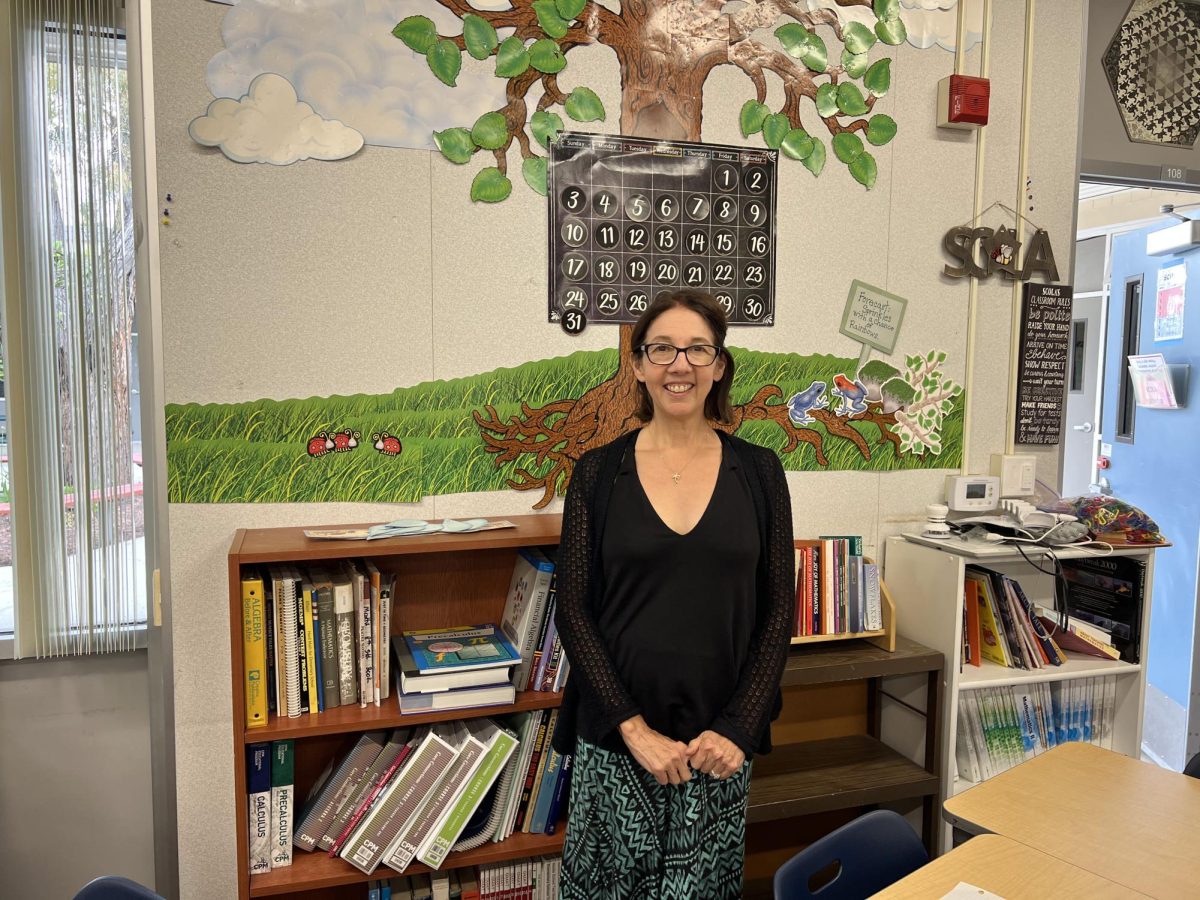




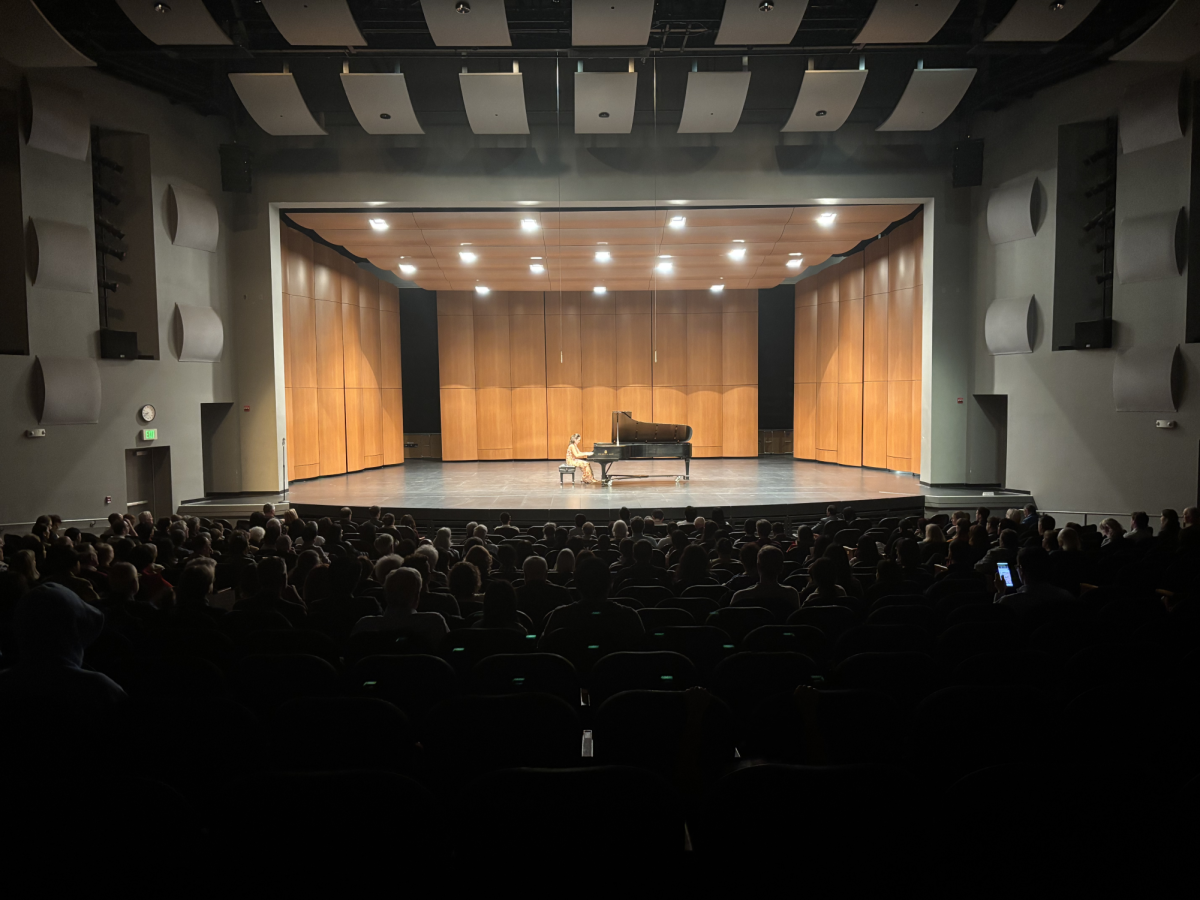
















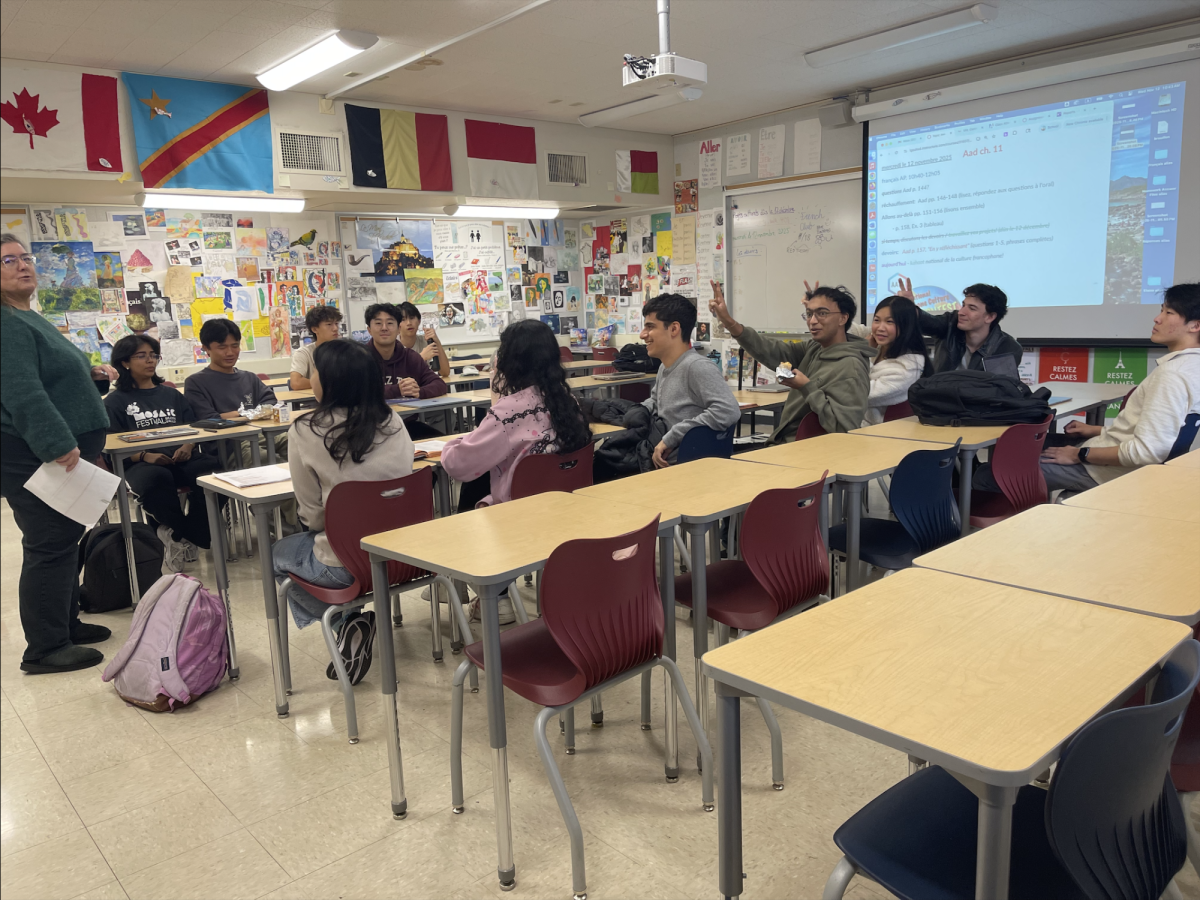
As the drama department rehearsed their fall play, “The Madwoman of Chaillot,” AP French students began simultaneously reading “La Folle de Chaillot” earlier last semester — but the plan needed readjustment. French teacher Elaine Haggerty decided to change her approach to presenting this piece after realizing the play’s complex vocabulary and niche historical references made it nearly impossible to teach efficiently.
“I had never heard of the play until Mr. Brotzman mentioned that the drama department was performing it,” Haggerty said. “When I tried to prepare lessons, I found so much jargon that even I had trouble understanding. We’d end up spending all our time looking up vocabulary.”
Ultimately, Haggerty decided to read a small excerpt in class for the exposure rather than assigning a full reading. AP French students were tasked to research and write a paragraph in French about the background and plot of the play instead.
“The Madwoman of Chaillot,” written by French playwright Jean Giraudoux in the 1940s, is a satirical comedy set in post-war Paris. The story follows Countess Aureilia, one of the many eccentric women who discovers a group of greedy businessmen plotting to drill for oil beneath the city. With the help of her equally whimsical friends, she implements a plan to stop them.
Haggerty especially appreciates the cultural value embedded within the work. The play incorporates classic elements of French theatrical tradition — whimsical characterization, post-war political critique and the role of a Parisian cafe as a social hub — all of which she says help students engage with French culture even if they aren’t reading the full script.
Senior Liam Lenh read a large portion of the play aloud in class before Haggerty made the switch, and agreed that it was challenging beyond what he had learned in his four years of French.
“I understood the gist until about halfway — then I mentally checked out,” he said. “It was pretty hard to read, but we’ve had other tough readings in AP French too.”
He believes that he would have gained a lot of obscure French vocabulary from this reading, though he admits he would forget most of them because the words are too specialized.
Meanwhile, sophomore Annabelle Co, a French 2 student, who played one of the mad women in the play last October, said that performing in the English-spoken show still helped her connect with the French language and culture.
“Our play showed cultural themes through props, costumes, sets and dialogue that appear commonly throughout everyday French society,” she said.
Haggerty went to watch the drama’s performance and enjoyed how ”the themes were valid, especially nowadays corporate greed [for oil] versus trying to save the planet.”
