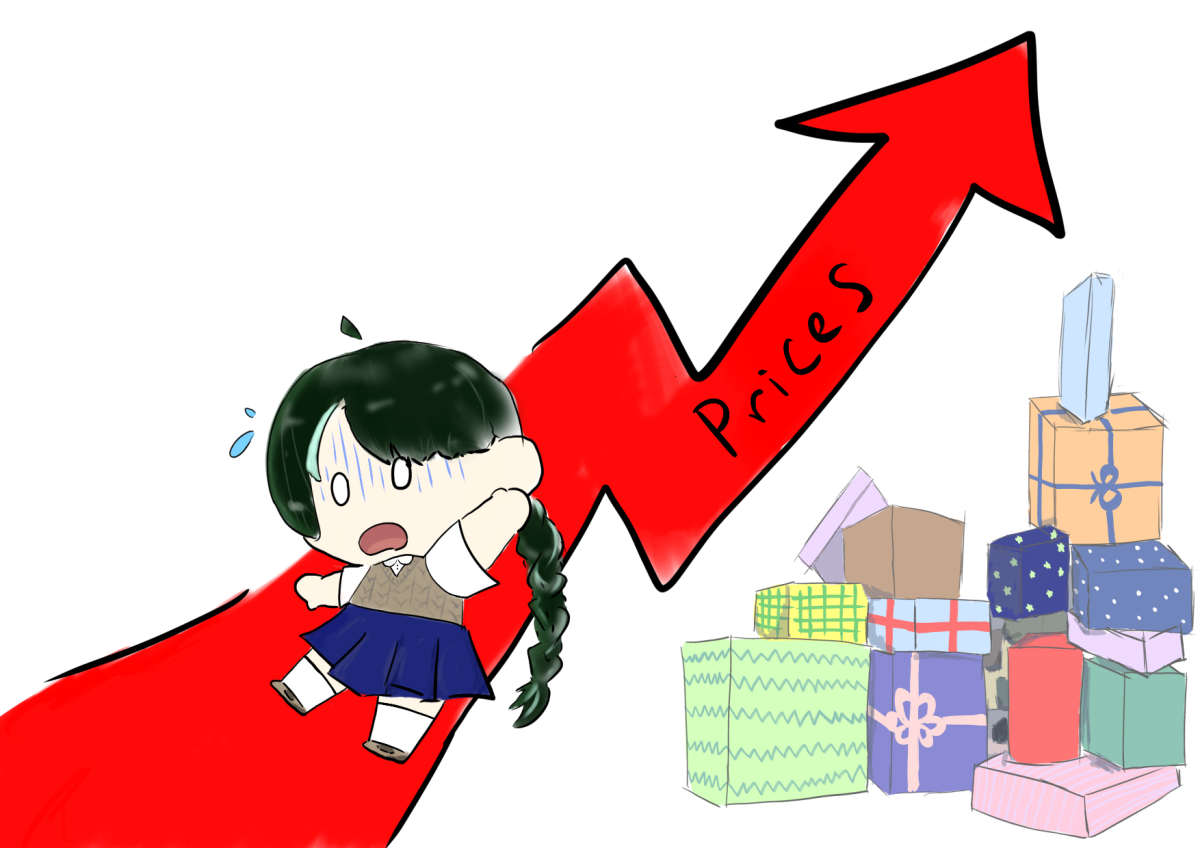
Increased prices of foreign goods may cause consternation among shoppers as the holiday season arrives.
With the holiday season in full swing, the Christmas gifting season is right around the corner. As Americans order gifts for friends, however, they may notice price hikes caused by the new tariffs implemented earlier in the year by the Trump administration.
Historically, tariffs have been implemented to favor domestic manufacturing of certain goods over imports. The idea is to make domestic goods cheaper for consumers vs. their imported competitors. Other countries, however, often retaliate with tariffs of their own on US goods or they stop importing products such as the soybeans the Chinese stopped ordering from US farmers earlier this year.
The Supreme Court now has a case that will determine the legality of the tariffs implemented using the International Emergency Economic Powers Act (IEEPA) with no Congressional input. The case, Learning Resources, Inc. vs Trump has yet to reach a final ruling, which will likely be decided in 2026, was filed by two small, family-run companies, Learning Resources and hand2mind.
Starting in early April, the baseline 10% tariff has been applied to all imports. However, in Trump’s shifting policy approach, not all tariffs are equal. Some countries like China and India, which are major exporters to America, have additional, higher tariffs, while countries with Free Trade Agreements (FTAs) like Canada and Mexico have much lower tariffs. (Consumers, not the countries themselves, pay the tariffs.)
Story continues below advertisement
Besides the baseline tariffs, another change that has increased prices is the abolishment of the des minimis exception. Latin for “negligible,” the phrase des minimis refers to the convention of exempting items of little value from import fees, taxes and even customs processing. For the U.S., the former des minimis threshold was $800 — raised from the original $200 by President Barack Obama in 2016. Now, with this loophole closed for many online retail companies, even small packages from overseas are being taxed, raising prices for consumers.
Here are a few examples of products with potential price hikes, with decent budget-friendly alternatives for your wallet.
Nintendo Switch 2
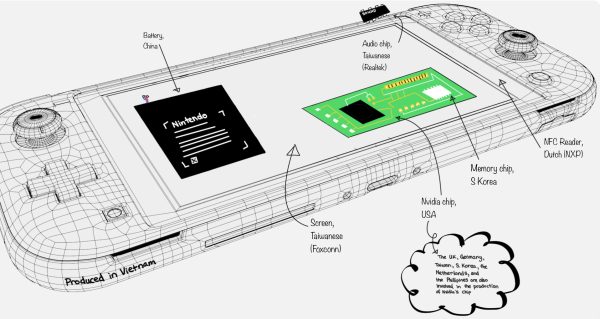
Released on June 26, the Nintendo Switch 2 makes a perfect gift for anyone who enjoys video games. The Switch 2 has many components sourced from various places: the Netherlands, Taiwan, China, Vietnam and South Korea.
The assembly of the device takes place in Vietnam, which the US has imposed a 20% tariff on, a decrease from the initially threatened 46% tariff. Instead of further raising the price of the Switch 2, which sells at $449.99, a 50% price increase from the original Switch, Nintendo has opted to raise the price of the original Switch as well as select accessories. The original Switch’s price will rise from $299.99 to $340, a 13% increase. Other accessories like Joy-Con controllers and Amiibos have also seen price increases of about 15%.
By shifting their price increase onto older accessories, Nintendo was able to protect the sales of the Switch 2, which has sold more than 10 million units, compared to the Switch, which has only sold 1.89 million units this year.
The original Switch, released in 2017, has had a successful but tapering career, with sales peaking in 2021 at 11.15 million units sold in America. Sales have since been in decline, dropping to 5.52 million units sold in 2024, making now the perfect time to release the updated model. Although the Switch 2 has not been on the market for long, its sales have grown quickly, already amassing 3.68 million units sold in America.
As the Switch 2’s price has yet to increase, $449.99 could very well be the best deal for it in a while, making it still a worthwhile buy for someone looking to upgrade from their original console. Alternatively, the Xbox S is known for having excellent graphics (1440p) and a wide selection of games despite its smaller size; at $380, it is a strong console that costs even less than even the original Switch now.
Due to the many countries involved in its manufacture, the Switch 2, like many other tech items, is subject to many tariffs. (Rose Liu)
LEGO Sets
No toy store’s Christmas display is complete without the latest LEGO set, whether it be a complex architectural structure aimed at adult hobbyists or a Duplo set for toddlers.
While LEGO, originally a Danish company, has many branches tailored to different audiences, the 76976 Spinosaurus Air Mission Set from the Jurassic World line is one example of a set affected by tariffs. Released on June 1 with 984 pieces, the set has already seen price changes despite being a new set. Its initial U.S. release price of $149.99 has been raised to $159.99.
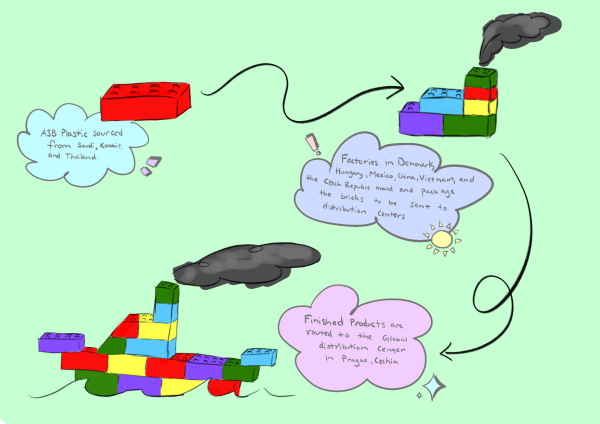
The LEGO company has several major international factories, notably in Billund, Denmark; Kladno, Czech Republic; Nyíregyháza, Hungary; Monterrey, Mexico; Jiaxing, China and Ho Chi Minh City, Vietnam, with another factory set to open in Virginia in 2027.
Currently, the factory in Monterrey, Mexico, is the main supplier for LEGO products sold to the US. That means products fall under the so-called fentanyl tariff, which Trump implemented to curb the illegal fentanyl trade by taxing products from countries that are believed to be the major sources of illegal fentanyl trade — currently, it applies only to China, Mexico and Canada at rates of 10, 25 and 35%, respectively.
Additionally, unlike most toys, which devalue as they age, older LEGO sets can actually increase in value over time; prices can jump after they get officially retired by the company. However, this is uncommon to see on a newly released set like the Spinosaurus Air Mission set, making it noteworthy to see such an early price increase.
As LEGO sets are growing in size and increasing in price, alternative options are starting to look more appealing this holiday season. One notable option is Lumibricks, a company with LEGO-compatible bricks that allow their sets to be integrated into other LEGO sets. The sets also carry LED lights, making the builds stand out even under low light. Another benefit is their relatively lower price, with most of their larger sets maintaining a price under $300, while LEGO sets of similar size can reach prices as high as $600.
The LEGO supply chain spans the globe, but currently has no factories in the US. (Rose Liu)
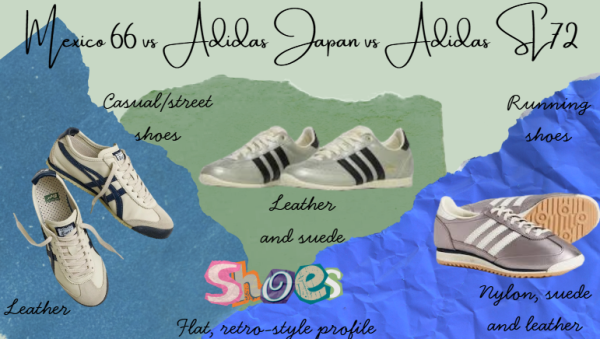
With a special “Nippon Made” line that shows off amazing Japanese workmanship, as well as the iconic line of Mexico 66 shoes, there is no shortage of good gifts in the Onitsuka Tiger catalogue.
Initially designed for athletes competing in the 1968 Olympics in Mexico, the Mexico 66 has become a cultural icon thanks to its appearance in Bruce Lee’s film “Game of Death” as well as the hit film “Kill Bill.”
The Mexico 66 shoes cost between $195 and $210, with price varying based on color. With a 15% tariff on imports from Japan (reduced from the threatened 25%), the price of the shoe is significantly higher than it would have been if bought directly in Japan. In Japan, the same Mexico 66 shoes may cost 13,000-16,000 yen — about $84-$104 — making the US price about a 45% markup.
Some Mexico 66 shoes are also manufactured in Vietnam or Indonesia which have tariff rates of 20% and 19% respectively, both higher than the rates in Japan.
The most reliable way to find a bargain for a pair of Mexico 66s would be, of course, to travel to Japan — but for those who don’t have traveling plans for Christmas, the Adidas Japan as well as the Adidas SL 72 lines have been likened to the Mexico 66, with a price range around $100-$120 if bought domestically.
Adidas Japan and Adidas SL 72 shoes are the most similar to the Mexico 66 shoes. (Rose Liu)
Fujifilm Cameras
With retro camera styles now making a resurgence, digital cameras like the Japan-based Fujifilm X100VI have surged in popularity. Although the cameras may look like retro-style relics, some, like the Fujifilm, are actually quite adept at taking high quality photos as well.
Most Fujifilm cameras are made in China, but with China’s 34% reciprocal and 10% fentanyl tariffs, production for US bound cameras has recently been moved to Japan, with a 15% tariff instead. Still, the price of a model like the Fujifilm X100VI digital camera is $1799.95 despite the migration of production — it’s one example of unavoidable high cost.
Priced at $1599.95 before August 2025, the Fujifilm X100VI has already seen a 12.5% price increase due to tariffs. But despite tariffs, Fujifilm sales are growing, with the number of cameras shipped increasing by about 72% between 2023 and 2024. As the massive demand for the camera continues to increase, the price may continue to grow as well.
The Fujifilm X100VI occupies a special place in the market, blending compact design with a nostalgic retro style and excellent photo quality. Because of its diverse strengths and high demand, it is difficult, but necessary to find a substitute with a lower price point.
For a small, trendy, beginner-friendly gift, the much more affordable Fujifilm InstaX Mini EVO may be a good choice, coming in at only $234.95. As a retro style instant camera, it has far fewer presets and controls, making it easier for everyday use, though its image quality is somewhat compromised.
Another option is the Ricoh GR IIIx at $1249.95, a very compact digital camera boasting high image quality, perfect for amateur photographers who want a step up from something simpler like a Polaroid.
Overall, although prices continue to rise, there are still many tactics that can be used to snag quality gifts and stay within budget this winter. The Switch 2 has not yet raised its price, making this winter the best time to snag one before more potential raises, setting it apart from the other big name brands, like LEGO and Onitsuka Tigers, which have raised prices. To stay within the shopping budget, considering alternatives may be the best option, though for the Fujifilm X100VI, considering the recipient is crucial, as the world of digital cameras boasts many specialized machines, but few generalists that cover it all.
The Supreme Court is likely to make a ruling regarding the tariffs in early 2026, with a 76% chance of the Court ruling against the Trump administration, according to Polymarket. This could potentially lead to tariff refunds across the board, though it is unlikely to have an impact on Christmas shopping in the near future.
While it is difficult to buy Christmas gifts in an unpredictable market with ever-changing tariffs and policies, it is certainly possible to find good gifts without breaking the bank. Whether increased tariffs will continue as US economic policy over the long term will be determined in the next months and years. In the meantime, consumers are caught in the crosshairs of this policy debate.
Rose Liu (she/her), Class of ’28 is a writer for the 2025-26 school year. She looks forward to writing more stories, especially book reviews and STEM related stories. Outside of journalism, she enjoys reading and playing music.
Donate to The Saratoga Falcon
Your donation will support the student journalists of Saratoga High School. Your contribution will allow us to purchase equipment and cover our annual website hosting costs.