

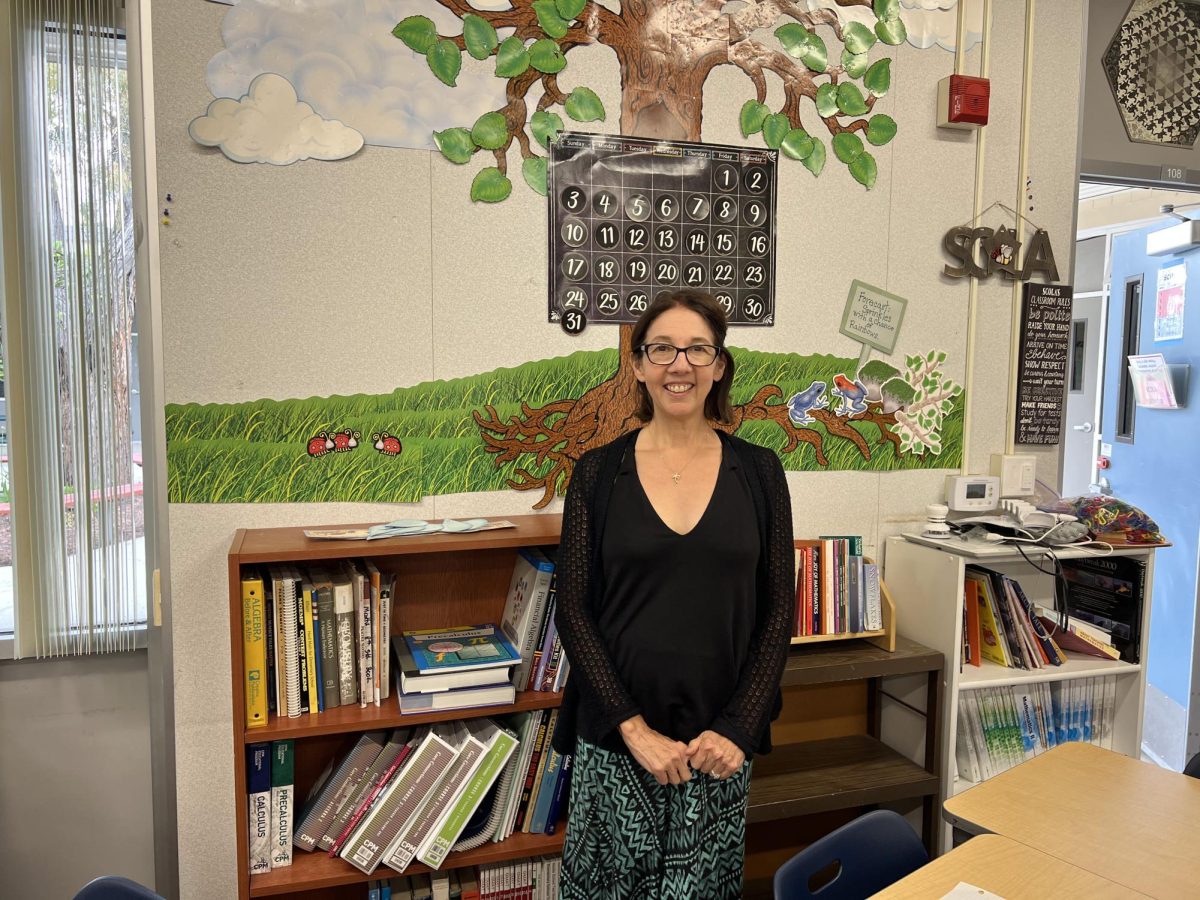















PE teacher Yuki Aoki grew up in Japan. She had little idea about the specifics of her future, but she had confidence in one belief: an education in America would be key to her success. At age 22, she left her home country and came to the U.S. in search of her version of the American dream.
Arriving in Indiana from Japan, she was bewildered when she realized how different life was here.
“I came, I didn’t speak [English] and I couldn’t understand it,” she said. “Back in those days, there were no cell phones, and I couldn’t figure out how to call Japan.”
Through powering her challenges, Aoki achieved her dream through hard work and studying in Ball State getting her masters degree. After that, she was able to get a job at SHS, a dream for her.
A financial dream
Senior Liam Lenh, someone who had Mrs. Aoki wonders if that same promise — that same American Dream — will be there for his generation. He defines the American dream as “the opportunity to pursue what you like as well as moving social classes.”
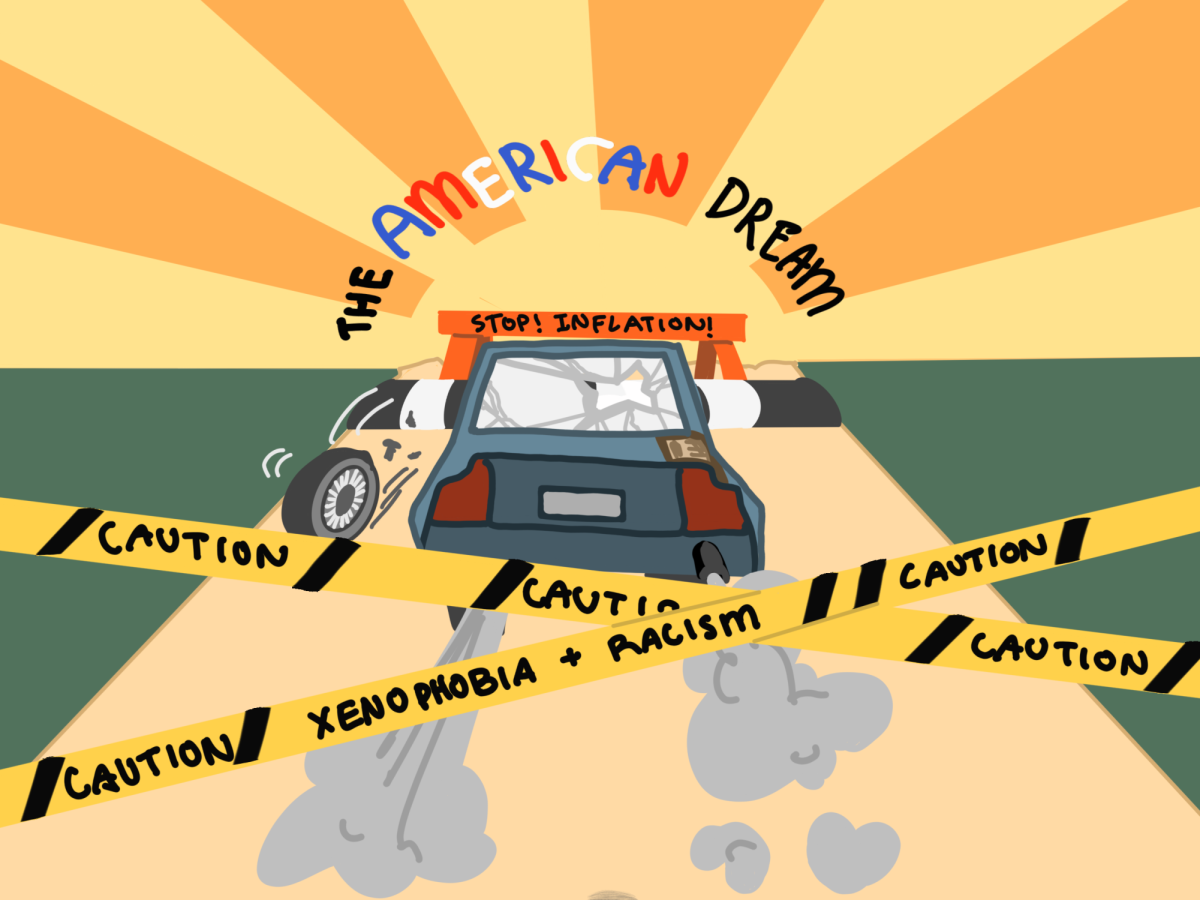
Although Lenh defines the American dream this way, there are still many challenges to achieving it. In the past two decades, the cost of living has been rising at unprecedented levels, and wages are not keeping up. Sixty seven percent of U.S. employees say their salaries are not keeping up with rising costs, leaving them in dangerously precarious living situations.
“In previous generations you could find many solid jobs that didn’t require a (college) degree,” Lenh said. “But the economy has shifted and now securing a decent income to keep up with rising costs of living is far more dependent on some level of higher education.”
As President Trump began his second term, record-high tariffs are starting to factor into rising inflation. Tariffs on China — America’s third-largest trading partner — peaked at 145% in April before leveling out to 10%, with the effective tariff rate remaining over 30%.
Tariffs cause companies to raise prices, so the average consumer has to pay much more for the same item.
Another factor is inflation. Inflation rates have been above the federally deemed healthy rate of 2% since 2021; it is at 2.9% as of August 2025. This means that for an average person who spends $100 on groceries a month, next year they would have to spend $102.9.
As paychecks are stretched and costs soar, it becomes harder for Americans to build wealth.
A rise in artificial intelligence also poses a threat to a wide range of jobs, including those held by white-collar workers such as customer service representatives, content creation and data analysis. Blue-collar jobs, on the other hand, are only projected to lose at most 1% of the workforce because of AI, according to the Economic Times.
A study from the Gerald Huff Fund for Humanity found that AI might affect nearly 45 million jobs in America by 2028. And this study isn’t alone in its unsettling prediction: Consulting giant McKinsey also predicts 30% of U.S. jobs will be automated by the end of the decade. The most affected sectors will be manufacturing, finance, education and media.
The toxic cycle hindering social mobility
Social mobility is decreasing. A study from Yale found that children in the 1940s had a 90% chance of earning more than their parents. Yet by the 1990s, that percentage decreased to just 50%.
Freshman Dhruv Rao’s parents grew up in India, more specifically Bangalore. Rao believes social mobility is going down but the American Dream is still possible.
“Previously, my parents were able to advance through social classes through good test scores. In the present day, it is hard for people in lower classes to advance as they don’t have the same resources many others do,” Rao said. “My future might not be as prosperous as my parents, my path might also be rocky.”
Today, only 36.5% of adults think they are better off financially than their parents.
Another study by the World Economic Forum shows that over the past 54 years, the average wages have increased by a mere 11.7% while education and healthcare costs have skyrocketed by 160%; low income workers bear the brunt of the consequences.
Class of ‘24 alumnus Cameron Nguyen, who is currently studying political science at Northeastern University, thinks zip code plays a huge role in children’s chances for eventual success. Nguyen believes that the American Dream is still possible.
“If you grow up in Saratoga, you’re already at a pretty big advantage,” Nguyen said. “But generally speaking, if students are from a high school that doesn’t get a lot of funding, it’s very hard [to succeed].”
In high school, Nguyen frequently volunteered to teach classes on Arduino microcontrollers for a program that helped potential first-generation college students. He was disheartened to find that many students did not believe they could ever succeed in a STEM field.
“They would literally call themselves the dumb kids,” Nguyen said. “It’s tragic. These middle schoolers are just going for the [high school] diploma, and then they’re probably going to go to some trade school.”
The future immigration challenge
Immigration and racism still pose major problems. In the U.S., systemic racism remains a challenge for immigrants. A 2020 study from the University of Chicago details that 76% of immigrants experience wage theft, where immigrants are paid less than agreed upon while working where they get paid less than an agreed amount.
Despite coming to America with the hopes of education and equality, immigrants remain at a disadvantage when trying to build their new lives in the “land of the free.”
A new bill issued in September now requires aspiring immigrants to pay an additional $100,000 to have their H-1B (high-skilled work) visa applications considered. It hinders immigrants from getting work in an already cutthroat job market, impacting nearly 2.5 million aspiring workers from STEM sectors. Some policies even terminated citizenship for people legally working in the U.S., forcing established immigrants to flee the country.
This makes it harder for future generations to succeed in creating more challenges and barriers to be crossed.
Another factor is how lucky you are in these processes, with so many factors you can’t decide there is not much you can control.
Tejas Tirthapura, a Class of ‘24 alumnus agrees that increasing variables, the economy and immigration barriers are making the American Dream less attainable than ever. Tirthapura believes that the American dream is possible but harder than before. Viewing his own future, he believes that nothing is certain, but the future is still bright.
“I think you have to get lucky,” Tirthapura said. “So many things — from getting into college, to getting a job — are defined by factors you can’t control. It was probably always this way, but now there are even more barriers which make everything even more precarious.”
An enduring hope for the American Dream
While not every generation faces the same struggles, America has been in tough spots time and time again, and has managed to continue to inspire immigrants to come and pursue the American Dream.
“There have always been barriers to success, but people succeed all the time,” Tirthapura said. “We are just facing our own unique set of generational obstacles.”
During the Great Recession, which occurred from 2007 to 2009, the U.S. harbored record-high rates of unemployment, industrial production fell and the GDP dropped by an astounding 4.3%.
Despite the less-than-ideal economic conditions, temporary worker migration increased from 1.7 million to 2.8 million from 2009-10. Even during America’s struggles, people continued to come in search of their dreams, drawn by the opportunities America still represents to the world.
America’s promise isn’t abstract, it shows up in the stories of people who built their lives here.
“I am now getting close to retirement age, and yes I think I did good. I have been in Saratoga for more than 25 years. I really appreciate the students who are very eager to learn,” Aoki said. “We have a good environment, and I have full confidence that the next generation can succeed as much as if not more than the previous generation.”

