














Courtesy of City of Saratoga
Renovations took place across Saratoga Village.As part of the Biden administration’s American Rescue Plan Act (ARPA) of 2021, communities across the nation received millions of dollars for recovering from the pandemic and building infrastructure.
The U.S., although advanced in tech, struggles to keep the core of its infrastructure up to date and steady; the ARPA money served as something of a miracle for many communities, bringing about huge renovations in every state that otherwise would not have happened.
In Saratoga’s case, the city received just over $7 million and has spent much of it on upgrading and renovating old, worn out, but key parts of downtown, namely parking lots.
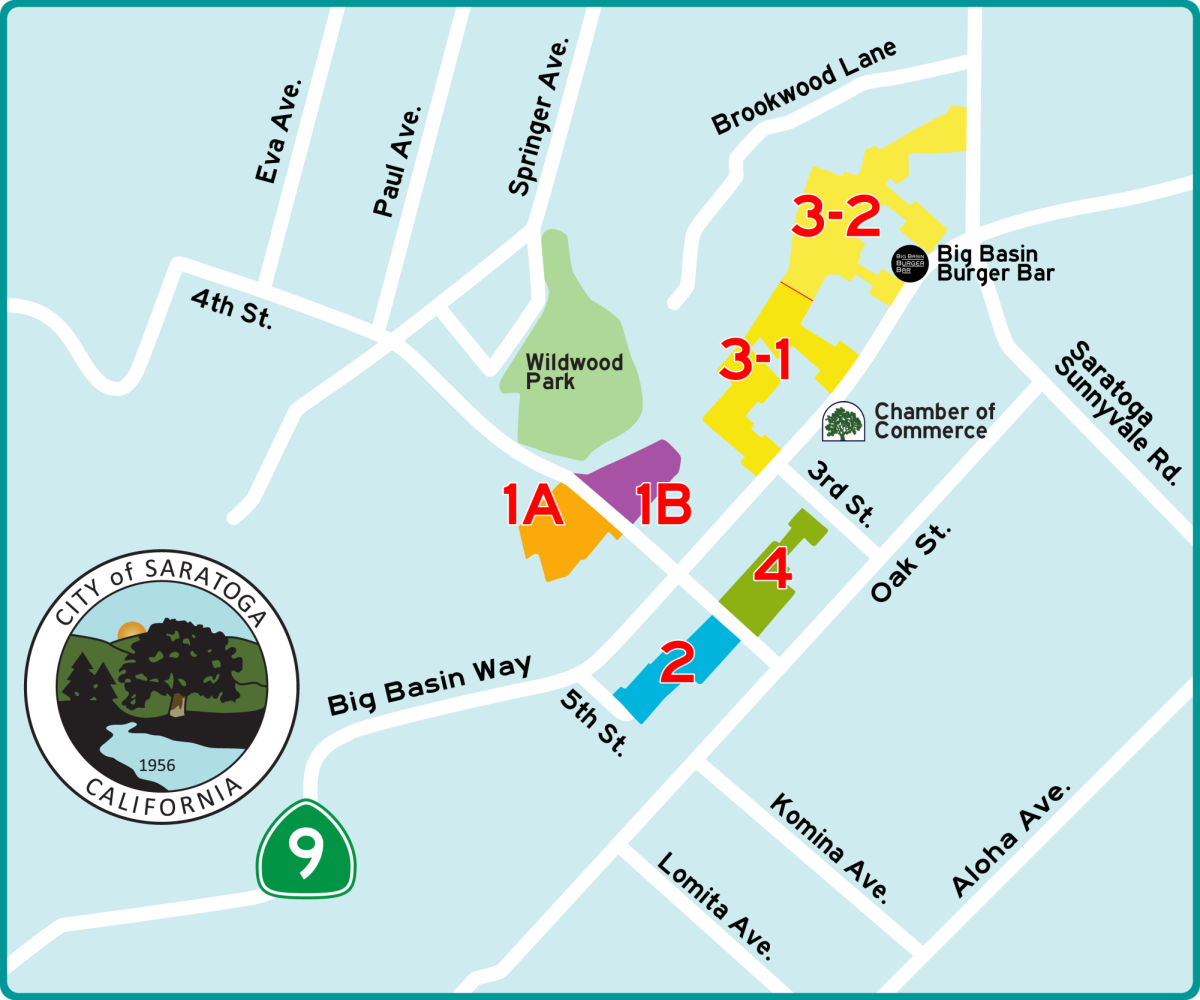
Over this past summer, lots were closed off during the evening in order to make way for the fresh paving of lots surrounding four labeled parking districts: Wildwood Park, the intersection of 3rd and Oak street, 5th street’s intersection with the former and around the Big Basin area.
The project was planned with the needs of Saratoga residents in mind, focusing on what renovations would make life for residents easier and more efficient. Meetings to plan and budget the project began in 2022, months after the city received ARPA money; of the ARPA money given, about $5,911,239 was used for the project to align with plans created by design consultants. The rest of the money was used on various other projects, including a stormwater pollution prevention program and green infrastructure on Prospect Road.
The city plans to celebrate the improved infrastructure with a groundbreaking ceremony in early to mid 2026. By then, all renovations are expected to be complete.
Although the temporary closures of the lots took place over summer, construction was scheduled to begin this past March. Until summer, the city council and GradeTech worked together to create a plan for the renovations.
Staff reports created by city engineer Macedonio Nunez were sent to the council as part of the preparation for this project. The reports covered budget and partnerships with companies and other major project members, including public works director John Cherbone and environmental manager Mainini Leah Cabute.
Renovations ranged from replacing worn out concrete to accessibility features for restrooms; a self-cleaning lavatory was installed behind Net Max Realty.
Another feature in the midst of being added for accessibility are reworked ramps and freshened-up pavement. For all four parking districts, the city decided to upgrade any concrete flatwork to include ramps compliant with the Americans with Disabilities Act (ADA), pedestrian walkways, curbs and gutters.
ADA parking stalls in downtown are also to be relocated and placed throughout the districts, with the goal of providing the shortest and most direct path to and from the pedestrian entry point of the lot.
Efforts in ecology also took a front seat; flow-through planters, bioswales and separator units were added as part of a new stormwater collection and treatment system. The pre-existing stormwater system, old and failing, is also to be rehabilitated for efficiency.
Various other renovations include wayfinding signage, improved lighting (52 parking lights were installed), and the replacing of old trash enclosures with covered ones. These changes aim for easier, cleaner, more efficient and safer parking.
In totality, the project is to renovate 37 preexisting parking spaces for the following improvements, as listed by the city council:
- ADA Stalls/Path
- Bioretention Areas
- New Trash Enclosures
- New Restroom
- Added Planting Strips
“The City has a need for the improvements to the City’s storm drain collection and treatment systems in all Village Parking Districts to improve the quality of water discharge to Saratoga Creek,” Nunez wrote in a staff report during the planning stage of the renovations.
