








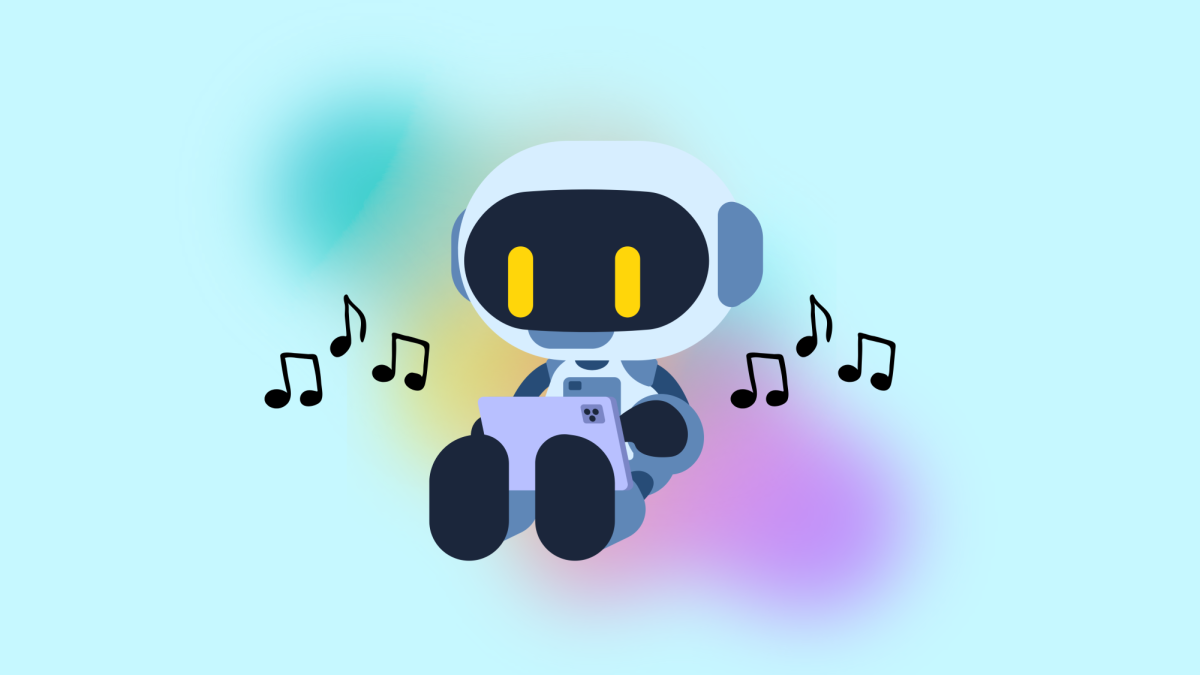
On Nov. 1, the 30th spot on the Billboard charts belonged to a song that somehow captured the hearts of millions of listeners: Xania Monet’s “How Was I Supposed To Know.”
In reality, Monet is a completely AI-generated artist created by Telisha Jones, a Mississippi-based poet. For the song, Jones wrote the lyrics but used Suno AI to generate the vocals and melodies of the song.
Monet’s song — or, more accurately, Jones’s — has already led her to sign a $3 million record deal with Hallwood Media, an unprecedented event raising major concerns about authenticity in music creation. The song’s popularity leaves the industry grappling with the future possibilities of AI usage in music production.
For artists, Monet’s success seems like another sign of doom. Their livelihoods are becoming increasingly threatened by the abilities of generative AI algorithms. But at its core, the usage of AI remains problematic and raises ethical and legal issues, such as the violation of copyright and privacy laws.
Since generative AI algorithms scrape information from the internet to produce their content, they infringe on the copyright of millions of artists by creating a piece using fragments of their work — The New York Times and other publishers are suing OpenAI and Microsoft over the very issue. Due to the recency of all these innovations, there are few laws surrounding the usage of AI.
But with their introduction, large music streaming platforms like Spotify can opt for platforming cheaper AI-generated content rather than independent artists’ music, thwarting careers and increasing competition. A global economic study conducted in December 2024 found a quarter of independent music artists’ incomes would be hurt by generative AI algorithms in the next five years.
These songs typically involve AI music software — of which the internet is already full of, including Suno AI, Artificial Intelligence Virtual Artist (AIVA), Soundraw, Landr, Beatoven.ai and Mureka. These algorithms can perform tasks from generating full pieces of music to creating individual tracks, background music and vocals in different languages. Simultaneously, increasingly realistic AI deepfakes have the ability to mimic the voices of established artists, violating their copyright privileges— such functions make generating new pieces as easy as pressing a button.
Though surveys indicate listeners believe human creativity is essential to music, around 97% of listeners claim that AI-generated music seems real. In 2023, a song called “Heart on My Sleeve” went viral on TikTok; audiences were unaware that the song was created using the AI deepfake voices of Drake and The Weeknd.
The rise of AI-generated songs has separately led to issues like streaming fraud. France-based music platform Deezer reports having more than 10,000 AI generated songs uploaded daily as of January 2025. Scammers then employ AI bots to constantly stream those songs, generating unwarranted profits.
However, AI tools can also be used in some cases to enhance the music of independent artists. Paul McCartney, Ringo Starr and George Harrison of the Beatles used AI tools to clean up their 2023 song “Now and Then,” which featured recordings from the ‘70s.
Junior Ishir Ayyagari, an independent music creator, sees the value in the technology for new artists to streamline the often complex music-making process. While he believes that AI could be helpful in mixing and mastering music, he still remains steadfast that it should not be used to generate complete songs, as it takes away from the creativity in music.
“I don’t use AI for making music, as I view music as a very personal form of expression,” he said. “When I make music, I want to express everything I feel at that moment. Using AI feels like a shortcut that might limit the amount of meaning behind my tracks.”
Other professional music artists like David Guetta see AI as the future of the music industry. In 2023, he created an unofficial song with lyrics sung in the style of Eminem and was greatly impressed with the accurate results of the deepfake.
But for many, the use of AI in music remains a nonnegotiable no. In 2024, a group of acclaimed music artists, including Billie Eilish, Katy Perry, Jon Bon Jovi and J Balvin, signed an open letter speaking out against the use of AI and deepfakes as infringing on an artist’s creativity and undermining opportunities.
With the rise of AI usage in the entertainment industry, competition between human creators will increase — while ethical and legal concerns will only become more prominent.
