
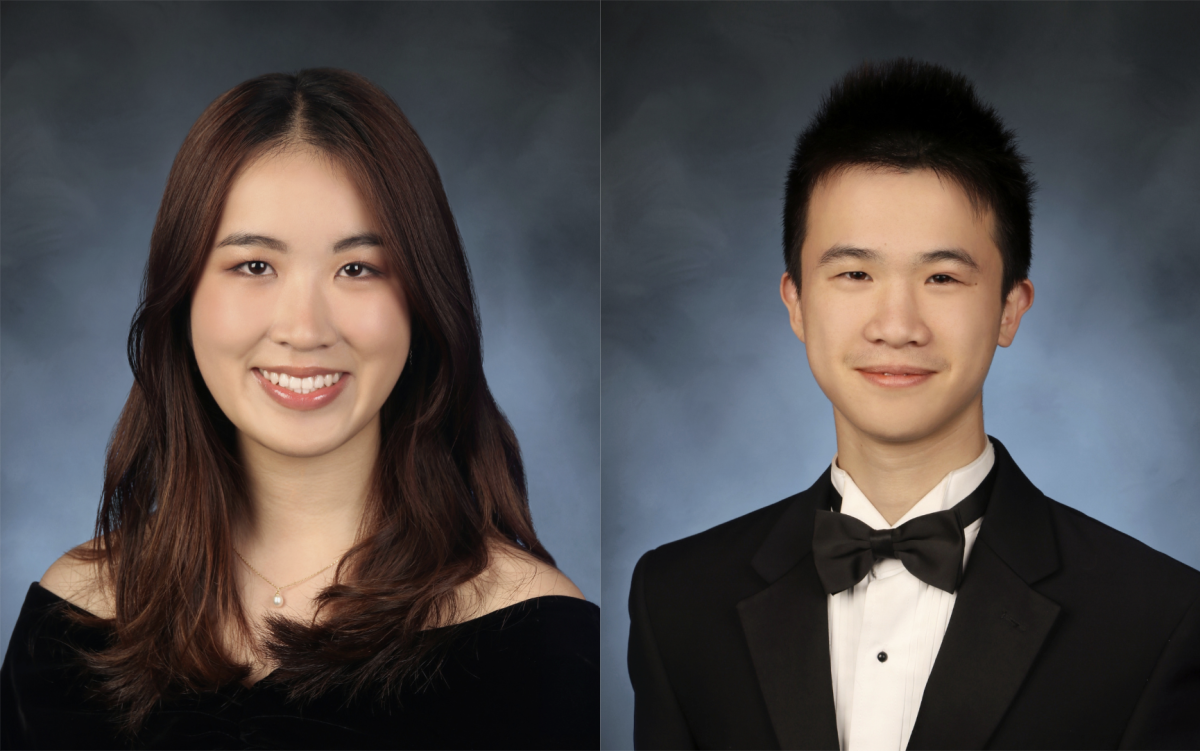








Ever since sophomore Michael Zhao was young, he has been fascinated by biology and chemistry.
He attributes much of his love of science to his grandparents, who were doctors when they lived in China.
To further his studies, he has sought out various internships and research programs.
During the second semester of his freshman year, he applied to and was accepted into the Emerging Health and Society Scholars Mentored Research Program at Duke University, where he has been helping with research for the past 8 months.
The bulk of Zhao’s research has been done independently and mentored remotely under the guidance of a professor of public health at Duke. (Zhao declined to provide the professor’s name.)
Zhao’s grandfather was originally a pioneering ear surgeon, and his scientific studies motivated Zhao to use statistical analysis to research the causes behind cognitive decline in people older than 45.
This consists of studying the decline of abilities such as memory, attention, reading and judgment. Using data from the Behavioral Risk Factor Surveillance System, a survey that gathers health-related information on U.S. residents, Zhao analyzes how different factors affect cognitive decline by putting the risk factors on a weighted logistic regression model — in other words, one where he compares how individual risk factors affects memory.
By using various socio-demographic, behavioral and social risk factors, Zhao evaluates the prevalence of worsening thinking and memory among older adults.
Zhao attributes his success in science to his determination to do well.
“For people who know me, they know that I am an extremely competitive person and I’m willing to put my heart and soul into something,” Zhao said. “I think that trait has allowed me to be where I am now. [You need] the ability to never be satisfied because there is always someone better than you, meaning you are never the first, so you always need to keep pushing.”
When working on this project, Zhao realized that the best way to overcome roadblocks was to ask for help and it was OK to fail, as failing is just part of the process.
“The biggest challenge for me is not doing the experiment itself, I think it’s being patient with myself and giving myself time to figure out what I did wrong and knowing that it’s OK to be wrong the first time,” Zhao said.
Additionally, he has done research for other programs on similar topics, such as a 2025 summer internship at Neumarker, an AI company focused on developing reliable biomarkers to help people with central nervous system disorders. There, he analyzed different types of autism, comparing and contrasting several variations.
Since this spring, he has also become a research scientist at Oncology Alliance, a nonprofit whose mission is to ensure that patients can receive the highest quality, most affordable, and most accessible cancer care close to home. He has been researching the prevalence and various risk factors of different types of cancer.
Through doing many science-related projects in different fields such as neuroscience and oncology, Zhao is continually expanding his love for science.
“I like that in science, I can be myself and create things that haven’t been done before for the betterment of the world,” Zhao said. “Science is where I can bring my best foot forward and try to discover something new.”

