






















“A Chip Odyssey,” released on June 13, is a documentary that recounts the story behind Taiwan’s chip industry’s enormous impact on developing and shaping Silicon Valley in the past few decades and today’s AI-driven era.
Leading into personal stories and deep emotions, the film leans into a more interactive style of cinematography, offering a slow-paced but meaningful look at the pioneers who built the island’s chip industry — a fascinating story for anyone who aspires to a career in a STEM-related field.
The film keeps its story simple for people unfamiliar with the chip industry’s history. In the 1970s, an economically struggling Taiwan sent young engineers to Silicon Valley to learn how to create integrated circuits. Bringing their experience back home, they met up in small cafés to trade notes with colleagues and built the foundations for TSMC — the Taiwan Semiconductor Manufacturing Company — which now manufactures chips for everything from smartphones to the newest wave of AI systems.
Through the eyes of engineers, technicians and scientists, the film hopes to inform newer generations of innovators that they have been passed down a critical responsibility of continuing to support the island’s booming semiconductor industry.
While featuring many great clips of inventors and professionals, the film also incorporates a variety of wide scenic shots that take viewers from the stunning modern landscapes of Taiwan to grainier, black-and-white footage. On the topic of visuals, the color grading stands out the most, capturing the warm sunny tones of the present while using harsh contrast to illustrate the challenging past Taiwan endured in the late 1900s.
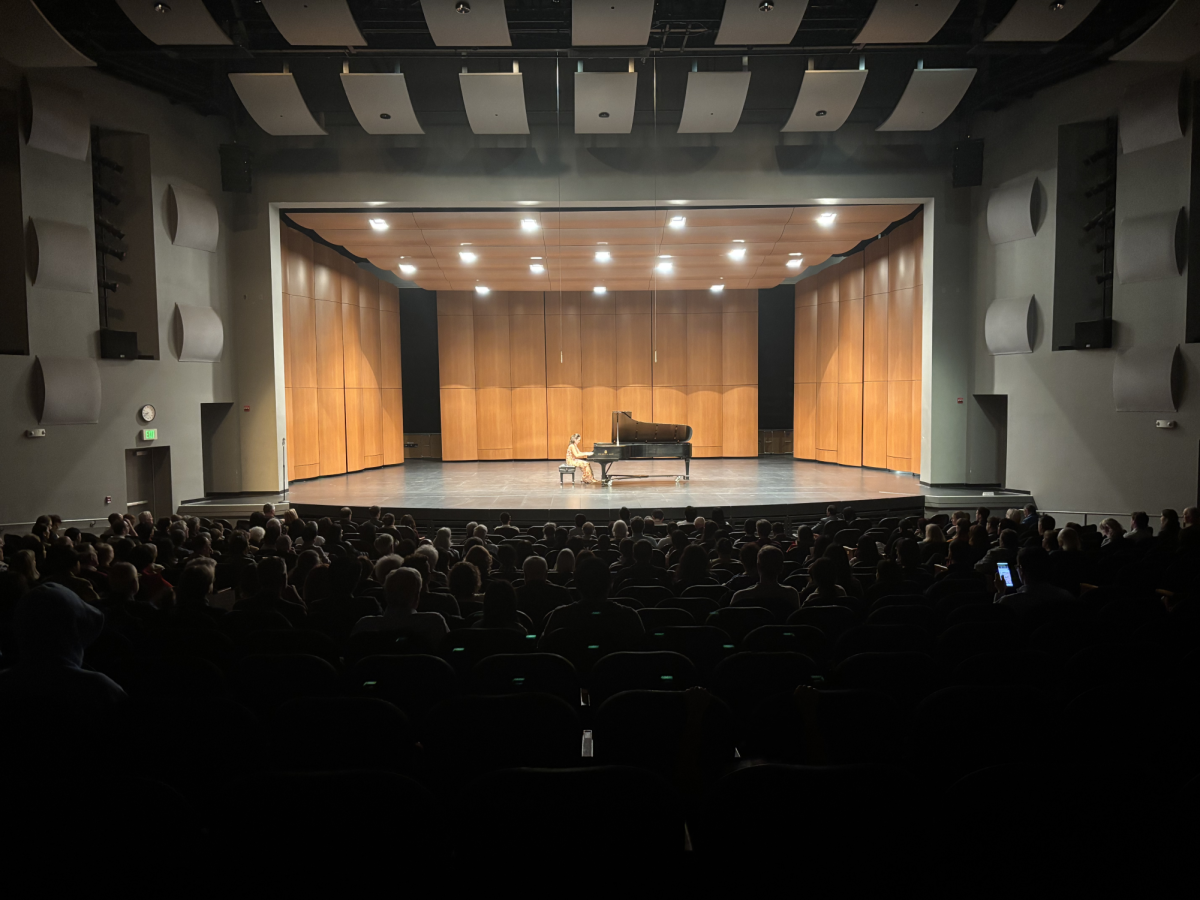
In the Nov. 2 Bay Area premiere of “A Chip Odyssey,” hosted by the Chinese American Semiconductor Professional Association (CASPA), a Silicon Valley-based nonprofit connecting semiconductor professionals, and Sparknify, an organizer of Bay Area film and tech events, the filmmakers chose to reach out to an audience of Silicon Valley industry professionals, as Silicon Valley is home to many high-tech companies that rely on chips and semiconductor technology.
Director Hsiao Chu-Chen and semiconductor professional Ben Tsiang created the film to trace Taiwan’s journey from humble beginnings to becoming one of the world’s largest hubs for chips in the digital age. They were first inspired after attending the memorial for semiconductor pioneer Hu Ding Hwa, who died at age 76 in 2019.
During the production of the movie, Chu-chen and Tsiang split into two film crews and started documenting different parts of the history before coming back together to complete the film.
“We heard so many great stories from the first generation of engineers,” Tsiang told The Falcon. “At that memorial, we realized these voices had to be recorded before they were lost.”
Production spanned six years and included interviews with more than 80 professionals. According to Tsiang, the tech industry kept on shifting while they filmed, so the team had to revise the script about 40 times to keep the history accurate and up to date.
With a runtime of only 106 minutes, trying to cover every nuanced detail was unfeasible. Instead, the filmmakers plan to preserve the transcripts and recordings in a separate file so future researchers can access the original interviews to take in the full narrative.
The film shows Taiwan’s early economic struggles to survive in the tech market. The pacing of the story is quite slow — even drowsy at times — and instead the film focuses more on the emotions of the interviewees, focusing on how dire Taiwan’s economic situation was in the 1960s before the introduction of semiconductors.
For students aspiring to work in STEM, the film is a great watch for gaining a contextual understanding of the realities some countries face in order to exist economically in the world. Though accounting for less than 0.02% of the world’s total landmass, Taiwan’s story hopes to inspire other generations by showing how a small island became globally renowned by pouring its heart into survival and innovation.
“Decades ago, leaders and young engineers made a bold decision to bet almost everything on building world-class technology,” Tsiang said. “I hope young people see that the pioneers featured in the film were once young, too. Now it’s your turn. You’re holding the next set of keys.”
Rating: 4.5 out of 5 Falcons
