
























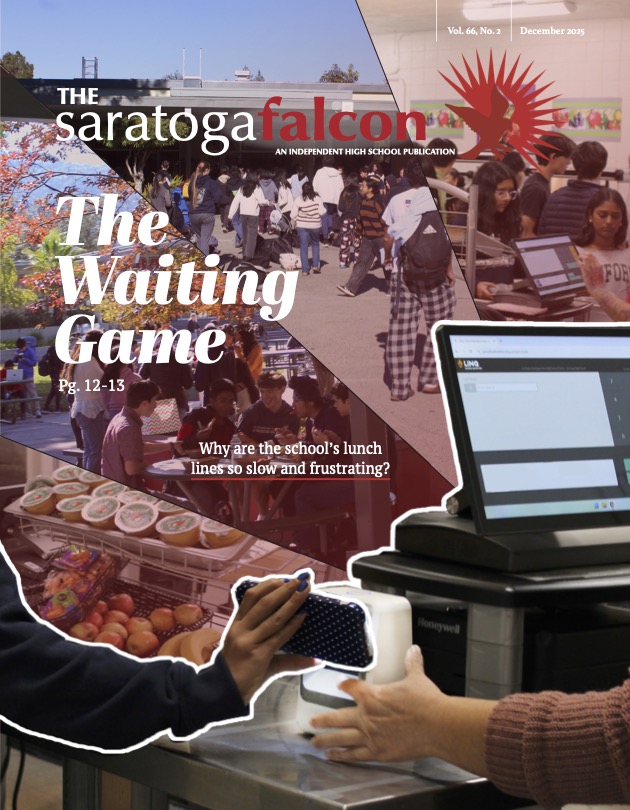


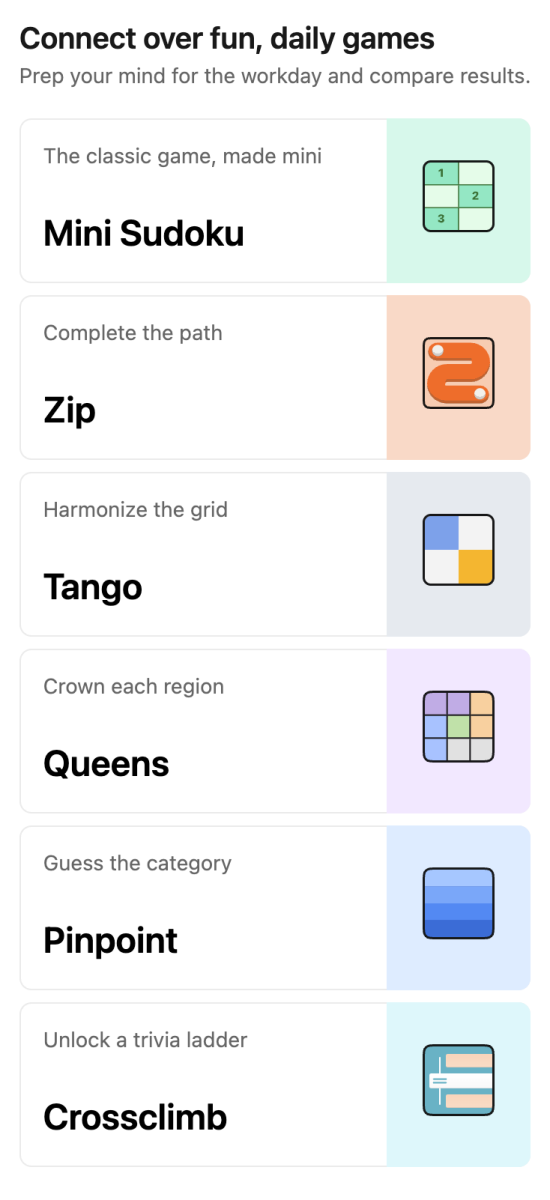
On May 1, 2024, LinkedIn released six games to go along with their website: Mini Sudoku, Zip, Tango, Queens, Pinpoint and Crossclimb. These games are of similar nature to The New York Times’s popular game Wordle and are fun, addicting little daily challenges for LinkedIn users.
While perhaps seeming like an odd choice for LinkedIn, these games have been a net positive because they help give users some harmless daily fun. In addition, those who don’t want the games in their workspace can ignore them, so making them available to all users isn’t much of a nuisance.
One nice feature is the accessibility of the games, since they are either quite easy to understand or are presented with a ruleset. The games also allow players to discuss or share results with their LinkedIn friends. What’s more, each challenge refreshes daily, making them easy to pick up and integrate into one’s routine.
Between LinkedIn friends, these games can become competitions for the fastest solve for these games, or the least guesses in the case of Pinpoint, a game in which players try to guess a category in the fewest guesses possible from clues.
These games vary greatly in length. Some, like the board-filling number-connecting game Zip, can take up only 30 seconds, while others can be several-minute-long puzzles that test people’s critical thinking skills, such as Mini Sudoku.
All the games are all quite solid in design, but my favorites are Queens, a game in which players must place chess queens in boxes on a grid so that none of them attack each other — only one solution exists for each puzzle — and Crossclimb, a game in which players must use trivia to build a word ladder.
However, to some people, adding games seems like a strange decision because they seem to serve the opposite purpose of LinkedIn itself, a platform to build resumes and share job opportunities. Surprisingly, LinkedIn actually provides an answer to this question.
“Every year, we study the world’s best workplaces. Turns out, one of the best ways to deepen and reignite relationships at work is simply by having fun together,” LinkedIn states in a blurb.
This shows that although having games on the platform does seem contradictory to the workplace environment, the games actually help keep people’s relationships healthy.
LinkedIn further states, “Games forge relationships, and relationships are at the heart of everything we do.”